
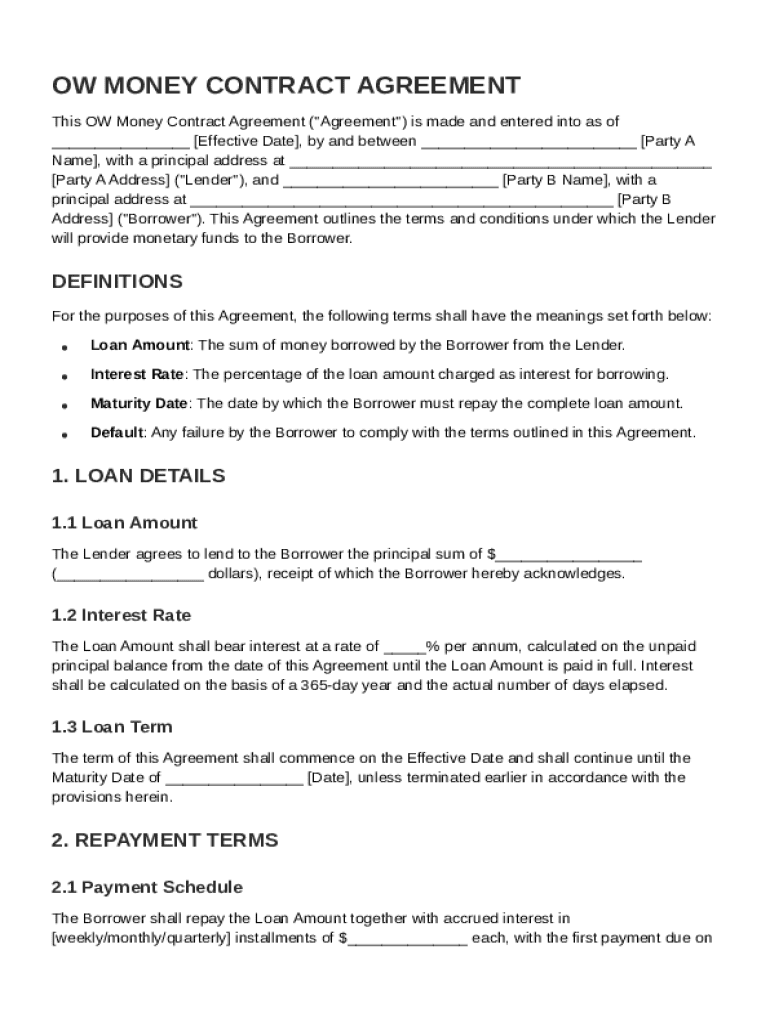







Definition & Meaning of the Ow Money Contract Template
The Ow Money Contract Template is a legal framework used to formalize loan agreements between lenders and borrowers. It clearly outlines the responsibilities and obligations of each party involved in the transaction. This contract typically includes specifics such as the loan amount, interest rates, and repayment schedule, making it an essential tool for ensuring transparent and binding agreements.
- Loan Amount and Terms: The template specifies the total loan amount and detailed terms under which it will be provided. It helps in setting clear expectations regarding financial obligations.
- Interest Rates: Defining the interest rates within the contract protects both parties and aligns them on the financial implications of the loan.
- Repayment Schedule: This section of the contract sets forth the timeline and installment amounts for repaying the borrowed money, ensuring a structured and predictable payment plan.
The use of the Ow Money Contract Template is integral in establishing a legally binding agreement that safeguards the interests of both the lender and the borrower.
How to Use the Ow Money Contract Template
Utilizing the Ow Money Contract Template involves several key steps to ensure the contract serves its intended purpose effectively.
- Download the Template: Access the Ow Money Contract Template from a reliable source, such as the DocHub platform, which offers secure download options.
- Fill in the Particulars: Input essential details, including the loan amount, interest rates, parties involved, and repayment schedule. Ensure all information is accurate and comprehensively reflects the agreement terms.
- Review Legal Clauses: Carefully review any legal terminology and clauses present in the contract to ensure they align with your needs and are in compliance with applicable laws.
Utilizing the template correctly can facilitate a more streamlined and error-free contract creation process, offering legal protection through well-documented agreements.
Steps to Complete the Ow Money Contract Template
The completion of an Ow Money Contract Template requires careful attention to detail and a systematic approach.
- Gather Necessary Information: Collect relevant data such as borrower and lender identification, loan specifics, and any existing preliminary agreements.
- Enter Details into the Template: Use the template fields to enter all necessary information accurately, ensuring that each section is completed fully.
- Consult Legal Advice: If any portion of the contract is unclear, consulting a legal advisor can be beneficial to resolve uncertainties.
By following these steps, you ensure the template meets all legal requirements and serves as a comprehensive record of the financial agreement.
Key Elements of the Ow Money Contract Template
The Ow Money Contract Template includes several critical elements that contribute to its effectiveness as a legal document.
- Parties Involved: Clearly names both the lender and borrower, establishing who is legally responsible for upholding the contract terms.
- Loan Amount and Repayment Terms: Outlines the specifics of the financial transaction, including principal amount and how it will be repaid.
- Default Conditions and Remedies: Provides a mechanism for handling cases where the borrower fails to meet payment obligations.
- Signatures of Both Parties: Validates the contract with signatures, signifying that both parties agree to the terms and conditions.
This framework ensures clarity and a shared understanding between parties, reducing the likelihood of disputes.
Legal Use of the Ow Money Contract Template
The Ow Money Contract Template must adhere to legal standards to be enforceable.
- Compliance with State Laws: Ensures the contract aligns with legal requirements specific to the state where it is executed, acknowledging variations in state laws.
- Arbitration Clauses: Includes provisions for resolving disputes out of court, which can speed up conflict resolution and reduce legal fees.
- Amendment Procedures: Lays out how amendments to the contract can be made, ensuring changes are valid and recognized by both parties.
Proper legal use protects all involved parties by ensuring the contract is an effective and enforceable document.
Who Typically Uses the Ow Money Contract Template
This template is commonly used by various individuals and entities in need of a structured loan agreement.
- Private Lenders and Individuals: Those lending money on a personal basis often use this template to formalize arrangements.
- Small Businesses: Enterprises requiring temporary financial assistance might utilize the template to secure loans from private investors.
- Family Loans: It is useful for creating formal agreements in situations where money is lent between family members, offering clarity and preventing misunderstandings.
The broad applicability of the template makes it a versatile tool in various lending scenarios.


Important Terms Related to the Ow Money Contract Template
Several key terms are integral to the understanding and execution of the Ow Money Contract Template:
- Principal: The original sum of money borrowed or lent, which is subject to interest.
- Interest Rate: The percentage charged on the principal as the cost of borrowing.
- Repayment Terms: Schedule outlining how the loan will be repaid over time.
- Collateral: Property or other assets pledged by the borrower to secure the loan.
Understanding these terms is essential for accurately interpreting the contract and fulfilling its obligations.
State-Specific Rules for the Ow Money Contract Template
Each state may have unique rules and regulations governing loan agreements.
- Interest Rate Caps: Some states impose limits on interest rates to protect borrowers from excessive charges.
- Usury Laws: State-specific laws that define the maximum permissible rate of interest for loans.
- Formal Registration: Some jurisdictions may require loan agreements to be registered with state authorities to be enforceable.
Acknowledging state-specific rules ensures that the Ow Money Contract Template remains compliant across different legal territories.




