
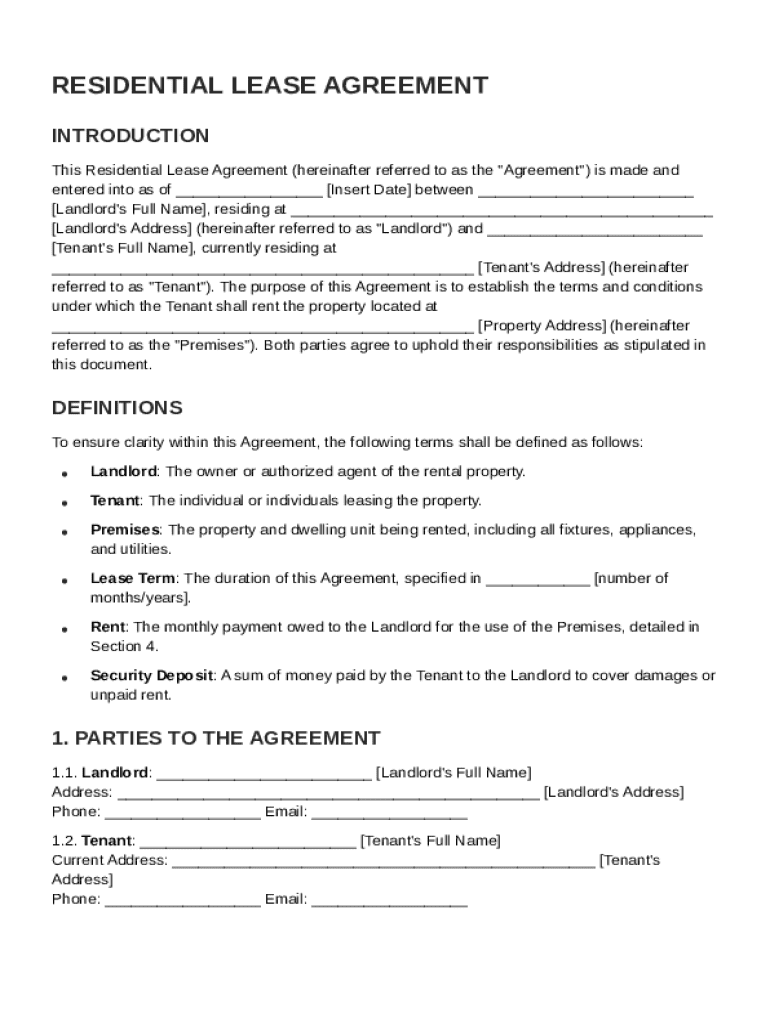







Definition and Meaning of a House For Rent Contract
A House For Rent Contract, commonly referred to as a Residential Lease Agreement, legally outlines the terms and conditions under which a Landlord rents a property to a Tenant. This document often includes definitions of key terms, such as "Landlord," "Tenant," and "Premises." The contract serves as a mutual understanding and agreement that formalizes the rental relationship, ensuring that both parties are aware of their rights and responsibilities. It's designed to prevent misunderstandings by stipulating all rental conditions clearly.
Key Features of the Contract
- Parties Involved: Clearly defined roles and identities of the Landlord and Tenant.
- Property Description: Specific details about the property being rented, including address and type.
- Lease Term: Duration of the rental agreement, whether it is month-to-month or a fixed term.
How to Use the House For Rent Contract Template
Using a House For Rent Contract Template can significantly simplify the process of drafting rental agreements. This template provides a structured framework that ensures all critical aspects are covered, reducing the likelihood of errors or omissions.
Steps to Use the Template
- Download the Template: Access a standard House For Rent Contract Template from a trusted source.
- Input Property Details: Fill in the specific property details, ensuring all descriptions match the actual premises.
- Enter Lease Terms: Clearly define the lease duration, start and end dates, and any renewal options.
- Specify Rent Details: Include rental amount, payment due dates, and acceptable payment methods.
Customization Options
- Additional Clauses: Add custom clauses to address specific concerns such as pet policies or maintenance responsibilities.
- State-Specific Requirements: Tailor the template to meet state-specific legal requirements, like capped security deposits or tenant's right to repair and deduct.
Important Terms Related to the House For Rent Contract Template
When dealing with a House For Rent Contract, it is crucial to understand certain terms to ensure proper interpretation and compliance.
Commonly Used Terms
- Security Deposit: A sum paid by the tenant to cover potential damages. Terms of its return should be specified.
- Utilities: Indicate whether utilities are included in the rent or if they are the tenant's responsibility.
- Maintenance Responsibilities: Delineate which maintenance tasks are the landlord's responsibility versus those of the tenant.
Legal and Financial Implications
Understanding these terms helps both parties to avoid legal issues and ensures financial clarity. For example, knowing the rules surrounding security deposit returns can mitigate disputes when the lease ends.
Legal Use of the House For Rent Contract Template
The House For Rent Contract serves as a legal document, providing both parties with enforceable rights and obligations under law.
Compliance with State Laws
- Governing Law: The lease should specify which state laws will govern the agreement, as renter’s rights can vary significantly.
- Disclosures: Many states require landlords to make specific disclosures, such as information about toxic mold or lead-based paints.
Enforcing Lease Terms
The contract provides a legal basis to enforce lease terms. If either party breaches the agreement, the contract can serve as evidence in legal proceedings. For example, if a tenant fails to pay rent, the landlord can initiate eviction proceedings based on the contractual terms.
Key Elements of the House For Rent Contract Template
A comprehensive House For Rent Contract Template covers a variety of elements critical to a successful rental relationship.
Essential Sections of the Contract
- Payment Terms: Outline the rent amount, due dates, and penalties for late payments.
- Termination Conditions: Specify the conditions under which the lease can be terminated by either party, and the notice period required.
- Property Use: Details about the permitted use of the premises, ensuring it matches local zoning laws or homeowner association rules.
Signatures
For a House For Rent Contract to be legally binding, both the landlord and tenant must sign it. This section usually includes space for dates and names, ensuring that stakeholders’ consents are well-documented.
Examples of Using the House For Rent Contract Template
Using a template can provide consistency and protection for a wide range of rental scenarios.
Real-World Applications
- Short-Term Rentals: Ideal for vacation properties or seasonal rentals, ensuring short-term tenants understand specific rules and responsibilities.
- Long-Term Tenancy: Provides clarity for longer commitments, such as annual leases, emphasizing stability for both landlord and tenant.
Case Study: Urban Apartment Rental
Consider a tenant renting an apartment in a downtown area. The House For Rent Contract Template is used to formalize terms, including shared amenity rules and noise restrictions crucial for urban settings, reflecting the specific lifestyle and community considerations inherent in city living.
State-Specific Rules for the House For Rent Contract Template
The enforceability and terms of a House For Rent Contract can vary based on state-specific provisions.
Examples of State Variations
- Security Deposit Limits: Some states cap the amount a landlord can charge for a security deposit.
- Tenant’s Right to Repairs: States may provide tenants with rights to enforce necessary repairs, affecting lease contracts.
Understanding these differences ensures the contract adheres to local laws, thereby offering greater protection to both parties.
Steps to Complete the House For Rent Contract Template
Completing a House For Rent Contract Template involves several clear steps to ensure accuracy and compliance.
Step-by-Step Process
- Gather Information: Collect all necessary data, including tenant’s personal details and property specifics.
- Review Legal Requirements: Check local laws and required disclosures to incorporate into the agreement.
- Fill in the Template: Enter all information, ensuring accuracy and completeness.
- Review and Finalize: Both parties should review the document for accuracy before signing.
Finalizing and Signing
After completion, disseminate copies to all parties and store them for future reference. This step mitigates potential disputes by ensuring both parties have access to the same document version.




