







Definition and Meaning
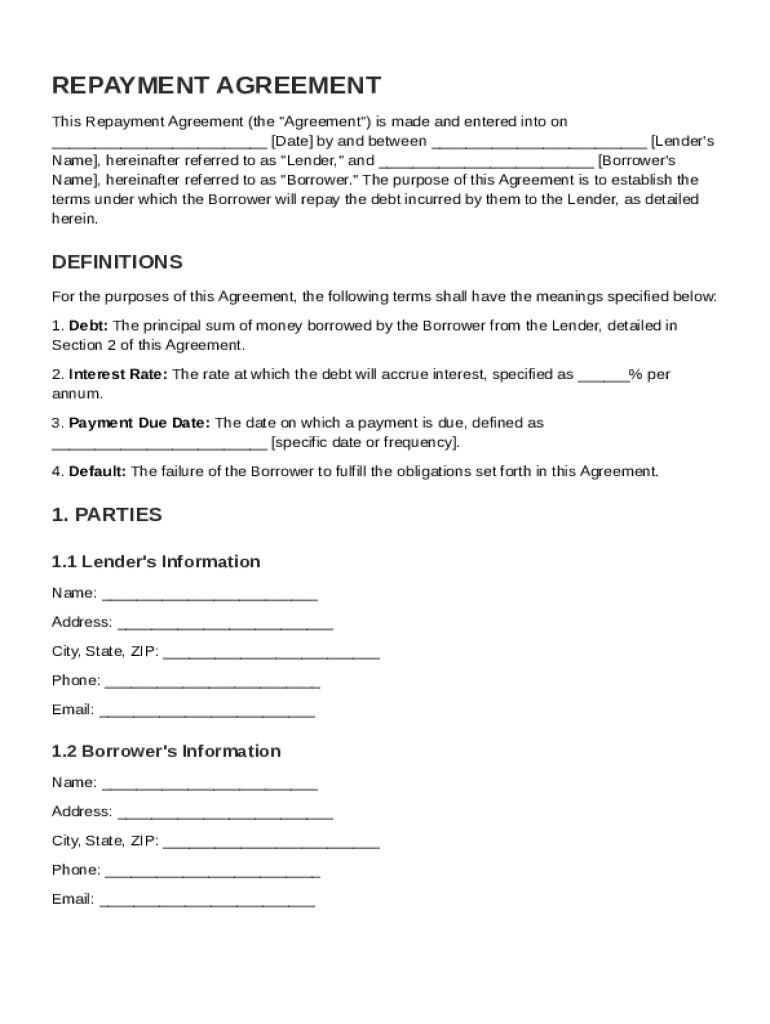
The Repayment Contract Template, sometimes referred to as a Repayment Agreement, is a legal document that outlines the specific terms under which a borrower agrees to repay a lender. This document serves not only as a comprehensive guideline for repayments but also as a legally binding contract that can be enforced in court if necessary.
- Loan Amount: The total sum that the borrower has agreed to repay, typically including any initial borrowed amount and potential interest.
- Repayment Terms: Detailed descriptions of the repayment schedule, such as payment frequency (e.g., monthly, quarterly) and special conditions (e.g., early repayment options).
- Interest Rates: Clearly stated interest rates, whether fixed or variable, and any conditions affecting these rates.
These components help establish clarity and trust between the borrower and lender, reducing the likelihood of disputes.
Key Elements of the Repayment Contract Template
The Repayment Contract Template typically includes several critical elements that define its structure and function. These elements ensure that both parties understand their responsibilities and the contract's intent.
- Obligations of the Borrower: Includes meeting payment deadlines and maintaining transparency if financial difficulties arise.
- Lender's Commitments: Establishes conditions under which the lender may alter terms, such as adjusting interest rates.
- Default Conditions: Specifies what constitutes a default (e.g., missed payments, bankruptcy) and outlines potential remedies.
Each element within the template plays a vital role in safeguarding both parties' interests, ensuring that the agreement is equitable and transparent.
How to Use the Repayment Contract Template
Utilizing the Repayment Contract Template involves discerning its structure and filling it out accurately. This process generally comprises several steps:
- Download or Access: Obtain the template online or through legal counsel.
- Fill in Basic Information: Enter the names, addresses, and contact details of both the borrower and lender.
- Define Loan Details: Specify the amount, interest rate, repayment terms, and other financial specifics.
- Set Conditions: Include any special conditions, such as the right to prepay without penalty or the procedures for extending payment terms.
- Finalize with Signatures: Ensure that both parties review the terms and affix their signatures to validate the contract.
Following these steps ensures a complete and precise repayment agreement.
Steps to Complete the Repayment Contract Template
Completing the Repayment Contract Template involves several detailed steps to ensure legal validity and mutual understanding:
- Input Accurate Financial Terms: Ensure all financial measures, including interest rates and repayment schedules, are clearly defined.
- Adjust Legal Clauses: Modify clauses to reflect the specific legal requirements of both parties, referencing applicable laws as needed.
- Review Asset Collateralization: If applicable, include a description of any assets used as collateral, with valuation and lien details.
- Validate with Notary (if required): Some contracts may need notarization for additional legal standing.
- Secure Copies: Each party should maintain a signed copy of the agreement for their records.
These steps ensure a comprehensive completion of the template, enhancing its enforceability.
Importance of the Repayment Contract Template
The Repayment Contract Template is essential as it provides a structured method for documenting loan arrangements while offering legal protection. It ensures both parties have a clear understanding of their rights and obligations.
- Risk Reduction: Minimizes the risk of non-payment or disputes regarding the terms.
- Legal Clarity: Offers a clear legal recourse in case of default or disagreement.
- Professionalism: Conveys a sense of professionalism and commitment to the terms discussed.
The template's structured nature also facilitates clear communication and sets expectations from the beginning.
State-Specific Rules for the Repayment Contract Template
While the Repayment Contract Template provides a standard framework, adapting it to comply with state-specific laws is crucial to its legal integrity.
- Interest Rate Limits: Some states impose limits on the maximum allowable interest rates, often referenced as usury laws.
- Legal Enforcements: Varying state regulations may influence how a repayment contract can be enforced if breached.
- Filing Requirements: Specific jurisdictions could require the contract to be filed or registered officially.
Understanding these state-specific nuances helps tailor the template for full compliance and effectiveness.
Legal Use of the Repayment Contract Template
Repayment Contract Templates must adhere to strict legal guidelines to ensure their enforceability. Legal considerations include:
- Compliance with the ESIGN Act: Electronic signatures used within the template must comply with federal electronic signature standards, ensuring they are legally binding.
- Disclosure Obligations: Both parties are obligated to disclose all material facts, including financial capacity and potential risks.
- Confidentiality Protocols: Provisions for maintaining confidentiality of borrower and lender information should be part of the contract.
These elements protect the interests of both parties and uphold the contract's integrity.
Common Examples of Using the Repayment Contract Template
The Repayment Contract Template can be applied in various contexts to formalize loan agreements:
- Personal Loans: Agreements between individuals for financing personal expenses or ventures.
- Business Loans: Formalizing terms where a business entity borrows funds from another business or individual.
- Family Loans: Creating clear terms to avoid misunderstandings in familial financial support.
- Microloans: Structured arrangements for small, rapid repayment loans, often in entrepreneurial settings.
These examples highlight the template's versatility and applicability across different loan scenarios, ensuring transparent and fair lending practices.




