
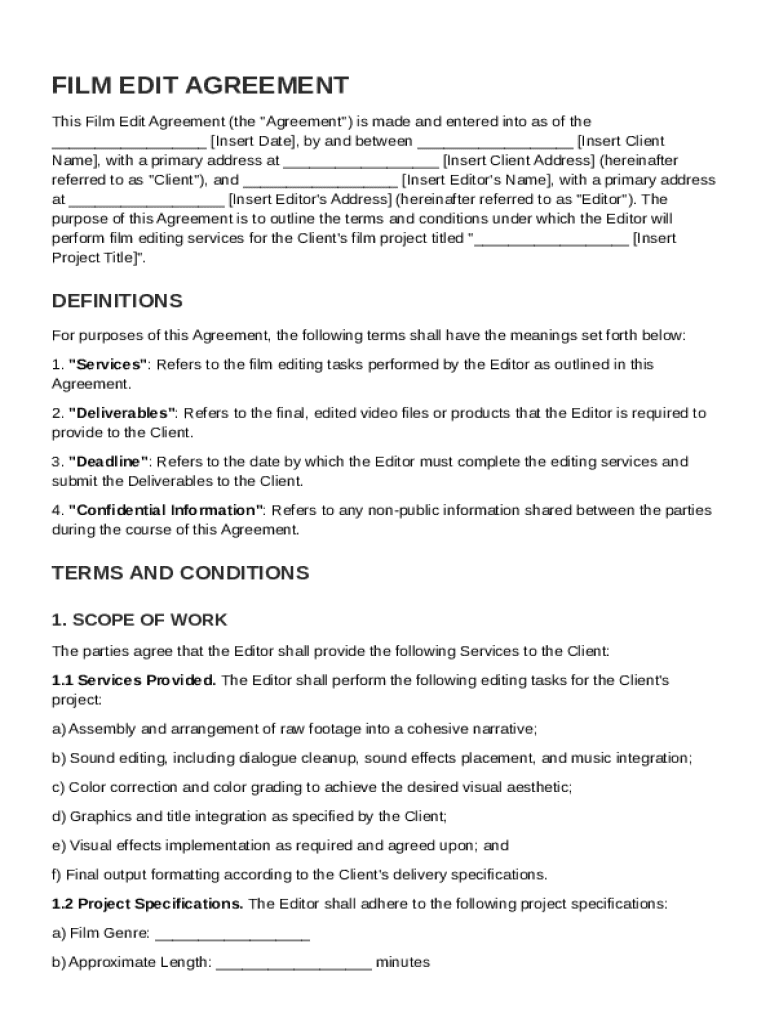







Definition & Meaning
A Film Edit Contract Template is a legally binding document used to outline the terms between clients and editors involved in film post-production. It sets expectations for deliverables, timelines, and compensation, ensuring clarity and mutual understanding. This template serves to formalize agreements, reduce misunderstandings, and provide legal protection to both parties involved. By defining roles and responsibilities, it ensures the project progresses smoothly and potential disputes are mitigated.
Key Elements of the Film Edit Contract Template
The template comprises several essential components to ensure a comprehensive agreement:
-
Scope of Work: Details specific editing tasks, such as cutting, color correction, and sound editing. By explicitly stating these tasks, both parties can align on expected deliverables.
-
Compensation: Outlines payment structures and timelines. This section may include whether payment is hourly, by project milestones, or upon completion, minimizing potential financial disputes.
-
Timeline: Provides deadlines for each phase of the project. Clear timelines ensure editors and clients manage their time efficiently and meet agreed deadlines.
-
Revisions: Specifies revision limits, revision request protocols, and how they affect deadlines. This clarification helps manage client expectations and editor workload.
-
Rights and Ownership: Clarifies who retains rights over the final product and raw materials. This is crucial for understanding usage rights after completion.
-
Confidentiality: Ensures sensitive content remains private and secure. This clause protects the client’s content from unauthorized disclosure.
How to Use the Film Edit Contract Template
Utilizing the Film Edit Contract Template involves several steps designed to enhance clarity and efficiency:
-
Download the Template: Access a digital version compatible with your editing software.
-
Customize the Agreement: Tailor sections related to specific project needs, such as adding clauses for unique post-production services.
-
Collaborate with Stakeholders: Share the draft with all parties, incorporating feedback to ensure mutual satisfaction.
-
Review Legal Terms: Consult a legal advisor to ensure contractual terms comply with current laws.
-
Sign and Secure: Use electronic signature tools to finalize the agreement and keep secure copies for both parties.
Who Typically Uses the Film Edit Contract Template
The Film Edit Contract Template is a pivotal tool for various stakeholders:
-
Independent Filmmakers: Often leverage this template to formalize agreements with freelance editors.
-
Production Companies: Utilize these contracts to maintain consistent, legally sound agreements across multiple projects.
-
Freelance Editors: Ensure clear terms before commencing work, avoiding misalignments about job scope or compensation.
This contract offers flexibility, adapting to varying scales of film projects, from indie productions to large studios.


Legal Use of the Film Edit Contract Template
The template upholds legal standards, providing a compliant framework across different scenarios. It is crafted to ensure:
-
Adherence to Legislation: Reflects U.S. cinematography and intellectual property law, stressing appropriate rights and ownership clauses.
-
Enforcement: Offers legal protection by specifying dispute resolution processes which can be adjudicated in court if necessary.
-
Validity: Legal usability across jurisdictions, albeit state-specific laws may necessitate additions for comprehensive compliance.
Consultation with legal professionals ensures that all contractual elements comply with current legal standards and precedents.
State-specific Rules for the Film Edit Contract Template
While the Film Edit Contract Template is broadly applicable, nuances in state laws might affect specific terms:
-
Intellectual Property: States might have varying rules on copyright that influence film rights.
-
Employment Laws: Regulations concerning freelance work differ, impacting how compensation and contractual terms are structured.
-
Dispute Resolution: State laws dictate where legal proceedings may occur, and these terms should align with applicable jurisdictional laws.
Understanding these distinctions enhances the template's utility, ensuring precise adherence to regional needs.
Steps to Complete the Film Edit Contract Template
Completing the template requires attention to detail and collaboration:
-
Review the Template: Ensure it comprehensively captures the project’s scope.
-
Fill in Details: Enter required information such as project name, parties involved, and timelines.
-
Add Specific Clauses: Incorporate any unique stipulations pertinent to the project.
-
Verification: Check for consistency and confirm that all necessary components are included.
-
Legal Review: Have a legal expert verify the template’s completeness and compliance.
-
Finalize and Sign: Secure signatures using an electronic signing solution to formalize the contract.
These steps ensure the contract is thorough, legally sound, and ready to guide the project seamlessly.
Examples of Using the Film Edit Contract Template
Real-world applications demonstrate the versatility of the Film Edit Contract Template:
-
Short Films: Essential for defining expectations in indie short productions, often involving minimal resources and tight schedules.
-
Documentaries: Use this contract for clarity in prolonged editing phases typical of extensive documentary projects.
-
Corporate Productions: Companies rely on these templates in promotional projects, often involving varied visual content needing professional editing.
Each scenario underscores the template’s adaptability, supporting various forms of post-production engagements within the film industry.




