






Definition & Meaning
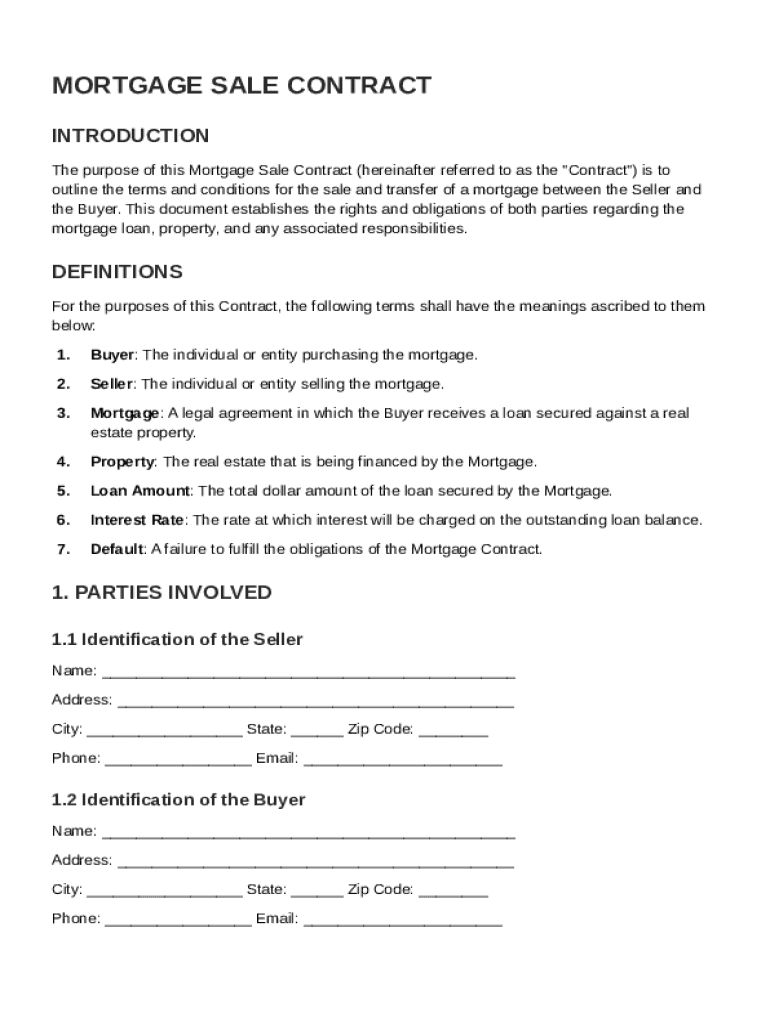
A Mortgage Sale Contract Template is a formal legal document used to outline the terms and conditions of a mortgage transaction between a seller and a buyer. In this contract, vital components including the property details, mortgage terms, purchase price, and payment conditions are clearly articulated. The contract serves as a binding agreement that delineates the responsibilities and rights of both parties involved. Additionally, it addresses potential default conditions and the legal remedies available should any issues arise. This template functions as a comprehensive roadmap for ensuring all aspects of the mortgage transaction are in alignment with legal standards.
How to Use the Mortgage Sale Contract Template
Understanding how to effectively use the Mortgage Sale Contract Template is crucial for ensuring a seamless transaction. Begin by thoroughly reviewing the template to familiarize yourself with its structure and required information. Once you have a clear understanding, fill in the necessary details such as the names and contact details of the seller and buyer, specific mortgage information, and the purchase price. Carefully define the payment terms and schedules. It's also essential to outline any contingencies or conditions that must be met prior to finalizing the contract. After completing the form, consider consulting a legal professional to verify its accuracy and compliance with local laws before both parties sign the agreement.
Practical Steps:
- Review template sections to understand requirements.
- Enter following details:
- Identifications of parties.
- Detailed mortgage information.
- Defined payment terms.
- Mention contingencies and conditions.
- Review with legal counsel.
- Sign and finalize with involved parties.
Steps to Complete the Mortgage Sale Contract Template
Completing the Mortgage Sale Contract Template involves a series of structured steps aimed at capturing all necessary details accurately.
-
Identify the Parties: Enter the full names and addresses of the seller and buyer at the start of the document.
-
Describe the Property: Provide a detailed description, including the full address and any unique identifiers for the property being mortgaged.
-
Detail the Mortgage: Clearly specify principal amount, interest rate, and the mortgage term. Include information about payment schedules and expected installments.
-
List Purchase Price: State the agreed purchase price and any upfront payments or deposits made.
-
Outline Responsibilities and Default Conditions: Clearly delineate the obligations of both parties and enumerate conditions constituting default.
-
Signatures: Ensure that both parties sign the document. It's often recommended to have witnesses or a notary public present to validate the signatures.
Key Elements of the Mortgage Sale Contract Template
A comprehensive Mortgage Sale Contract Template incorporates several key elements that establish a clear understanding between the transacting parties.
- Parties Involved: Names and contact information for both seller and buyer.
- Property Description: Details pertaining to the specific property under the mortgage, including legal description and address.
- Mortgage Details: Specifics configuration of the mortgage, such as amount, term, and rates.
- Payment Terms: An outline of the payment schedule, including when payments are due and acceptable means of payment.
- Default and Remedies: Clear definitions of what constitutes a default and the remedies available to either party if one occurs.
- Governing Law: Statements indicating which state laws the contract will adhere to, ensuring legal clarity.
- Additional Clauses: Any other terms agreed upon by both parties that impact execution of the contract.
Important Terms Related to Mortgage Sale Contract Template
Ensuring a clear understanding of relevant terminology is essential when navigating a Mortgage Sale Contract.
- Principal: The initial amount of money borrowed in the mortgage.
- Interest Rate: The rate at which interest is paid by borrowers for the use of money.
- Amortization: The process of gradually paying off a debt over time through regular payments.
- Default: Failure to meet the legal obligations of the mortgage, such as missing a payment.
- Escrow: An account where mortgage payments or deposits are held before being directed to intended parties.
- Lien: A right to keep possession of property belonging to another person until a debt is discharged.
Legal Use of the Mortgage Sale Contract Template
The legal use of the Mortgage Sale Contract Template is to provide a structured and enforceable agreement for mortgage transactions. It's crucial that the template complies with applicable legal standards and state-specific regulations to prevent any potential disputes. Consulting with a legal professional to ensure that all clauses meet current legal requirements is strongly encouraged. Also, witnessing or notarizing the signed document can be a fundamental step to further cement its legality and enforceability. The template should serve as a defensible document in the event of disagreement or legal disputes.
Who Typically Uses the Mortgage Sale Contract Template
The primary users of a Mortgage Sale Contract Template are individuals and entities engaging in real estate transactions. This often includes:
- Private Home Buyers and Sellers: Individuals buying or selling their personal residence.
- Real Estate Investors: Persons or entities acquiring properties for investment purposes.
- Financial Institutions: Banks or mortgage lenders facilitating the mortgage arrangement.
- Legal Professionals: Attorneys who are responsible for drafting, interpreting, or executing mortgage documents.
- Real Estate Agents and Brokers: Professionals who mediate between the buyer and seller to complete the transaction.


State-Specific Rules for the Mortgage Sale Contract Template
While the Mortgage Sale Contract Template serves a general purpose, it's important to tailor it to meet state-specific requirements to ensure compliance. Each state in the U.S. has distinct regulations that may influence how mortgage contracts must be drafted and executed.
- Differences in Legal Requirements: Some states may require specific disclosures, notices, or additional clauses aligned with state laws.
- Varying Tax Implications: Property taxes and related obligations may differ significantly between states.
- Record-Keeping Requirements: Certain states may stipulate specific formats or processes for maintaining copies of the contract.
Consulting with a legal expert who is well-versed in the real estate laws of the specific state where the property is located can prove invaluable in ensuring the contract’s accuracy and legality.