
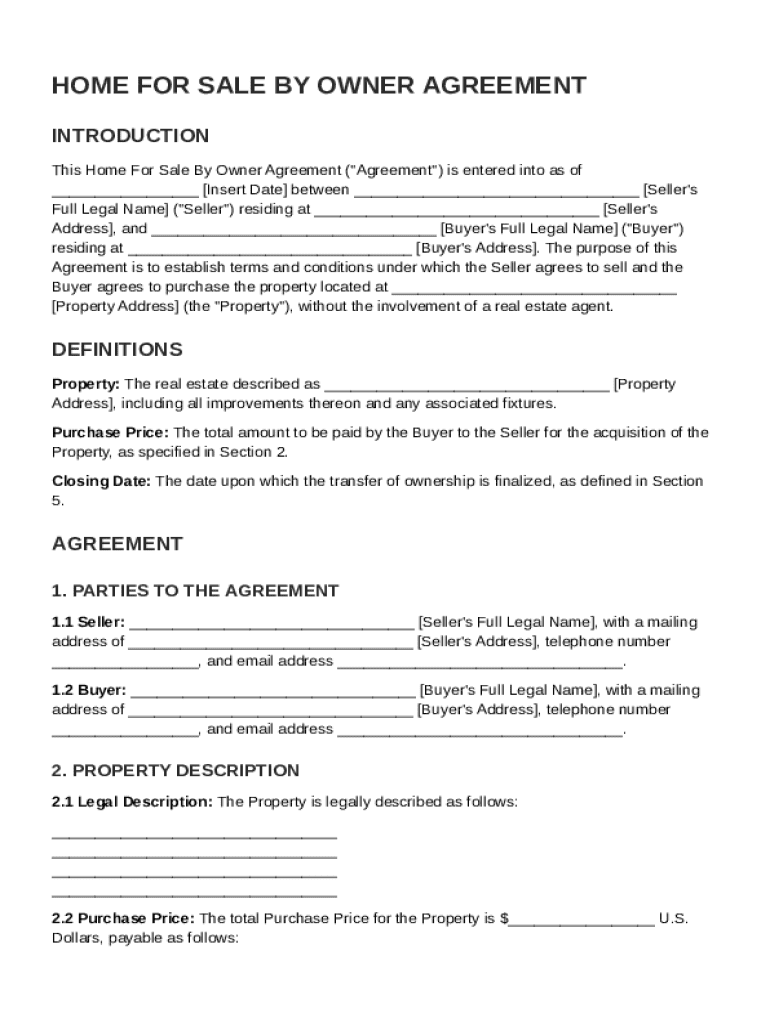







Definition and Purpose of the Home For Sale By Owner Contract Template
The Home For Sale By Owner Contract Template, often referred to as a FSBO contract, serves as a legally binding agreement between a property seller and buyer without the intervention of a real estate agent. This contract typically includes crucial sections such as the property's legal description, the agreed purchase price, contingencies related to inspections and financing, as well as the terms of disclosure required from the seller. The contract aims to formalize the transaction parameters, ensuring both parties are clear about their obligations and rights throughout the process.
Key Components of the FSBO Contract
- Property Details: Specifies the property's legal description, address, and any fixtures or fittings included in the sale.
- Purchase Price and Payment Terms: Details the agreed sale price, payment method, and any earnest money deposit required.
- Contingencies: Outlines conditions that must be met, such as a satisfactory home inspection or securing financing.
- Seller Disclosures: Lists all material facts and defects that the seller must disclose, adhering to state regulations.
- Closing Process: Describes how and when the ownership will be transferred, including details of the signing and recording of the deed.
How to Use the Home For Sale By Owner Contract Template
Utilizing the FSBO contract involves several steps to ensure that all vital elements are captured and both parties' interests are protected. Start by downloading a reputable FSBO contract template suitable for your state, which complies with local laws and regulations. Next, fill in detailed information about the property, the agreed sale terms, and required disclosures. Both parties should thoroughly review the contract, seeking legal advice if necessary, before signing.
Step-by-Step Guide
- Download a State-Compliant Template: Ensure the contract template aligns with specific state laws and real estate requirements.
- Complete Property and Buyer Details: Add comprehensive details about the property and the buyer's and seller's information.
- Negotiate and Agree on Terms: Discuss and finalize terms including payment method, contingencies, and closing timeline.
- Review Disclosures and Contingencies: Confirm that all necessary disclosures are included and that contingencies are realistic.
- Sign and Notarize the Contract: Once agreed upon, both parties should sign the document, and it may need to be notarized to be enforceable.
Steps to Complete the FSBO Contract
Completing an FSBO contract involves careful consideration of every clause and provision to avoid future disputes. Begin by verifying all personal and property details, carefully reading each section to understand responsibilities and potential liabilities. Be meticulous about fulfilling state-specific requirements, particularly those regarding disclosures and contingency clauses. Consulting with a real estate professional or attorney, even in an FSBO transaction, can enhance the contract's comprehensiveness and enforceability.
Detailed Steps
- Verify and Enter Personal Information: Double-check names, addresses, and contact details for accuracy.
- Detail the Financial Agreement: Clearly outline the purchase price, payment breakdown, and any applicable deposits.
- Define Contingencies and Deadlines: Specify deadlines for inspections, financial approval, and conditions under which the contract may be voided.
- Include Necessary Disclosures: Ensure all required seller disclosures are added as per state law.
- Sign and Store Safely: Encourage all parties to sign, preferably in person, and securely store the contract and related documents.
Legal Use and Compliance for the FSBO Contract
The FSBO contract, while a tool for simplifying property transactions, must adhere to local real estate laws to be legally enforceable. It's essential that both the buyer and seller ensure compliance with applicable statutes, focusing on disclosure obligations and contingency terms as defined by state law. Failure to comply with legal standards can result in voided contracts or additional legal liability for the parties involved.
Legal Considerations
- Disclosure Requirements: Adherence to state-mandated disclosure rules to cover any known defects or issues with the property.
- Contingency Management: Proper management of contingencies like financing or structural inspections.
- Enforceability: Ensures signatures are properly witnessed or notarized where required by law.
Important Terms Related to the FSBO Contract
Understanding the terminology used in FSBO contracts is crucial for both novices and seasoned participants in real estate transactions. Terms such as 'contingency,' 'disclosures,' and 'earnest money' are frequently encountered. Each term carries specific implications for the transaction's success and legality, and misunderstanding can lead to complications or legal disputes.
Key Terms to Note
- Contingency: Conditions that need to be met for the sale to proceed, such as financing approval.
- Disclosure: Information the seller is legally required to provide about the property's condition.
- Earnest Money: A deposit made to demonstrate the buyer's commitment to the purchase.
State-Specific Rules for FSBO Contract
Each state in the U.S. may impose unique requirements on FSBO contracts, highlighting the need for state-specific templates and expert consultation. These rules frequently impact disclosures, escrow practices, and property transfer procedures. It's vital for both parties to research and understand these differences to comply wholly with state law.
Differences and Nuances
- Disclosure Variations: States have varying requirements on what a seller must disclose regarding property condition and defects.
- Closing Procedures: Specific closing timelines, the necessity of escrow, and who assumes various closing costs can vary.




