






Definition & Meaning
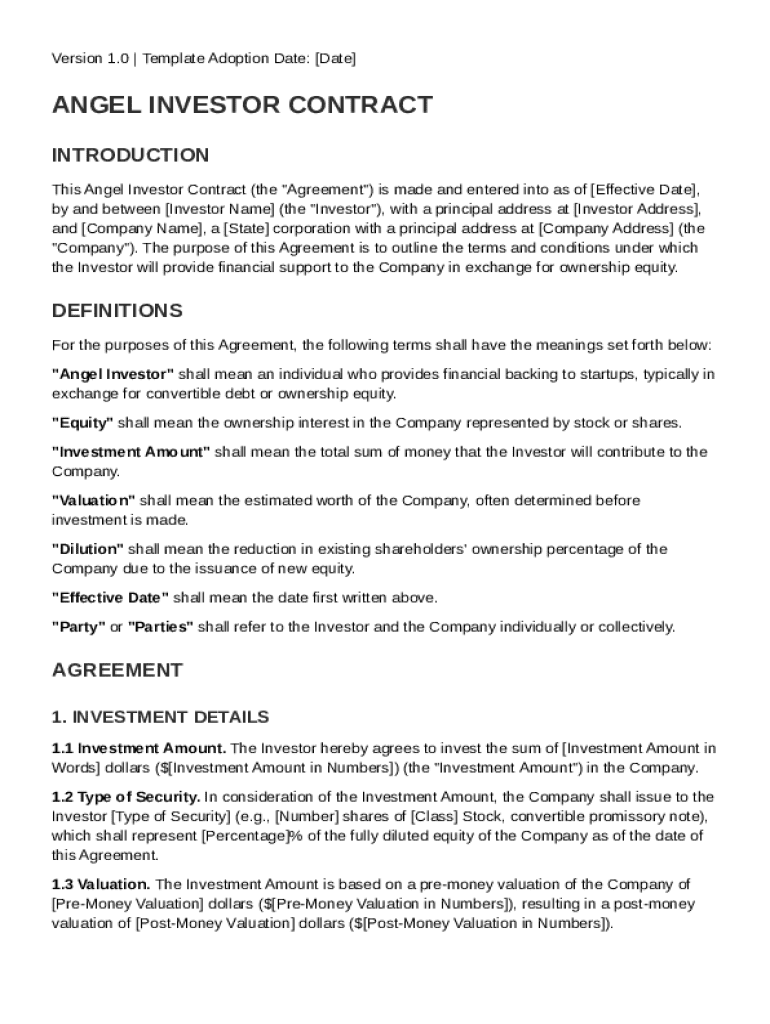
An Angel Investor Contract Template is a formal agreement that details the terms and conditions under which an investor provides financial support to a startup or small business in exchange for equity ownership. This document serves as a foundational tool to define the investment relationship, including the roles, responsibilities, and expectations of both parties. It typically includes definitions of key terms to ensure a common understanding, investment specifics such as the amount contributed and the type of security issued, as well as the intended use of the invested funds. Additionally, it outlines the investor's rights, such as conversion rights and potential board seat provisions.
Key Elements of the Angel Investor Contract Template
The Angel Investor Contract Template typically includes several critical components essential for protecting interests and ensuring clarity in the investment arrangement:
- Investment Details: Specifies the amount and type of security provided by the investor, such as equity or convertible notes, and outlines any conditions or milestones for fund distribution.
- Use of Funds: Details intended purposes for the investment, ensuring that the funds are utilized in ways that are agreed upon by both parties.
- Conversion Rights: Explains the conditions under which the investor can convert their securities into equity, which adds flexibility to the investment terms.
- Representations and Warranties: Both the investor and the company must affirm certain assurances regarding legal standing, authorization, and financial statements.
- Covenants: Covers agreements related to confidentiality and compliance with laws, ensuring that sensitive information remains secure and that both parties adhere to relevant regulations.
- Exit Strategy Information: Outlines potential scenarios for investment exit, such as buyout opportunities or public offerings, and what effects these will have on both parties.
- Miscellaneous Provisions: Includes indemnification clauses, governing law, and termination conditions to address unforeseen circumstances and disputes.
Steps to Complete the Angel Investor Contract Template
Completing the Angel Investor Contract Template involves several steps to ensure that all relevant information is captured accurately:
- Pre-fill Basic Information: Include names and addresses of both the investor and the company, along with the date of the agreement's initiation.
- Define and Clarify Key Terms: Ensure that both parties have a clear understanding of terminology specific to the contract, including investment and equity terms.
- Detail Investment Components: Specify the total investment amount, type of securities involved, and associated conditions or milestones.
- Outline Rights and Responsibilities: Clearly state the investor's rights, such as access to financial reports and participation in decision-making, if applicable.
- Include Legal and Compliance Covenants: Affirm that both parties will comply with all applicable laws and maintain confidentiality as required.
- Finalize and Review: Both parties should review the contract thoroughly before signing, potentially consulting legal counsel to ensure all aspects are covered.
Legal Use of the Angel Investor Contract Template
The Angel Investor Contract Template is legally significant as it defines the binding terms of the financial relationship, ensuring compliance with relevant laws such as the Securities Act regulations in the United States. This agreement helps mitigate legal risks by clearly defining obligations, investment terms, and provisions for conflict resolution. Legal counsel often reviews these contracts to confirm alignment with U.S. regulations and to ensure that both parties' interests are well-protected.
Examples of Using the Angel Investor Contract Template
In practice, Angel Investor Contract Templates can be used in various scenarios:
- Tech Startups: A technology firm seeking seed funding can use this contract to formalize an investment deal with an angel investor interested in tech industries.
- Healthcare Innovations: A healthcare startup developing a new medical device may use this contract to secure funds from an angel investor specializing in health tech.
- Sustainability Projects: Companies focused on sustainable energy solutions might attract angel investment through clear and comprehensive contract details.
Who Typically Uses the Angel Investor Contract Template
The primary users of the Angel Investor Contract Template include:
- Entrepreneurs and Startups: Founders looking to raise capital without taking loans.
- Angel Investors: Individuals or groups providing capital to early-stage businesses in exchange for equity.
- Legal Advisors: Attorneys and legal consultants who help tailor the contract to fit specific investment needs and ensure it meets legal standards.
- Business Advisors: Consultants who guide startups through the investment process.


State-Specific Rules for the Angel Investor Contract Template
Different states in the U.S. may have varying rules and regulations regarding angel investments. For instance:
- California: Requires compliance with specific securities laws intended to protect investors.
- New York: May impose additional disclosure requirements on investment details and business plans.
- Texas: Allows certain exemptions for small business fundraising within state borders.
It's crucial to consult with legal professionals familiar with local regulations to ensure all state-specific requirements are addressed comprehensively.
Business Types That Benefit Most from the Angel Investor Contract Template
Certain types of businesses are particularly well-suited to benefit from angel investment contracts:
- Tech Startups: High-growth potential companies in software, hardware, and IT services.
- Biotech Firms: Businesses developing new pharmaceuticals or medical technologies.
- Consumer Goods: Companies introducing innovative products that require initial capital to reach market readiness.
- Digital Media Enterprises: Startups offering unique digital content or online services that anticipate rapid scaling.
These businesses typically have high growth potential, making them attractive to early-stage investors seeking significant returns on their investment.