
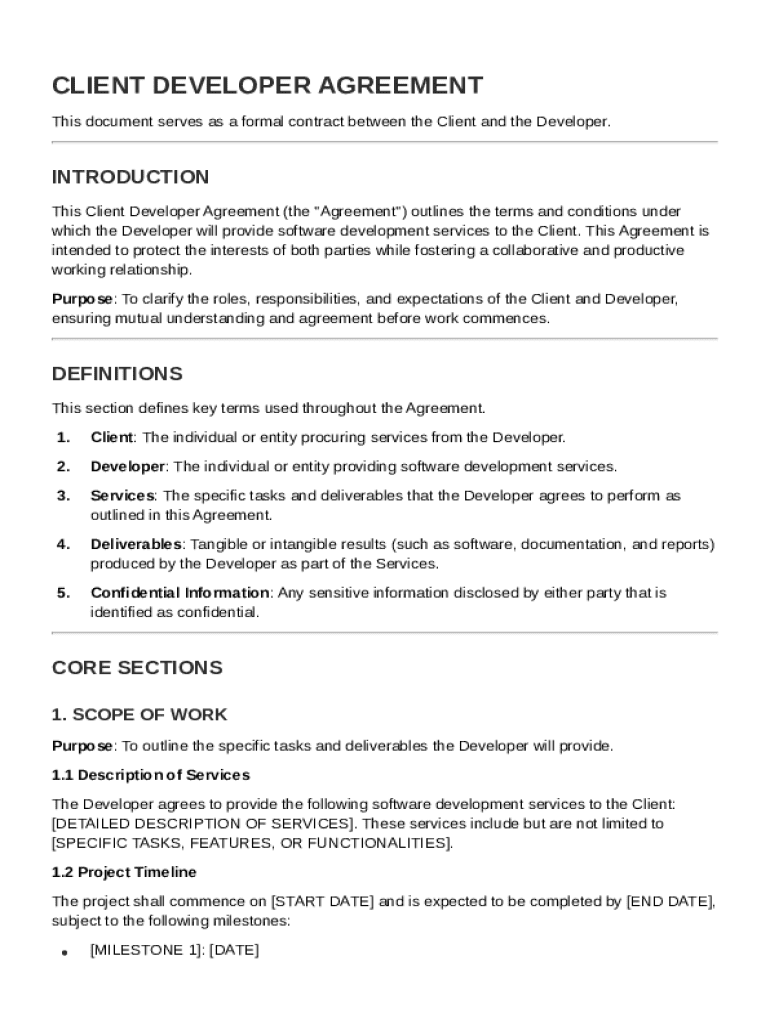







Key Elements of the Client Developer Contract Template
The Client Developer Contract Template is an essential document that streamlines the agreement process between a client and a developer. It includes various components that define the scope, terms, and responsibilities of each party involved. Key elements typically covered in the template include:
-
Scope of Work: This section outlines the specific tasks and deliverables the developer is responsible for. It includes timelines, project phases, and detailed descriptions of the work to be completed.
-
Compensation Structure: Detailing how and when the developer will be compensated is crucial. This may cover hourly rates, fixed project fees, payment milestones, and any bonuses or penalties associated with the project's progress or completion.
-
Intellectual Property Rights: It specifies who holds the ownership of the work product, which can include source code, design assets, and any associated documentation. This section is crucial to protect the innovations and efforts of the developer while ensuring the client receives the intended deliverable.
-
Confidentiality Obligations: Protecting sensitive business information is a priority. This section defines what information is considered confidential and the measures each party must take to ensure it remains undisclosed to unauthorized parties.
-
Warranties and Liabilities: This block outlines any guarantees provided by the developer and the limits of liability in case of errors or project failure. It helps to establish trust and reduces potential disputes.
-
Termination Conditions: Conditions under which the contract can be dissolved by either party, such as breach of contract, failure to meet obligations, or external factors like project funding changes, are laid out clearly.
-
General Provisions: This section includes miscellaneous terms such as dispute resolution processes, jurisdiction, and any amendments to the agreement.
Steps to Complete the Client Developer Contract Template
Filling out a Client Developer Contract Template involves several thoughtful steps to ensure all necessary details are covered:
-
Review Template: Start by thoroughly reading through the entire template to understand the sections and what information is required.
-
Add Parties' Information: Insert the names, addresses, and contact details of both the client and developer. This personalizes the contract and makes it binding upon signature.
-
Define the Scope of Work: Clearly describe the project with detailed deliverables, expected timelines, and milestones. Ensure this aligns with verbal or written agreements made in prior discussions.
-
Set Compensation Details: Specify the agreed payment terms, frequency, and any conditions attached to payments like completion of milestones or deliverables.
-
Detail Intellectual Property Rights: Make clear any ownership arrangements concerning the work produced and any necessary rights or licenses afforded to the client or developer.
-
Include Confidentiality Clauses: If applicable, detail the specifics of what should remain confidential and outline permissible uses of such information.
-
Outline Warranties and Liabilities: Include the extent of the developer's responsibilities for defects and the remedies for potential issues.
-
Specify Termination Conditions: Describe the acceptable circumstances under which the contract can be prematurely terminated alongside the notification process.
Legal Use of the Client Developer Contract Template
The legal validity of the Client Developer Contract Template relies upon several fundamental components that comply with U.S. law:
-
Mutual Agreement: Both parties must willingly agree to the terms. This is represented by signatures, which legally bind them to uphold the contract's contents.
-
Consideration: Each party must provide something of value. In most cases, this involves the provision of services by the developer and payment by the client.
-
Capacity to Contract: All parties involved must have the legal authority or capacity to enter into a binding agreement, typically meaning they are of sound mind and above the age of majority.
-
Legality of Purpose: The contract must be for lawful purposes. Any agreement made for illegal activities renders the contract void.
Important Terms Related to the Client Developer Contract Template
Understanding the terminology specific to the Client Developer Contract Template ensures clarity and prevents misunderstandings:
-
Deliverables: Specific outputs promised within the contract, often constituting various components of software, documentation, or design materials.
-
Milestones: Key stages of the project or within the development timeline that trigger specific actions, such as installments of payment.
-
Breach of Contract: An act of failing to comply with the agreement’s terms. Specifying what constitutes a breach and the consequences is crucial.
-
Force Majeure: Circumstances that prevent fulfillment of the contract due to events beyond control, such as natural disasters or political instability.
-
Assignment: The ability to transfer obligations or benefits within the contract to another party, depending on predefined conditions.
Who Typically Uses the Client Developer Contract Template
This contract template is widely utilized across multiple business sectors:
-
Startups: New businesses often engage developers for software solutions and need a clear contract to guide collaborations.
-
Freelancers: Independent developers use these templates to formalize their work agreements with clients, ensuring professionalism and clarity in the working relationship.
-
Small to Medium Enterprises (SMEs): To scale their operations, SMEs often require software development, making these contracts vital in defining terms clearly.
-
Large Corporations: Even established organizations may outsource specialized development work and require structured contracts to manage external collaborations.


State-Specific Rules for Client Developer Contracts
The application of this template can vary based on state laws, which affect contract enforceability:
-
Intellectual Property Laws: Certain states have distinct interpretations and rules regarding the assignment and protection of IP created during the course of a project.
-
Non-Compete Clauses: The enforceability of non-compete clauses varies by state; it's critical to adapt these clauses to comply with local laws or consult legal expertise.
-
Dispute Resolution: Preferences between litigation and mediation may depend on state laws or the standard practices within those jurisdictions.
Why You Should Use a Client Developer Contract Template
Utilizing this template provides multiple advantages:
-
Clarity and Structure: Detailed terms prevent miscommunications, clearly delineating each party's expectations, rights, and obligations.
-
Legal Protection: Proper use can safeguard both parties from legal disputes by providing a clear reference point in case of disagreements.
-
Professionalism: Having a formal document in place enhances the professional nature of interactions and may be pivotal in establishing trust.
-
Efficiency: Ready-made templates streamline the contract creation process, reducing the time and resources spent drafting from scratch.
Examples of Using the Client Developer Contract Template
Here are practical scenarios where this template shows its utility:
-
Software Project for Healthcare System: A medical software startup uses the template to reach a detailed agreement with a developer, covering sensitive patient data handling and compliance with healthcare regulations.
-
Website Development for E-commerce: An online retail company hires a freelancer to develop their platform, using the template to specify design expectations and the integration of payment systems.
-
Application Development for Financial Services: A bank contracts a developer to create a secure mobile app, leveraging the template to outline stringent security requirements and compliance with financial data protections.
Definition & Meaning of the Client Developer Contract Template
The Client Developer Contract Template serves as a pre-formatted document that parties can utilize to effectively outline and formalize agreements pertaining to custom software development services. Aimed at preventing misunderstandings, it comprehensively defines each party's responsibilities, expectations, and the legal framework governing the collaboration. This tool is essential in the digital age, where clear, precise agreements underpin successful project completions and professional relationships.




