
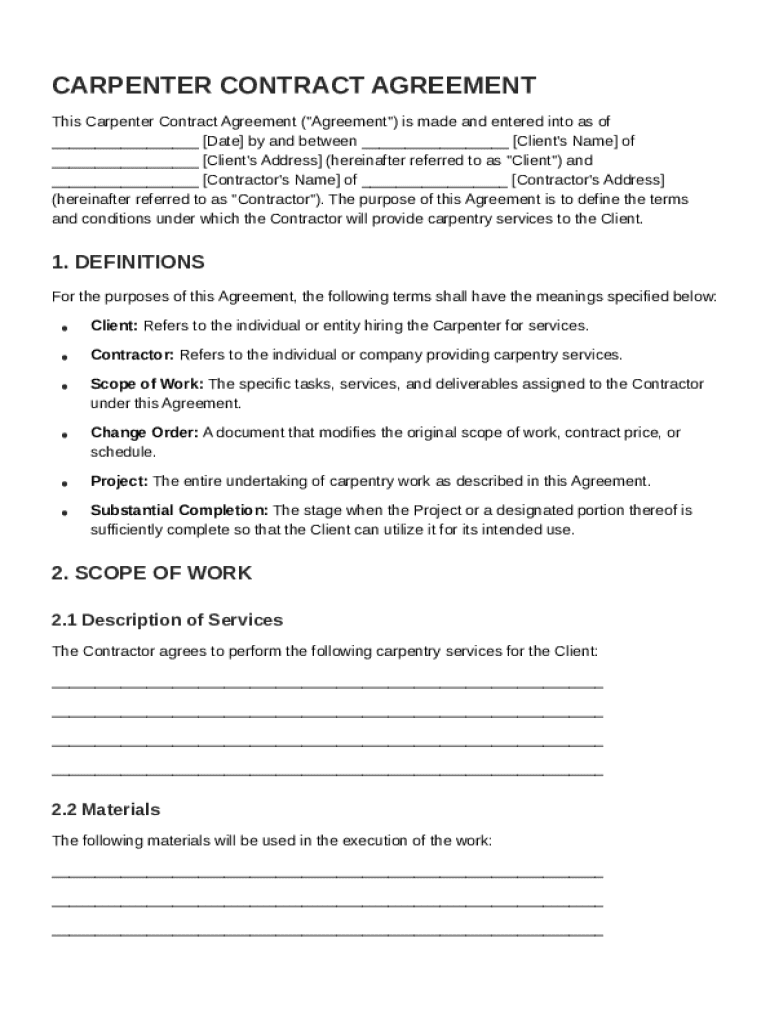







Definition and Purpose of the Carpenter Contract Template
The Carpenter Contract Template is a comprehensive document designed to outline the terms and conditions between a client and a contractor for carpentry services. It serves as a formal agreement that clarifies expectations and responsibilities, providing a structured framework for project execution. The template includes essential elements such as the scope of work, payment terms, project timeline, responsibilities of both parties, and procedures for change orders. By using this contract, both the client and contractor can ensure mutual understanding and minimize the potential for disputes.
Key Elements Included
- Scope of Work: Clearly defines the specific tasks and deliverables expected from the carpenter.
- Payment Terms: Lays out the financial agreements, including fees, payment schedule, and any applicable penalties for late payments.
- Project Timeline: Details the start and completion dates, along with any milestones or deadlines.
- Responsibilities: Outlines the obligations of both the client and contractor to ensure accountability.
How to Use the Carpenter Contract Template
Utilizing the Carpenter Contract Template requires a careful review and customization according to the specific project at hand. Users should follow these steps:
- Review the Template: Familiarize yourself with all sections of the template.
- Customize the Content: Tailor each section to reflect the unique aspects of your carpentry project, such as specific tasks and timelines.
- Consult Legal Advice: Consider having a lawyer review the contract to ensure compliance with local laws and regulations.
- Finalize the Document: Make any necessary adjustments based on legal counsel and ensure all sections are complete.
Tips for Effective Customization
- Include Detailed Descriptions: The more specific you are about the tasks and expectations, the better.
- Adjust Payment Schedules: Ensure that payment terms are feasible and reflect the cash flow needs of all parties.
Who Typically Uses the Carpenter Contract Template
This template is widely used by both individual clients seeking carpentry services and professional contractors offering such services. It is particularly valuable for:
- Independent Carpenters: Individuals providing specialized carpentry work and requiring formal agreements.
- Construction Companies: Businesses involved in larger projects that incorporate carpentry as a component of broader construction services.
- Homeowners and Property Managers: Clients who are hiring contractors for residential or commercial improvements.


Common Use Cases
- Home Renovations: Setting clear expectations for remodeling tasks.
- Commercial Projects: Formalizing the terms of carpentry services in office or retail spaces.
Legal Use of the Carpenter Contract Template
To ensure that the Carpenter Contract Template is legally enforceable, it must be drafted with precision and adherence to applicable laws. Here are some considerations:
Compliance and Enforceability
- State Laws: Be aware that contract laws can vary by state, affecting enforceability.
- Legal Language: Utilize clear legal terminology to avoid ambiguities that could lead to disputes.
Incorporating Legal Protections
- Dispute Resolution: Include clauses that outline mediation or arbitration processes in case of disagreements.
- Warranties and Liabilities: Specify the warranties on workmanship and any liabilities for defects.
Steps to Complete the Carpenter Contract Template
Filling out the Carpenter Contract Template involves several key steps to ensure accuracy and completeness:
- Gather Necessary Information: Include all relevant details such as names, addresses, and contact information for both parties.
- Define the Scope of Work: Provide a thorough description of the work to be performed.
- Detail the Financial Arrangements: Specify the payment terms, including amounts, due dates, and payment methods.
- Set Completion Criteria: Indicate conditions for project completion and delivery standards.
- Include Signature Fields: Ensure that there are spaces for both parties to sign and date the document.
Important Terms Related to the Carpenter Contract Template
Understanding key terms associated with this contract can aid in its effective use:
- Change Order: A formal alteration to the original scope of work or terms.
- Force Majeure: A clause that frees parties from liability during unforeseeable events that prevent contract fulfillment.
- Retainage: A portion of the contract sum withheld until final completion of the work.
Examples of Other Relevant Terms
- Lien Waiver: Prevents the contractor from placing a lien on the property upon payment.
- Performance Bond: A guarantee provided by a third party to ensure the completion of the work.
Software Compatibility for Document Management
The Carpenter Contract Template can be managed using software platforms like DocHub, which offer compatibility with a variety of file formats beyond PDF. These platforms provide:
- Easy Editing and Annotation: Tools to add text, images, and comments directly onto documents.
- Secure Sharing: Options to set permissions and share documents securely with other parties.
Benefits of Integrated Platforms
- Real-Time Collaboration: Multiple users can work on the document simultaneously.
- Digital Signature Capabilities: Legally binding electronic signatures enhance efficiency and compliance.
State-Specific Rules for the Carpenter Contract Template
While a general template provides a foundation, it's crucial to adjust your contract to adhere to specific state regulations, which may impact certain clauses or terms. Key considerations include:
- License Requirements: Many states require carpenters to be licensed or registered, which should be reflected in the contract.
- Permits and Inspections: Include clauses regarding necessary permits or inspections pertinent to the project location.
Adapting to Regional Differences
- State-Specific Language: Be sure that terminologies comply with local jurisdictions.
- Governing Law and Jurisdiction: Clearly state which state’s laws will govern the contract.




