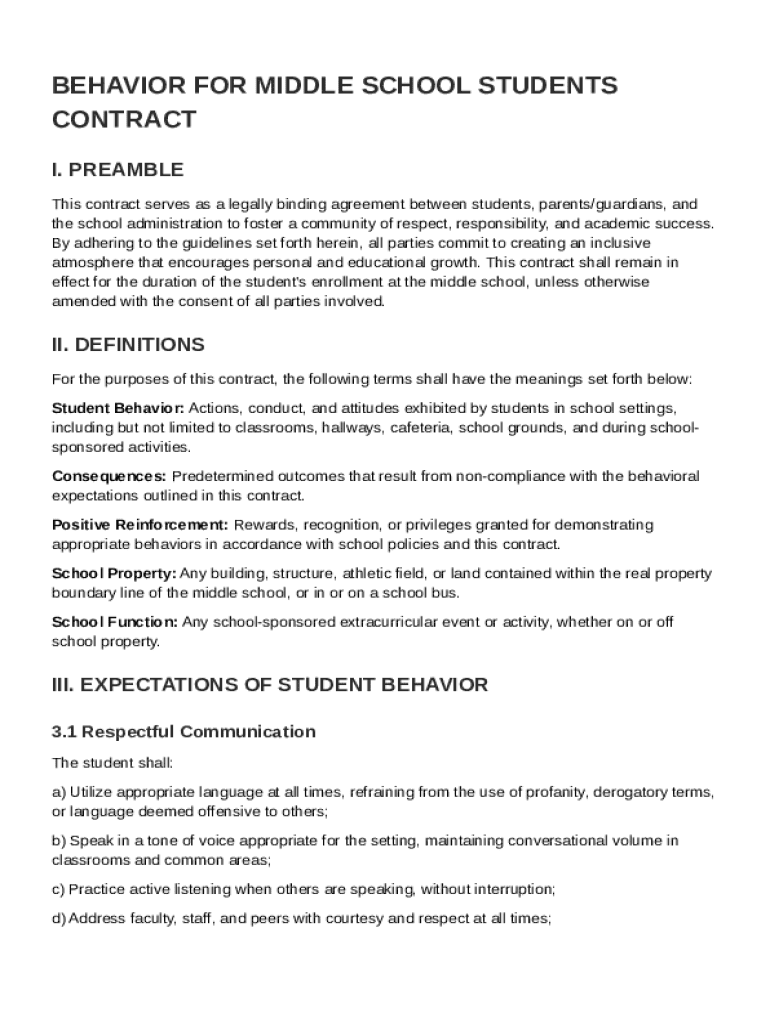







Definition & Meaning
A Behavior Contract for Middle School Students is a formal agreement that outlines the expectations for student behavior within a school setting. This contract serves as a mutual understanding between the student, their parents or guardians, and the school administration. The document is designed to promote a respectful and responsible school environment, contributing positively to both academic success and personal development. In essence, it ensures that all parties are clear on the standards of behavior expected and the consequences of not adhering to these standards.
How to Use the Behavior Contract Template
To effectively utilize the Behavior Contract template, various steps should be followed to ensure clarity and comprehensiveness:
-
Customize the Template:
- Adjust sections as necessary to reflect specific expectations and guidelines applicable within your school.
- Include school-specific policies or add unique behavior expectations relevant to the middle school level.
-
Incorporate Stakeholder Input:
- Engage both teachers and school administrators to verify that the guidelines are applicable and relevant.
- Allow space for parents or guardians to contribute their expectations or suggestions where appropriate.
-
Explain Terms Clearly:
- Define specific terms used within the contract to avoid ambiguities.
- Use straightforward language to ensure comprehensive understanding by both students and guardians.
Steps to Complete the Behavior Contract Template
Filling out the Behavior Contract template systematically ensures that all necessary information is captured correctly:
-
Identify Participant Information:
- Start by inserting the names and relevant details of the student, parents or guardians, and related school officials.
-
Outline Expectations:
- Clearly specify the desired behaviors and set boundaries for acceptable and unacceptable conduct within the school.
-
Define Responsibilities:
- Detail the responsibilities of each participant, including students, parents/guardians, and the school.
-
Specify Consequences:
- State clearly the consequences of non-compliance with the outlined behaviors.
-
Include Positive Reinforcement Strategies:
- Describe how positive behavior will be encouraged and rewarded.
-
Finalize the Document:
- Ensure all parties sign and date the contract to confirm understanding and agreement.
-
Distribute Copies:
- Provide copies of the signed contract to each participating party to maintain record consistency.
Key Elements of the Behavior Contract
Fundamental elements crucial to a well-structured Behavior Contract include:
-
Expected Behaviors:
- A comprehensive list detailing acceptable behaviors within the school environment, tailored to middle school students.
-
Roles and Responsibilities:
- Clarification of each participant's role in fostering the agreed-upon behavior model.
-
Consequences for Non-Compliance:
- Predefined outcomes for failing to adhere to the behavior guidelines, ensuring transparency.
-
Positive Reinforcement:
- Strategies to reward exemplary behavior and encourage ongoing adherence to conduct guidelines.
-
Signature Section:
- A dedicated area for signing, affirming that each participant has read and agreed to the contract terms.
Why Use the Behavior Contract Template
Adopting the Behavior Contract template brings numerous advantages, such as:
-
Structured Guidance:
- Provides a clearly defined framework for behavior management within the school.
-
Accountability:
- Ensures that students are aware of the expectations and repercussions, fostering a sense of accountability.
-
Parental Involvement:
- Actively involves parents or guardians in reinforcing appropriate behaviors, potentially improving school-home relations.
-
Enhanced Learning Environment:
- Contributes positively to establishing a conducive learning atmosphere, focusing on respect and mutual understanding.
Legal Use of the Behavior Contract Template
Integrating the Behavior Contract into school operations is supported legally by ensuring compliance with existing educational regulations. Critical considerations include:
-
Legal Review:
- Engage with legal advisors to ensure the contract complies with local and federal educational guidelines.
-
Compliance with School Policies:
- Align the contract's provisions with the school's broader code of conduct and policies.
-
Data Protection:
- Ensure the confidentiality and secure handling of all personal information contained within the contract.
State-Specific Rules for Behavior Contracts
Behavior Contracts may be subject to specific state educational regulations. Key considerations include:
-
State Educational Guidelines:
- Be cognizant of any state-mandated behavior management policies that could affect the contract's terms.
-
Customary Practices:
- Adapt the contract according to state-specific customary approaches to student discipline.
-
Legal Precedents:
- Consult state legal precedents and statutes to inform any adaptations or customizations.
Examples of Using a Behavior Contract
Real-world scenarios illustrate the effectiveness of Behavior Contracts:
-
Case Study 1:
- In a middle school in California, a behavior contract led to a 30% reduction in classroom disruptions over one semester.
-
Case Study 2:
- A school in New York implemented behavior contracts that saw improved communication and collaboration between parents and teachers.
These examples reflect how behavior contracts can effectively cultivate an environment of respect and cooperation within educational settings.