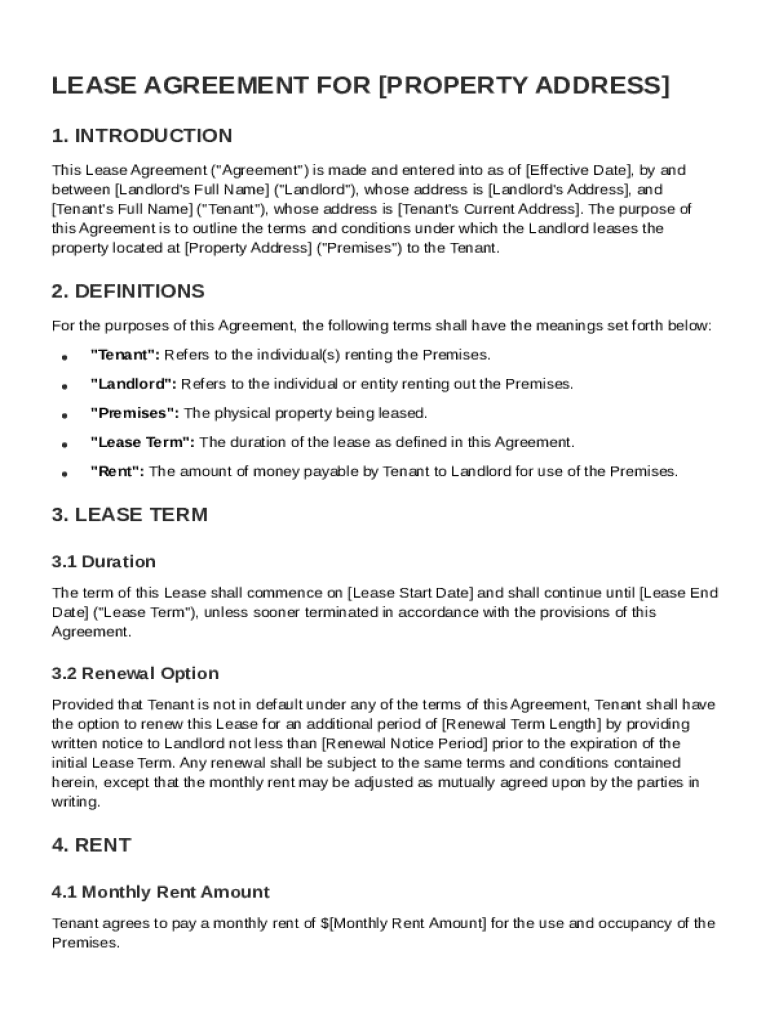







Definition and Purpose of a Lease for Property Agreement Template
A Lease for Property Agreement Template is a comprehensive document used to formalize the legal and contractual relationship between a landlord and a tenant. This template serves as the foundation of the leasing agreement by detailing all the necessary clauses and stipulations involved in renting a property. Generally, it includes terms about rent payment, lease duration, security deposits, and maintenance responsibilities, among others. By providing a structured format, this template ensures all pertinent information is covered, mitigating potential disputes and misunderstandings between parties. A well-crafted lease agreement template offers clarity and peace of mind to both landlords and tenants by outlining their rights, duties, and obligations per real estate law guidelines.
Key Elements and Clauses
Several essential components are typically included in a Lease for Property Agreement Template, each serving a critical role in the leasing process:
- Identification of Parties: Clearly names and identifies both the landlord and tenant involved in the agreement.
- Property Description: Details of the property being rented, including address and any specific attributes or restrictions.
- Lease Term: Specifies the duration of the lease, including start and end dates, and any renewal terms.
- Rent Details: Outlines the agreed-upon rent amount, payment due dates, acceptable payment methods, and any late fees or penalties.
- Security Deposit: Explains the amount of the security deposit, the conditions for its return, and circumstances under which deductions may be made.
- Maintenance and Repairs: Clarifies the responsibilities for property upkeep and details who covers the cost of repairs.
- Use and Restrictions: Specifies the permissible use of the property and any prohibitions, such as smoking or having pets.
This template ensures comprehensive coverage of these elements, providing a robust foundation for any leasing transaction.
Steps to Complete the Template
Completing the Lease for Property Agreement Template requires careful attention to each section:
- Review the Template: Start by familiarizing yourself with all sections of the template to understand what information is required.
- Fill in Party Information: Enter the complete names and contact details of both the landlord and tenant.
- Describe the Property: Provide accurate details about the rental property, ensuring no ambiguity.
- Specify Lease Terms: Clearly outline the lease duration, including start and end dates, and conditions for contract renewal.
- Determine Rent Details: Write in the agreed-upon rent, including payment terms, due dates, and penalties for late payments.
- Include Additional Clauses: Add any special provisions or conditions specific to your agreement, such as pet policies or rules for subletting.
- Review and Sign: Both parties should thoroughly review the lease agreement for accuracy before signing, ensuring mutual understanding and agreement.
Legal Compliance and Enforcement
Using a Lease for Property Agreement Template involves understanding its legal implications:
- Legal Validity: Ensure the template complies with local real estate laws and regulations to be legally enforceable.
- State-Specific Requirements: Some states have specific rules regarding lease agreements, so adapting the template to reflect state laws is crucial.
- Dispute Resolution: The agreement should include mechanisms for resolving disputes, be it through mediation, arbitration, or court procedures.
- Rights and Obligations: Clearly outline the rights and responsibilities of both parties to prevent future legal conflicts.
Being mindful of these requirements can fortify the lease agreement against potential legal challenges.
Common Users and Their Considerations
The Lease for Property Agreement Template is commonly utilized by a variety of individuals and entities:
- Landlords and Property Managers: Use this template to efficiently manage rental properties while ensuring all legal aspects are covered.
- Tenants: Helps tenants understand their leasing terms and protect their rights in a rental agreement.
- Legal Professionals: Lawyers and legal consultants can provide their clients with customized templates that comply with specific legal standards.
- Real Estate Agents: Facilitate the leasing process by providing a ready-to-use, standardized document for all parties involved.
Each user must tailor the template to fit their specific role and needs in the leasing transaction.


Benefits of Using a Standardized Template
Adopting a standardized Lease for Property Agreement Template comes with several advantages:
- Consistency: Ensures a uniform approach to leasing across different properties, which simplifies management for landlords or property managers handling multiple agreements.
- Efficiency: Saves time by providing a ready-made structure that only requires filling out specific details.
- Risk Mitigation: By explicitly listing terms and conditions, it helps reduce the risk of misunderstandings or disputes.
- Professionalism: Offers a polished and professional document that reflects seriousness and due diligence.
These benefits make a lease template an invaluable tool for any rental situation.
State-by-State Differences
Lease agreements might need modifications based on varying state regulations within the United States:
- Security Deposit Laws: Regulations around allowable amounts and conditions for withholding deposits differ by state.
- Landlord Entry: Legal requirements regarding the notice period a landlord must provide before entering a property vary.
- Lease Termination Procedures: State laws can dictate notice periods and valid reasons for terminating a lease prematurely.
- Disclosure Requirements: Some states may require specific disclosures, like those pertaining to environmental hazards or previous renovations.
Adapting the lease template to comply with state-specific legal requirements is critical for ensuring a lawful leasing arrangement.