
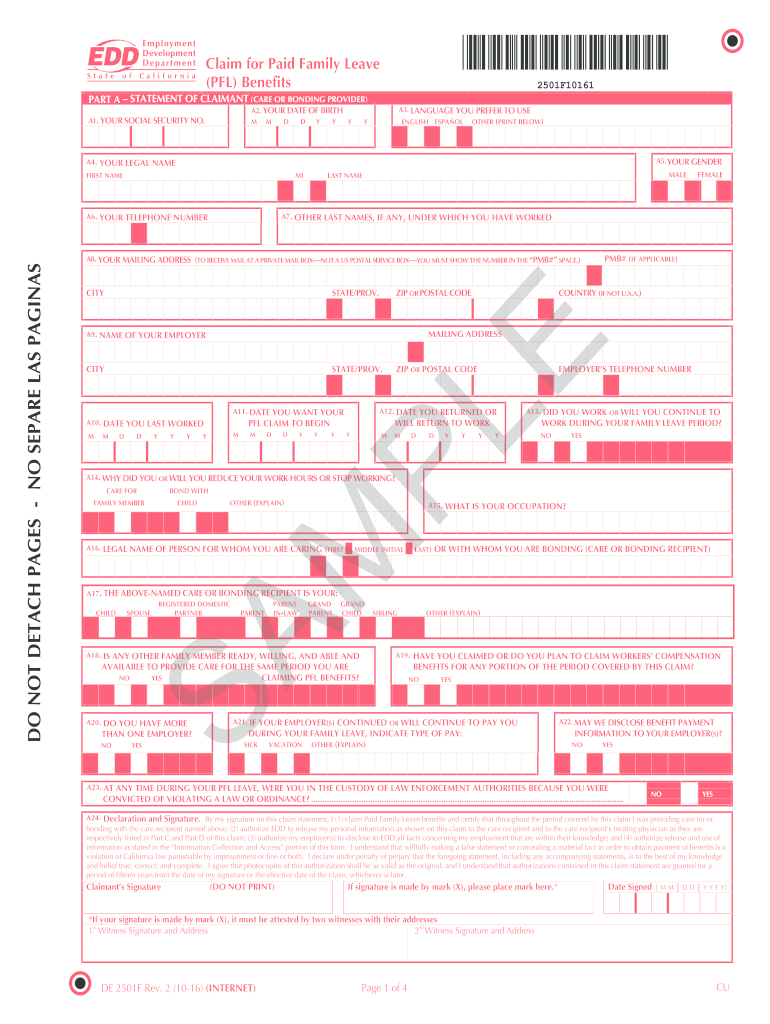







Overview of the Paid Family Leave Form
The paid family leave form sample is a crucial document for individuals seeking benefits to provide care or bond with a family member. It outlines necessary information and steps required to file a claim for paid family leave (PFL) benefits, ensuring that all required documentation is submitted correctly for approval.
Required Information When Filing the Form
The completion of the paid family leave form necessitates specific personal and employment details. Claimants must provide:
- Personal Identification: Full name, address, phone number, and Social Security number.
- Employment History: The employer’s name, location, and contact information. Include the length of employment and job title.
- Leave Reasons: Clear explanations for the need for leave, such as caring for a seriously ill family member or bonding with a newborn.
- Medical Authorization: Consent for the release of medical information is often required, verifying the legitimacy of the claimed leave reason.
Incomplete or inaccurate information can lead to delays in processing the claim or potential denials.
Types of Leave Covered Under Paid Family Leave
Paid family leave encompasses various situations qualifying for benefits, including:
- Child Bonding: Time off to bond with a newborn or a newly adopted child.
- Family Care: Leave to care for a spouse, child, or parent who has a serious health condition.
- Military Family Leave: Situations involving care for a loved one who is a service member, especially during deployment.
Understanding these categories ensures claimants apply for the correct benefits, as different situations may require additional documentation.
Important Supporting Documents for Submission
Alongside the paid family leave form, claimants must submit several supporting documents:
- Doctor's Certification: This may include medical records or a health care provider's note confirming the serious health condition of the individual requiring care.
- Proof of Relationship: Documentation establishing the claimant's relationship to the family member, such as a birth certificate or adoption papers.
- Employment Verification: This can involve pay stubs or a letter from the employer confirming the claimant's employment status and tenure.
Ensuring all necessary documents are included with the initial submission can speed up the approval process.
The Signing Process and Legal Requirements
To finalize the paid family leave form, signatures from the designated parties must be provided:
- Claimant’s Signature: The individual applying for leave must sign the form, confirming the accuracy of the information submitted.
- Care Recipient’s Signature: If applicable, the individual receiving care may also need to sign, particularly if required by state regulations.
All signatures need to be dated and may require witness signatures, ensuring compliance with legal standards. This step is essential for maintaining the document's validity and adhering to state requirements.
Submission Methods for the Paid Family Leave Form
Claimants have multiple options for submitting the paid family leave form:
- Online Submission: Many states offer web portals where forms can be uploaded directly. This is often the fastest method.
- Mail: Claimants can send printed forms via postal service. It is vital to use certified mail for tracking purposes.
- In-Person: Some individuals might choose to submit the form directly at a local office. This method can provide immediate confirmation of receipt.
Each submission method may have varying processing times, with online submissions generally being the quickest.
Tracking the Status of Your Claim
After submission, claimants can track the status of their paid family leave claim to ensure everything is proceeding as expected. This often involves:
- Online Portals: Most states maintain a system where claimants can log in to view the claim status.
- Contacting Customer Service: If online tracking is unavailable, reaching out to customer service through phone or email can provide updates.
Staying informed about the claim status helps claimants understand when benefits will begin and can allow for timely follow-up if issues arise.
Frequently Asked Questions (FAQs) About Paid Family Leave
-
What happens if my claim is denied?
A denial often leads to an appeal process where additional documentation may be required to substantiate the claim. -
Can I apply for PFL if I work part-time?
Yes, part-time employees may still be eligible for benefits, depending on their employment duration and employer policies. -
How long does it take to process the claim?
Processing times can vary by state, but typically it takes between two to four weeks.
By understanding these aspects of the paid family leave form, claimants can navigate the application process more efficiently, increasing the likelihood of a successful claim.




