






Definition & Purpose of the Second Mortgage Agreement Template
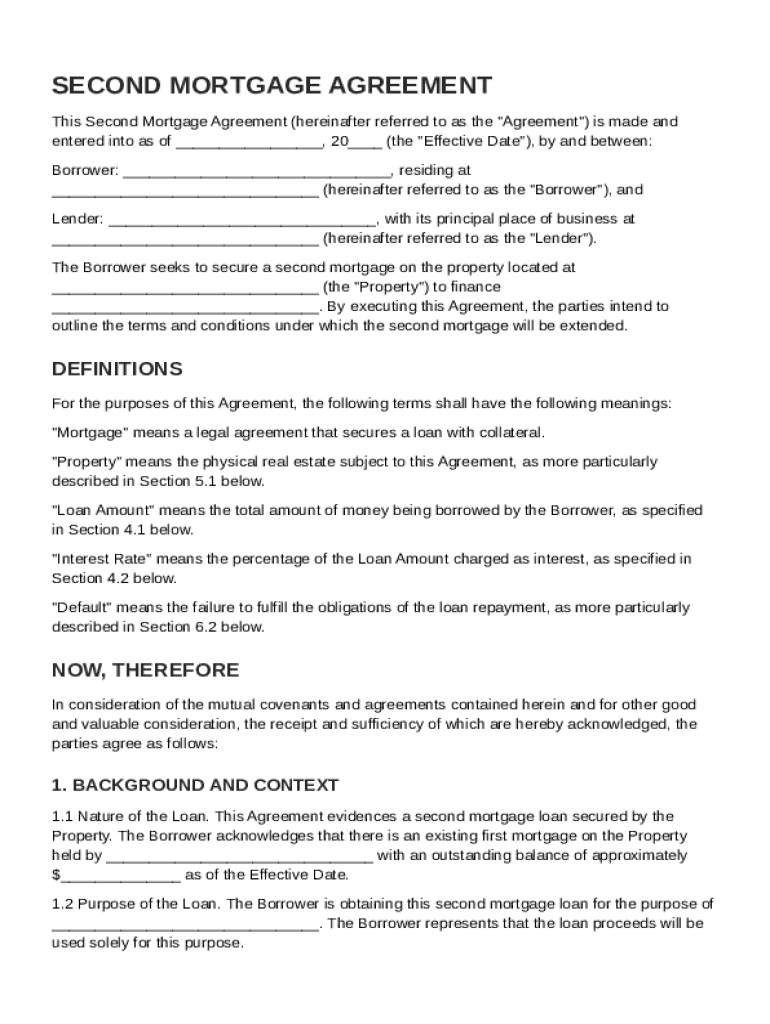
A second mortgage agreement template is a standardized legal document used to formalize the agreement between a borrower and a lender when a secondary loan is taken out on a property that already has a primary mortgage. The template outlines the terms and conditions under which the second mortgage is secured, including the loan amount, interest rates, repayment schedule, and implications of default.
- Loan Amount and Interest: Details surrounding the principal amount borrowed and the interest rate applicable. This often varies based on lender policies and borrower creditworthiness.
- Repayment Terms: A clear schedule of when and how the repayment of the loan will occur, including the duration and frequency of payments.
- Default Conditions: Specific conditions under which the borrower could default, what constitutes default, and the resultant actions the lender can legally take.
How to Use the Second Mortgage Agreement Template
Effectively utilizing a second mortgage agreement template involves a few key steps. First, ensure the form is customized to accurately reflect the specifics of the mortgage deal.
- Input Accurate Information: Fill in all the relevant fields with the borrower's and lender's details, loan specifics, and property information.
- Review Terms: Carefully examine all terms and conditions to ensure they align with what was verbally agreed upon.
- Consult with Legal Professionals: Before signing, have a qualified legal professional review the document to ensure enforceability and that it complies with local laws.
Key Elements of the Second Mortgage Agreement Template
The template contains several critical sections detailing the obligations and rights of both parties involved in the agreement.
- Security Interest: Establishes that the property serves as collateral for the loan.
- Representations and Warranties: Statements by both parties attesting to their legal capacity and authority to enter into the agreement.
- Governing Law: Designation of the state's laws under which the agreement will be interpreted and enforced.
- Miscellaneous Provisions: Covers various other contract terms like amendments, waivers, and notices.
Who Typically Uses the Second Mortgage Agreement Template
This template is primarily utilized by individuals and financial institutions engaged in real estate financing and transactions.
- Homeowners: Borrowers looking to tap into their home equity for renovation, debt consolidation, or other financial needs.
- Lenders and Financial Institutions: Banks and credit unions that provide or offer second mortgage products.
- Real Estate Professionals: Legal and real estate practitioners who facilitate mortgage transactions on behalf of clients.


Legal Use and Compliance in the U.S.
In the U.S., the use of second mortgage agreements is regulated to protect both borrower and lender interests. Compliance with federal and state mortgage lending laws is crucial.
- Regulatory Compliance: Ensure adherence to federal mortgage lending regulations like the Truth in Lending Act (TILA).
- State-Specific Requirements: Some states may have additional regulations or required disclosures when obtaining a second mortgage.
- Enforcement of Terms: The document becomes enforceable when both parties agree and execute it under the applicable legal guidelines.
Important Terms Related to the Second Mortgage Agreement
Understanding key terms is essential for clarity and proper use of the template.
- Lien Position: Second mortgages hold a subordinate lien position to the first mortgage, meaning they are paid only after the first mortgage at foreclosure.
- Amortization: Indicates how loan repayments will gradually cover both principal and interest over time.
- Equity: The value of the homeowner's interest in their property after accounting for the first mortgage.
Examples of Using the Second Mortgage Agreement Template
Practical examples illustrate how the template might be used in various scenarios.
- Home Renovation Project: A homeowner takes out a second mortgage to finance a significant home improvement project, enhancing property value.
- Debt Consolidation: Utilizing a second mortgage to consolidate higher-interest debt, achieving lower overall interest costs.
- Educational Financing: Borrowers tapping into their home equity to fund educational expenses can use this template to structure the arrangement.
Software Compatibility and Document Management
DocHub enhances efficiency by enabling easy editing, sharing, and signing of the second mortgage agreement template.
- File Interoperability: The platform supports multiple file types, allowing for easy import and editing of mortgage documents.
- Security and Privacy: Top-level encryption and authentication ensure that sensitive information within the agreement remains secure.
- Integration with Google Workspace: Facilitates seamless document management and storage with Google Drive and Gmail, enhancing workflow efficiency.