




01. Edit your sample letter banning someone from property online
Type text, add images, blackout confidential details, add comments, highlights and more.

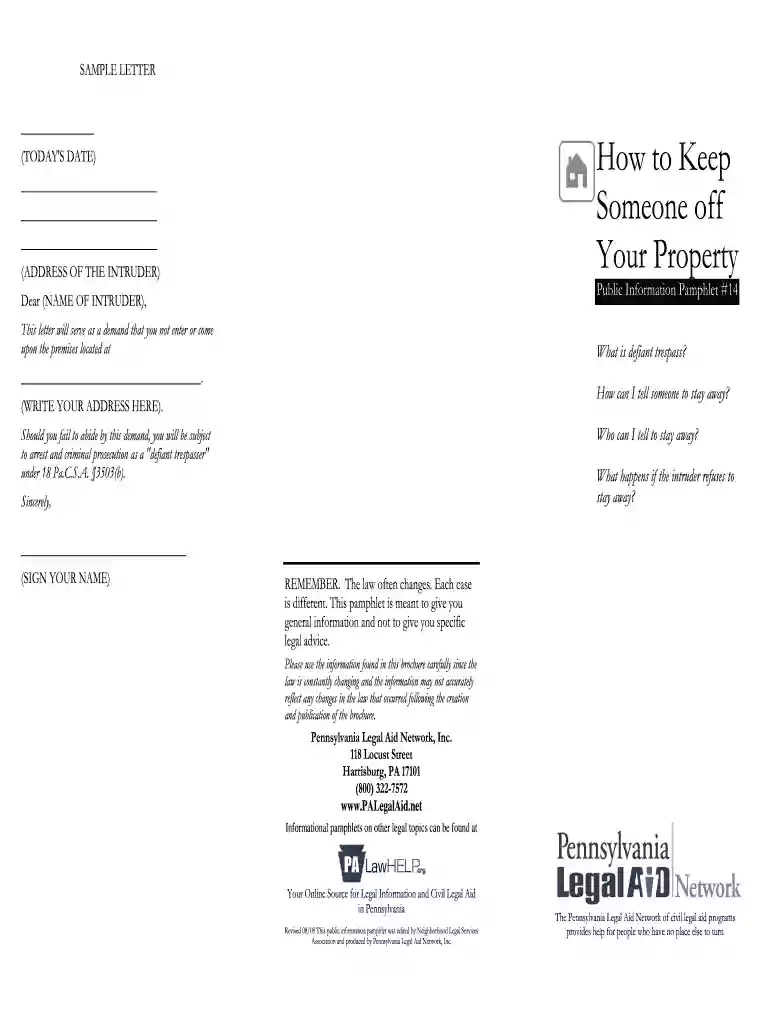
Type text, add images, blackout confidential details, add comments, highlights and more.

Draw your signature, type it, upload its image, or use your mobile device as a signature pad.

Send letter to ban someone from property via email, link, or fax. You can also download it, export it or print it out.
A letter to ban someone from property serves as a formal notification that explicitly prohibits an individual from entering or remaining on a specified piece of property. Such letters are commonly used by property owners, landlords, business proprietors, and certain organizations to legally convey boundaries regarding access to their property. This type of communication provides clarity regarding exclusions and can help avoid misunderstandings that may arise from unauthorized presence.
The concept is crucial in contexts where individuals need to be kept off private land or business premises, particularly in cases involving threats, harassment, or previous incidents of trespassing. By legally documenting the ban, the property owner establishes a record that may be necessary for potential future actions, such as involving law enforcement or pursuing legal recourse.
When constructing a letter to ban someone from property, consider the following critical elements to ensure clarity and legal effectiveness:
Date of the Letter: Clearly indicate the date on which the letter is written. This helps establish a timeline for any potential legal actions that may follow.
Property Description: Provide a specific description of the property being referenced. Include details such as the address, landmarks, or any identifiable features.
Recipient's Information: Include the full name of the individual being banned. This personalization is crucial for legal validity.
Reason for the Ban: Briefly explain the rationale behind the decision to ban the individual, citing any relevant incidents or behaviors that have prompted this action. This context is essential for future reference.
Effective Date of the Ban: State when the ban takes effect. This information allows the recipient to understand the immediacy of the directive.
Legal Consequences: Mention the potential legal repercussions if the individual fails to comply with the ban. This can deter further unwanted behavior.
Contact Information: Offer the contact details of the property owner or their representative. This provides an avenue for the banned individual to respond or seek clarification if necessary.
To draft a letter effectively banning someone from property, follow this structured approach:
Gather Necessary Information: Collect data about the property, the individual's information, and any incidents that justify the ban.
Draft the Letter:
Justify the Ban: Include a brief explanation of why the ban is necessary. Ensure it is factual and concise.
Review Legal Requirements: Check any relevant state laws about ban letters to ensure compliance.
Sign and Date the Letter: Conclude with a signature and date to authenticate the letter.
Send the Letter: Deliver the letter using an appropriate method, such as certified mail, which provides proof of delivery.
Keep a Copy: Retain a copy of the letter for your records to include as evidence in case of future disputes.
A letter to ban someone from property serves a vital role in legal contexts. Its validity is often supported by state trespassing laws, which dictate how property owners can enforce their rights against unauthorized entry. Here are key legal considerations:
Property Rights: Landowners hold the right to control who enters their property. A formal ban reinforces this right and notifies the individual of boundaries.
Documentation: Should a conflict escalate, having a written record of the ban can serve as important evidence in court. It demonstrates that the property owner made efforts to communicate their wishes.
Enforcement: If the banned individual re-enters the property, the letter can facilitate law enforcement involvement. Officers may rely on the documentation when responding to trespassing incidents.
State-Specific Laws: Laws regarding property bans can vary by state, so it is crucial to familiarize oneself with local regulations to ensure the letter is enforceable.
Here are practical scenarios where a letter to ban someone from property is beneficial:
Residential Properties: A landlord may issue a ban letter to an unauthorized tenant who has been disruptive or violated lease terms, making it clear that the individual is no longer welcome.
Business Settings: A retail store owner may issue a letter to a person who has previously stolen merchandise or threatened staff, formally prohibiting the individual from entering the store again.
Event Venues: A venue that hosts events can use this type of letter to limit access to individuals who have previously caused disruptions or engaged in behavior that contradicts venue policies.
Public Places: Organizations managing public parks or community areas may utilize bans against individuals who have repeatedly disregarded posted rules or engaged in illegal behavior.
By utilizing a letter to ban someone from property, individuals and organizations not only safeguard their premises but also create a formalized record that upholds their rights.
We've got more versions of the sample letter banning someone from property form. Select the right sample letter banning someone from property version from the list and start editing it straight away!
| Versions | Form popularity | Fillable & printable |
|---|---|---|
| 2008 | 4.8 Satisfied (61 Votes) |
At DocHub, your data security is our priority. We follow HIPAA, SOC2, GDPR, and other standards, so you can work on your documents with confidence.
Only list these page properties ( action=querylist=pagepropnames returns page property names in use). ban, bar, bbc, bbc-latn, bcc, bcl, be, be-taraskRead more
Jun 1, 2024 The purpose of this policy is to establish guidelines for issuance of a no-trespass (ban) notice to a person.Read more
The below named person was found on the premises owned, occupied or managed by . This same person is hereby warned to stay off the property and grounds.Read more


