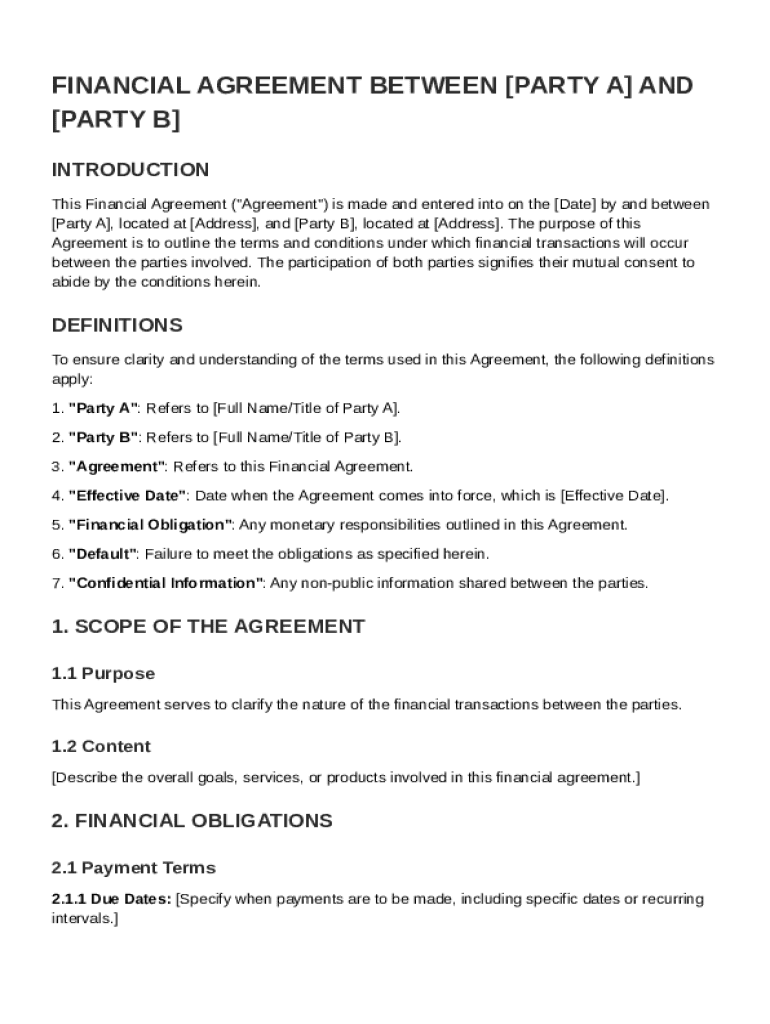







Definition & Purpose of a Financial Contract Template
A Financial Contract Template serves as a standardized document outlining the terms and conditions of financial transactions between two or more parties. This template is crucial for ensuring clear communication and mutual understanding regarding payment terms, obligations, confidentiality, dispute resolution, and termination clauses. By using a template, parties can efficiently manage financial interactions and reduce the time spent on drafting new agreements from scratch. Its standardized nature helps maintain consistent legal language and structure, facilitating smoother negotiations and reduced legal intervention.
Key Elements of a Financial Contract Template
A comprehensive Financial Contract Template typically includes several essential components to ensure all aspects of the financial agreement are covered. Important elements often featured in such templates include:
- Definitions: Establishes the meaning of specific terms used throughout the contract to prevent misunderstandings.
- Payment Terms: Defines how, when, and in what form payments will be made between parties, outlining any applicable penalties for late payments.
- Obligations of Parties: Details the specific duties and responsibilities of each party involved in the contract.
- Confidentiality Clauses: Protects sensitive information by stipulating conditions under which information may be shared or disclosed.
- Dispute Resolution: Provides mechanisms for resolving disagreements, often including negotiation, mediation, or arbitration.
- Termination Clauses: Specifies conditions under which the contract can be terminated and any ramifications.
Steps to Complete the Financial Contract Template
Completing a Financial Contract Template involves several sequential steps to ensure accuracy and compliance. Here is a step-by-step guide to filling out the template:
- Identify Parties: Clearly list all parties involved in the transaction, including their legal names, addresses, and contact information.
- Define Terms: Fill in the specific terms related to payments, obligations, and any unique conditions relevant to the transaction.
- Review Clauses: Go through the confidentiality, dispute resolution, and termination clauses to ensure they meet the needs of all parties involved.
- Consult Legal Counsel: Engage a legal professional to review the draft and ensure compliance with relevant laws and regulations.
- Sign and Date: All parties must sign and date the contract to formalize the agreement, securing mutual consent and understanding.
Legal Use and Compliance of the Financial Contract Template
Financial Contract Templates must comply with relevant legal standards to ensure enforcement in court if disputes arise. Typically, the template:
- Adheres to the Uniform Commercial Code (UCC): Particularly relevant for commercial transactions, ensuring that the contract meets standardized legal requirements.
- Respects State Laws: State-specific rules may apply, especially where interest rates and penalties are involved, making it crucial to customize the template based on jurisdiction.
- Ensures Legal Language Clarity: The use of clear and precise language helps in upholding the contract's enforceability.
- Provides Disclosure Requirements: Any pertinent information required by law must be disclosed within the template.
Important Terms Related to Financial Contract Template
Understanding key terms within a Financial Contract Template is vital for proper implementation and compliance. Some of these include:
- Consideration: Refers to the value exchanged between the parties, which is necessary for contract formation.
- Force Majeure: Covers circumstances that prevent fulfillment of contractual obligations due to events beyond control, like natural disasters.
- Breach of Contract: A situation where one party fails to deliver upon agreed-upon terms, potentially leading to legal consequences.
- Remedies: Specifies actions that can be taken in case of a breach, including compensation or contract rescission.
Who Typically Uses the Financial Contract Template
The Financial Contract Template is a valuable tool for various entities and individuals that require formal agreements on financial transactions. Common users include:
- Businesses and Corporations: Use them to formalize transactions, loans, and service agreements.
- Freelancers and Contractors: Benefit from templates to ensure payment and clarify service expectations with clients.
- Lenders and Creditors: Utilize them for loan agreements, outlining repayment schedules and interest terms.
- Partnerships: Found helpful in defining financial responsibilities and profit-sharing arrangements between partners.


State-Specific Rules for the Financial Contract Template
State regulations can influence the content and enforceability of Financial Contract Templates. Each state may impose distinct requirements that users must be aware of to ensure compliance:
- Interest Rate Caps: Some states have laws capping interest rates on loans, affecting terms you can legally include in the template.
- Termination Notices: Varying requirements exist for how and when parties must notify each other of contract termination.
- Witness and Notarization Requirements: While not mandatory everywhere, specific states may require contracts to be witnessed or notarized.
Understanding these rules is crucial for navigating the legal landscape pertinent to financial contracts.
Examples of Financial Contract Template Usage
Financial Contract Templates are versatile and can be adapted to various scenarios. Awareness of how these templates are applied can provide insights into their broader applicability:
- Loan Agreements: Establish clear repayment terms and consequences for default, reducing the risk of misunderstandings.
- Lease Agreements: Detail payment duties, maintenance responsibilities, and termination conditions between lessors and lessees.
- Purchase Agreements: Used in sales transactions to outline payment schedules, delivery terms, and return policies.
By tailoring the template to different contexts, users can ensure adaptable yet comprehensive contract coverage in any financial setting.