






Definition and Purpose of the First Right of Refusal Agreement Template
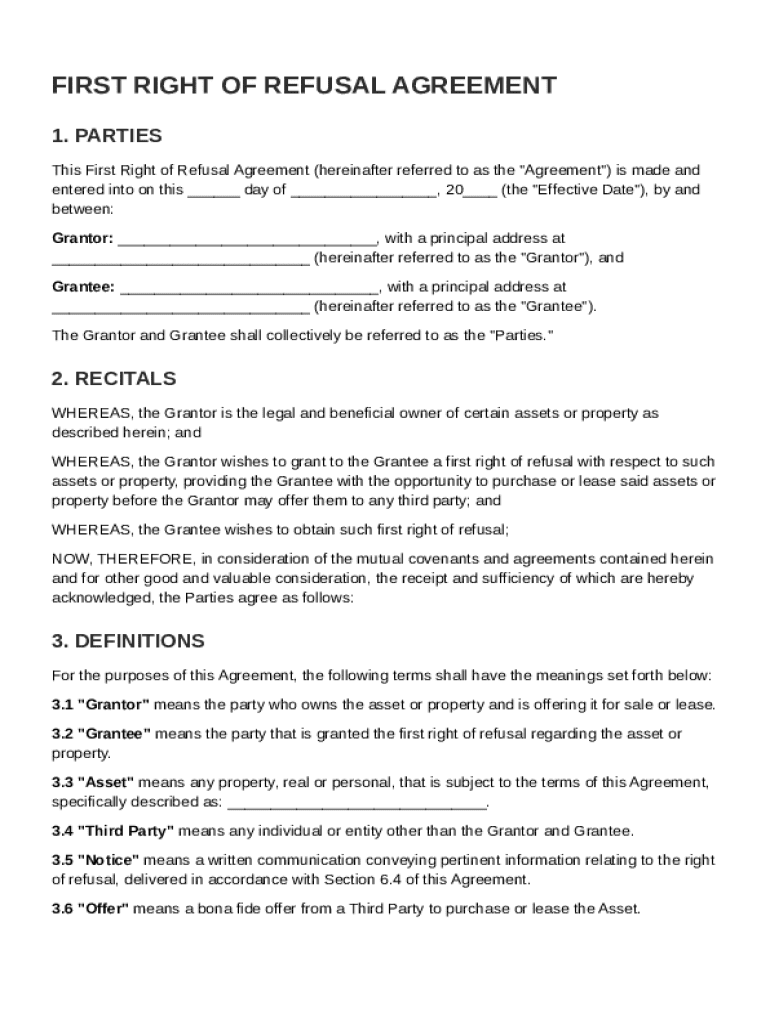
The First Right of Refusal Agreement Template is a legal document outlining the conditions under which a Grantee is given the opportunity to purchase or lease specific assets before the Grantor can offer them to third parties. This agreement ensures that the Grantee has the initial option to secure these assets, providing a competitive edge and allowing for strategic asset management. The template includes definitions, sale conditions, notification requirements, limitations on transferability, and dispute resolution procedures, laying down the framework for the rights and obligations of both parties involved.
How to Use the First Right of Refusal Agreement Template
When using the First Right of Refusal Agreement Template, it is essential to customize the document to fit the specifics of the transaction at hand. Begin by clearly identifying the parties involved: the Grantor, who holds and intends to sell or lease the assets, and the Grantee, who receives the right of first refusal. Input detailed descriptions of the assets, ensuring no ambiguity remains. Specify the conditions under which the rights are to be exercised, including time frames for response and method of notification. It may be beneficial to consult with legal counsel to ensure that all legal obligations are met, and the rights granted are enforceable under applicable law.
Key Elements of the First Right of Refusal Agreement Template
The template comprises several critical elements, each serving a specialized role. These include:
- Parties and Definitions: Clearly define the Grantor and Grantee and any third parties potentially involved.
- Assets Description: Provide a detailed and precise description of the assets covered under the agreement.
- Terms for Exercise: Outline the exact procedure for exercising the right of first refusal, including response times and notification methods.
- Transfer Limitations: Specify any restrictions placed on the transfer of the assets.
- Dispute Resolution: Include a method for resolving any disputes that may arise, such as arbitration or mediation clauses.
Steps to Complete the First Right of Refusal Agreement Template
- Identify Parties: Clearly name the Grantor and Grantee.
- Describe Assets: Mention detailed descriptions of the specific assets.
- Set Terms: Establish conditions and timelines for exercising rights.
- Draft Notifications: Specify the notification process for intent to sell or lease assets.
- Incorporate Legal Clause: Add legal clauses, including any state-specific requirements.
- Consult Legal Counsel: If necessary, seek advice to ensure the document's enforceability.
- Finalize and Sign: Both parties review, agree, and sign the document.
Legal Use of the First Right of Refusal Agreement Template
The agreement template is legally binding and is used to create enforceable rights for the Grantee. The enforceability hinges on the document's precision and adherence to relevant statutes. It is imperative to ensure that the agreement aligns with federal, state, and local regulations, which may vary significantly. Legal counsel can assist in customizing the agreement to meet these requirements, ensuring that any provisions for notification, exercise of rights, and resolution of disputes comply with applicable law.
Examples of Using the First Right of Refusal Agreement Template
Consider a scenario where an individual holds the right of first refusal on a property being leased. In this case, if the owner decides to sell the property, they must first offer it to the rights holder under the terms specified in the agreement. Another instance may involve a company with the right of first refusal to acquire a competitor's technology. Both examples highlight the strategic advantage provided by such an agreement, granting priority and negotiation leverage.
Important Terms Related to the First Right of Refusal Agreement Template
- Grantor: The party offering the assets subject to the right of first refusal.
- Grantee: The party receiving the right.
- Assets: The items, properties, or rights subject to the agreement.
- Exercise of Right: The process by which the Grantee opts to purchase or lease the assets.
- Notification: How and when the Grantor informs the Grantee of the intent to sell or lease.
State-Specific Rules for the First Right of Refusal Agreement Template
Different states may impose distinct rules and requirements concerning the enforceability and application of the right of first refusal. These may include additional notifications, specific filing requirements, or distinct dispute resolution preferences. Understanding these state-specific nuances is vital to ensure the template is correctly employed and holds up under local jurisdiction. For instance, a state may require registration of the agreement to make it enforceable against third parties. Legal professionals can offer guidance tailored to specific state laws.
Versions or Alternatives to the First Right of Refusal Agreement Template
While the First Right of Refusal Agreement Template serves a broad base, variations may better suit specific industries or asset types. For instance, commercial real estate often uses tailored agreements reflecting industry-specific terms and conditions. Alternatives like purchase options or right of first offer agreements may also be considered depending on strategic goals and the nature of the transactions involved. Selecting or customizing the version that aligns with your specific circumstances ensures optimal benefit from these legal instruments.