







Definition and Purpose of the Agreement
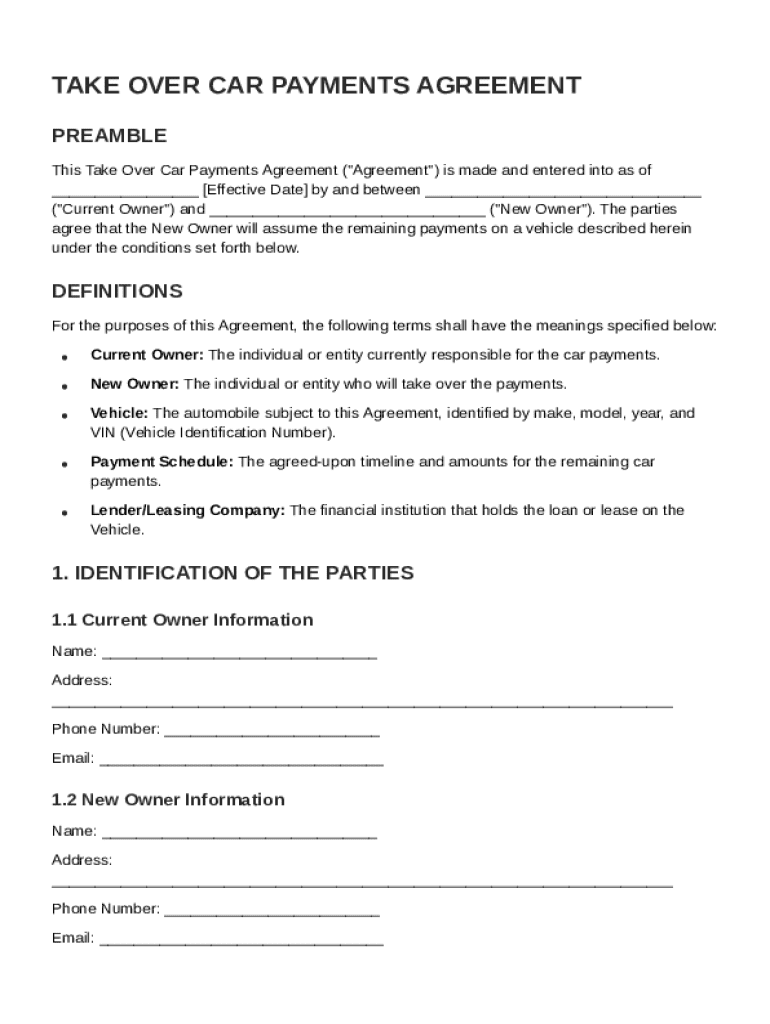
The Take Over Car Payments Agreement Template is a legal document that facilitates the transferral of responsibility for car payments from the Current Owner to a New Owner. This contract details the conditions that both parties must adhere to, including payment schedules, vehicle specifics, and obligations. It is key to note that this agreement does not absolve the Current Owner of liability to the lender, meaning that defaults could still impact their credit history.
Key Parties and Terms
- Current Owner: The individual who initially financed the car and is transferring payment responsibilities.
- New Owner: The person assuming the car payments, responsible for adhering to the agreed-upon terms.
- Lender: The financial institution that provided the loan for the vehicle, holding ultimate legal claim over its debt.
How to Use the Template Effectively
Using the Take Over Car Payments Agreement Template involves several critical steps to ensure clarity and legal compliance. Familiarity with the structure and purpose of each section can streamline the process.
Completing the Template
- Gather Necessary Information: Collect details about the vehicle, payment terms, and personal information for both parties.
- Fill Out Each Section: Ensure all sections related to vehicle specifics, payment dates, and financial arrangements are thoroughly completed.
- Review by Both Parties: Both the Current and New Owner should review the completed document to confirm the accuracy of provided information and agree on the terms.
Examples of Use
- Transferring Payments Between Family Members: If a family member can no longer make payments, this document formalizes the transfer of responsibility.
- Private Sale Agreements: Often used when a vehicle is sold privately on condition of payment takeover rather than upfront payment.
Steps to Complete the Agreement
Efficiently completing the agreement necessitates a step-by-step approach, ensuring that no crucial elements are overlooked.
- Initial Discussion Between Parties: Go over general terms and decide on the preliminary details of the agreement, including transfer dates and payment terms.
- Document Drafting: Both parties should work together to add necessary legal and personal information to the template.
- Signing and Notarization: Legalized signing may be necessary to provide authenticity and prevent disputes. Securing a notary's assistance can bolster the agreement's credibility.
- Submit to Lender (if necessary): Although the agreement transfers payment responsibility, some lenders require notification, if not direct intervention.
Key Elements of the Agreement Template
The template is constructed to cover several essential factors to guard the interests of all involved parties.
Critical Components
- Vehicle Details: Includes make, model, VIN, and mileage for accurate vehicle identification.
- Payment Provisions: Details the financial obligations, including payment amounts and due dates.
- Insurance Requirements: Mandates that the New Owner obtain suitable vehicle insurance to prevent liability gaps.
- Default Clauses: Outlines repercussions should the New Owner default on payments, maintaining accountability.
Legal Use and Considerations
Ensuring that the agreement complies with local and federal laws is crucial.
Compliance with State Laws
- Research State-Specific Regulations: Laws governing vehicle ownership and financial agreements can vary significantly by state, affecting the agreement's construction.
- Consult Legal Professionals: Although templates provide a framework, legal advice can ensure full compliance and validity.
State-Specific Rules for the Agreement
Variability in state laws can have significant implications on the terms and enforcement of the agreement.
Examples of State Variations
- Title Transfer Laws: Some states require immediate transfer as a condition of the agreement, whereas others allow deferred transfer pending full payment compliance.
- Tax Implications: States differ on how they tax transferred vehicle ownership, impacting overall cost.
Important Terms and Definitions
Familiarity with the specialized vocabulary used in the agreement can prevent misunderstandings and disputes.
Essential Definitions
- Payment Schedule: Chronology of financial obligations.
- Termination Clause: Defines conditions under which the agreement could become void.
- Lienholder Approval: Determines if the lender's consent is required for financial responsibility transfer.
Potential Risks and Mitigation Strategies
Transferring car payments carries inherent risks; preparedness can mitigate potential negative outcomes.
Common Risks
- Credit Risk for Current Owner: If the New Owner fails to keep up with payments, the Current Owner's credit may be affected.
- Legal Disputes: Discreation in understanding or fulfilling terms can lead to legal consequences for either party.
Mitigation Strategies
- In-depth Legal Review: Having legal counsel review the agreement can help anticipate and mitigate these risks.
- Robust Contact Clauses: Ensuring that contact information is part of the agreement can streamline dispute resolution processes.
By following this comprehensive approach and using the Take Over Car Payments Agreement Template correctly, both parties can engage in a transparent, legally sound transfer of responsibilities.




