
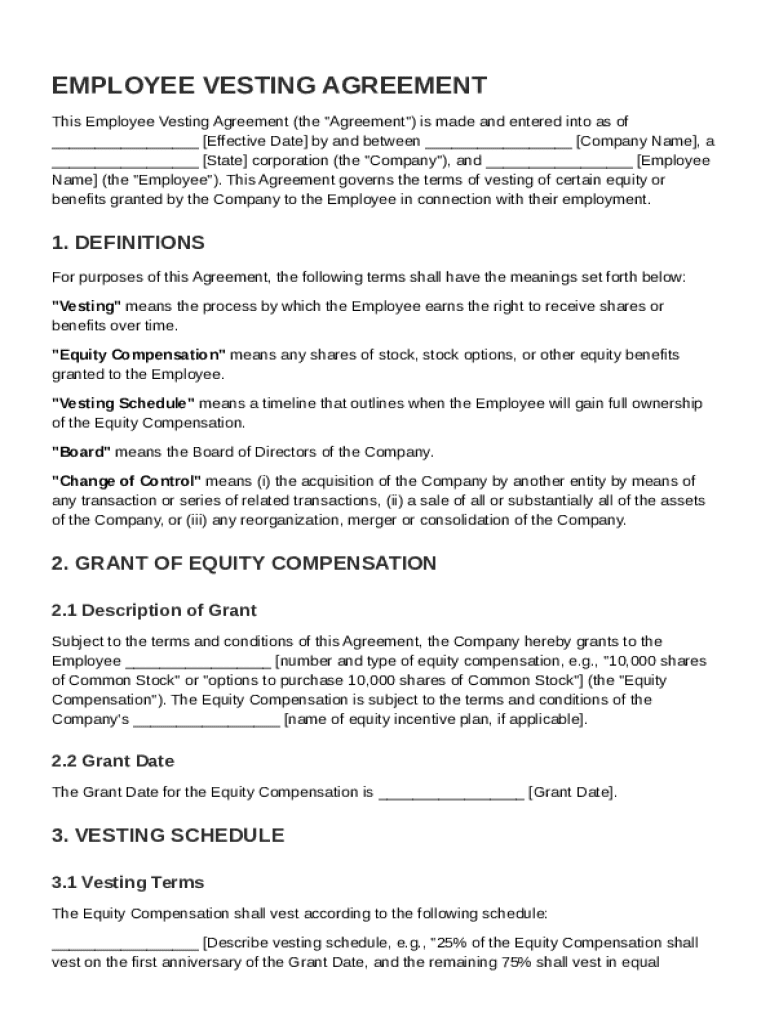







Definition and Meaning of an Employee Vesting Agreement
An Employee Vesting Agreement outlines the conditions under which an employee earns rights to equity compensation provided by a company. The terms 'vesting', 'equity compensation', and 'vesting schedule' are crucial. Vesting refers to the process by which an employee accrues non-forfeitable rights over employer-granted stock incentives or contributions, commonly tied to years of service. Equity compensation typically includes stock options or other forms of equity ownership. A vesting schedule denotes how and when these stock incentives become fully owned by the employee. This agreement ensures a shared understanding between employers and employees concerning the acquisition of equity interests over time.
Key Elements of the Employee Vesting Agreement Template
-
Equity Grant Details: This section specifies the type and quantity of equity compensation granted, such as stock options or restricted stock units (RSUs). It clearly outlines the nature of the equity, including any performance-based criteria that may affect vesting.
-
Vesting Schedule: Provides a timeline and conditions required to complete vesting. Common types include cliff vesting, where employees become fully vested after a certain period, and graded vesting, where vesting occurs incrementally over time.
-
Termination Provisions: Explains the consequences of employment termination on vesting rights. It clarifies whether vested or unvested shares are retained, forfeited, or subject to a repurchase by the company.
-
Tax Implications: Discusses the taxation of equity compensation, including potential tax liabilities and obligations employees should consider. It may cover aspects such as income recognition and potential capital gains on equity disposition.
-
Legal Framework: Details the governing law pertinent to the agreement, usually aligned with the state where the company is incorporated. It ensures that both parties understand the jurisdiction governing the terms and interpretations of the agreement.
How to Use the Employee Vesting Agreement Template
To effectively use this template, thorough understanding and careful completion are essential:
-
Review the Entire Template: Read through each section to ensure you understand all terms and conditions. Do not rush the review process, as comprehension is critical to avoid disputes.
-
Personalize the Details: Enter the specific information about the employee, the equity type, and the vesting schedule that applies. Ensure that all details are accurate and reflective of the intended agreement.
-
Consult with Legal Advisors: Given its legal nature, having a legal professional review the completed template ensures compliance with applicable laws and mitigates potential legal pitfalls.
-
Employee Acknowledgement: Once completed, present the agreement to the employee for acknowledgement and any required signatures. Ensure the employee understands all the terms before signing.
Steps to Complete the Employee Vesting Agreement Template
-
Gather Necessary Information: Collect data regarding the employee's position, tenure, and the specifics of the equity offering.
-
Customize Vesting Details: Modify the template to detail the specific vesting schedule, including start date, duration, and vesting intervals.
-
Confirm Legal Compliance: Ensure all terms comply with relevant employment laws, especially in differing jurisdictions if the company operates in multiple states.
-
Finalize the Document: Once reviewed and agreed upon by both parties, ensure all signatures are completed in the designated areas to formalize the agreement.
Importance of the Employee Vesting Agreement Template
The significance of this template lies in its role in defining the contractual relationship concerning equity compensation:
-
Employee Motivation and Retention: Vesting arrangements encourage long-term commitment by providing employees with financial incentives linked to company performance and tenure.
-
Clarifying Expectations: By clearly outlining terms, the agreement minimizes misunderstandings and aligns expectations of both parties, reducing potential disputes.
-
Legal Protection: Protects the interests of the company and its employees by providing a legal framework for resolving conflicts related to equity compensation.
Who Typically Uses the Employee Vesting Agreement Template
This template is predominantly utilized by:
-
Startups and Growth Companies: To attract and retain talented employees by offering potential company ownership.
-
Human Resources Departments: As part of employment contract packages to outline equity compensation plans.
-
Legal and Compliance Teams: To ensure agreements adhere to regulatory and statutory requirements.


Legal Use of the Employee Vesting Agreement Template
-
Compliance with Employment Laws: It ensures compliance with federal and state employment laws governing equity compensation and contractual agreements.
-
Confidentiality and Intellectual Property: Often includes clauses protecting company secrets and innovations developed during employment.
-
Dispute Resolution: It may incorporate arbitration or mediation clauses to address disputes amicably without litigation.
State-Specific Rules for Employee Vesting Agreements
Certain states might have unique requirements or interpretations regarding vesting agreements:
-
California: Known for employee-friendly laws, California might impose additional disclosure requirements or restrictions on non-compete clauses.
-
New York: Ensures transparency in compensation arrangements, possibly affecting disclosure obligations in the agreement.
Reviewing state-specific guidelines is essential to ensure all contractual elements are enforceable under local law. Regular legal review is advised for compliance as state laws evolve over time.




