






Definition and Meaning of Conditional Contract Template
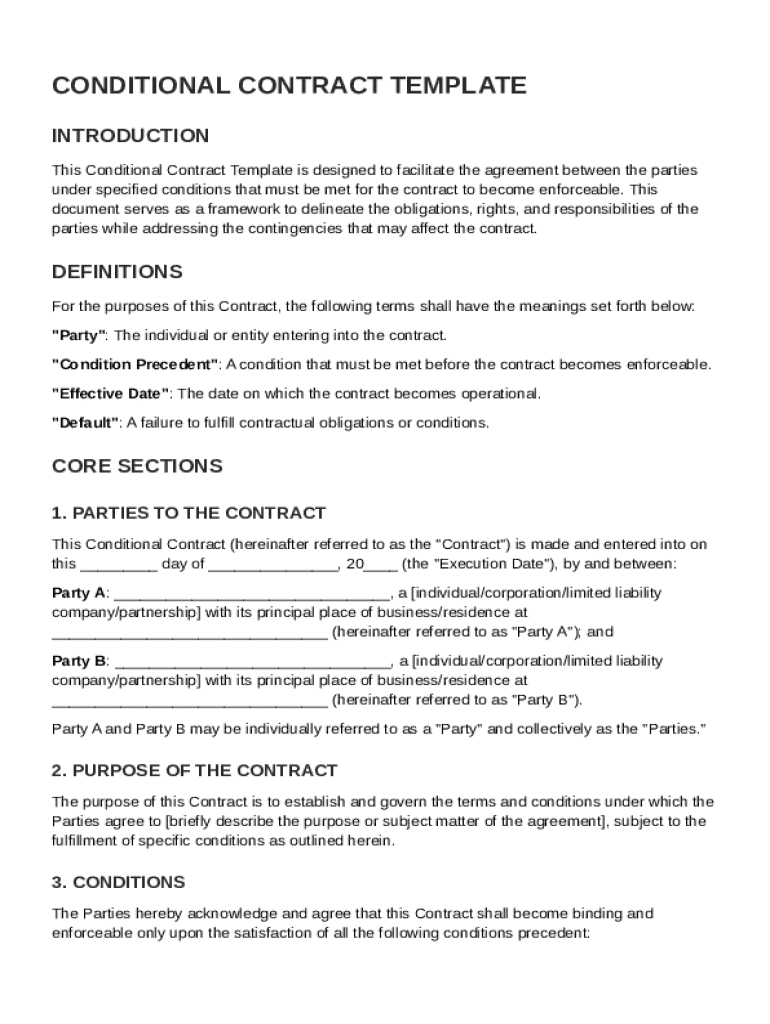
A Conditional Contract Template outlines the structure for an agreement between two parties, establishing that the contract's enforceability is dependent on specific conditions being met. These conditions are often outlined in a detailed manner to ensure both parties are aware of their obligations. This type of contract typically includes sections on definitions of key terms, the rights and obligations of each party, termination clauses, governing law, and any miscellaneous provisions. The template serves as a guide to help delineate each party's duties and the contractual terms they must adhere to for the contract to be valid.
How to Use the Conditional Contract Template
To effectively use a Conditional Contract Template, follow these steps to customize it according to your specific needs:
-
Identify Parties Involved: Clearly state the names and roles of all parties participating in the contract, ensuring clarity in responsibilities.
-
Specify Conditions: Outline the conditions that need to be fulfilled for the contract to come into effect. Be precise and use understandable language to avoid ambiguities.
-
Detail Obligations and Rights: Include sections detailing each party's obligations and rights, ensuring everything is clearly defined to prevent misunderstandings.
-
Set Terms and Duration: Specify the duration the contract covers, including start and end dates, along with any potential renewals.
-
Review Termination Clauses: Include clauses that detail how the contract can be terminated if conditions are not met. This should cover breaches and the process for amendments, if necessary.
-
Legal Review: Before finalizing the contract, have it reviewed by a legal professional to ensure compliance with applicable laws and to validate its enforceability.
Key Elements of the Conditional Contract Template
A thorough Conditional Contract Template should contain several key elements to be comprehensive and effective:
- Title and Introduction: Identify the document as a conditional contract and introduce the context or purpose.
- Definitions Section: Unambiguously define important terms used throughout the contract to maintain clarity.
- Obligations and Conditions: Detail the specific conditions under which the contract will be active and outline each party's responsibilities.
- Termination Conditions: Articulate the basis and procedure for terminating the contract should conditions not be met or if a breach occurs.
- Amendment Procedures: Specify how and when amendments to the contract can be made, including necessary approvals.
- Signatures Section: Provide space for signatures, ensuring both parties acknowledge their agreement and understanding of the contract.
Important Terms Related to Conditional Contract Template
Some essential terms are frequently used within a Conditional Contract Template and are critical for understanding and navigation:
- Contingent: A condition that must be satisfied for the contract to become enforceable.
- Breach of Contract: A violation of any stipulated terms or conditions within the contract.
- Amendment: Any change or alteration to the contract terms agreed upon by all parties involved.
- Governance Law: The legal guidelines under which the contract will be interpreted and disputes resolved.
- Termination Clause: A section that outlines the circumstances and process for legally ending the contract.
Legal Use of the Conditional Contract Template
The legal use of a Conditional Contract Template is to ensure a clear mutual understanding of each party's rights and obligations, protected under applicable legal statutes:
- Adherence to Contract Law: All conditions and clauses must comply with national and state-level contract law to be enforceable.
- Legally Binding Nature: Ensure the contract meets all legal criteria for a binding agreement, such as the capacity to contract and mutual consent.
- Clarity and Comprehension: Clearly written contracts are more likely to stand up in court, should a dispute arise.
- Signature Validity: Confirm that all parties have the legal authority to sign and uphold the contract terms.
Who Typically Uses the Conditional Contract Template
A Conditional Contract Template can be beneficial for a wide range of individuals and entities:
- Businesses and Corporations: Used for agreements contingent on specific sales targets, funding acquisitions, or delivery terms.
- Independent Contractors: Utilize to establish terms with clients that depend on the completion of specific milestones or deliverables.
- Real Estate Transactions: Often employed for purchase agreements subject to conditions like inspections or financing approvals.
- Supply Chain Partnerships: Establish criteria-based partnerships dependent on regulatory compliance or market conditions.


Steps to Complete the Conditional Contract Template
When completing a Conditional Contract Template, ensure all required details are accurately filled out:
- Fill in Basic Information: Include names, addresses, and contact details of the parties involved.
- Detail the Conditions: Clearly specify any conditions precedent to the contract's execution.
- Outline Responsibilities: Write down the roles and obligations of each party.
- Insert Necessary Clauses: Draft clauses for amendments, breaches, and potential disputes.
- Legal Review: Consult with a legal expert to check for compliance and clarity.
Examples of Using the Conditional Contract Template
Here are some tangible scenarios where a Conditional Contract Template proves invaluable:
- Real Estate: An agreement to purchase a house contingent upon securing a mortgage or passing a building inspection.
- Employment: A job offer dependent on passing a background check, having valid certifications, or completing a probationary period.
- Business Partnerships: Collaboration agreements contingent on both parties achieving specific product development milestones before full engagement.
State-Specific Rules for Conditional Contract Template
Conditional contracts may be subject to specific state rules depending on where they are executed:
- Different States, Different Laws: Each U.S. state might have particular laws concerning the enforceability and requirements of conditional contracts.
- State-Specific Clauses: Some states require specific clauses to be included for the contract to be considered binding.
- Understanding Local Legislation: Familiarize yourself with the relevant state laws or consult with a legal counsel specializing in that jurisdiction to ensure full compliance.