






Definition and Meaning
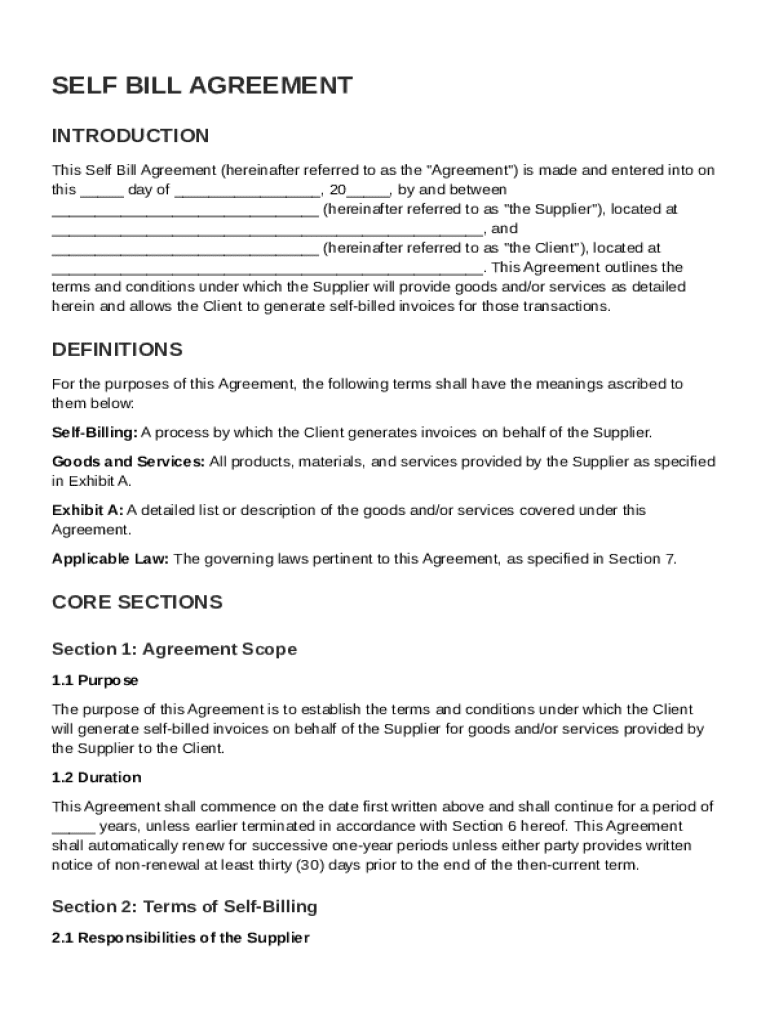
The Self Bill Agreement Template is a formal document outlining the terms under which a client can issue self-billed invoices for goods and services provided by a supplier. This agreement is critical in defining the responsibilities and expectations for both parties, ensuring invoice accuracy, establishing payment terms, and addressing confidentiality and data protection requirements. By clearly stating these parameters, the agreement aids in reducing misunderstandings and potential disputes between clients and suppliers.
Key Elements of the Self Bill Agreement Template
A comprehensive Self Bill Agreement Template includes several critical components that ensure mutual understanding and compliance with regulations. Key elements typically consist of:
- Parties Involved: Identification of the client and supplier, including full names and contact details.
- Invoice Details: Specifics on what the invoices will cover, the format, and any unique identification numbers.
- Payment Terms: Conditions under which payments will be made, including timelines and methods of payment.
- Confidentiality Provisions: Clauses to protect sensitive information shared between parties.
- Data Protection: Measures for safeguarding any personal or sensitive data in compliance with relevant laws.
- Termination Conditions: The process for terminating the agreement, including notice periods and conditions for both parties.
How to Use the Self Bill Agreement Template
Using a Self Bill Agreement Template effectively involves several steps:
- Identify the Parties: Clearly state all involved parties' names and contact details.
- Define Scope and Services: Specify the goods or services that will be covered under the self-billing arrangement.
- Set Payment and Invoice Terms: Outline the invoice issuance process and payment conditions.
- Include Legal Clauses: Incorporate necessary confidentiality and data protection clauses.
- Review and Sign: Ensure both parties review the document thoroughly and sign to acknowledge acceptance.
Who Typically Uses the Self Bill Agreement Template
The Self Bill Agreement Template is primarily used by businesses and accountants who manage invoicing processes. Common users include:
- Large Corporations: Companies with complex supply chains, benefiting from streamlined invoicing.
- SMEs and Freelancers: Smaller businesses and independent contractors where clear billing processes are essential.
- Service Providers: Entities that regularly outsource and need consistent billing practices.


Legal Use of the Self Bill Agreement Template
Legal compliance is paramount when executing a Self Bill Agreement. Parties must ensure:
- Adherence to Tax Laws: Ensuring self-billing practices comply with IRS guidelines.
- Compliance with State Regulations: Understanding any state-specific rules that may apply.
- Clear Legal Clauses: Including terms covering liability, indemnification, and dispute resolution to safeguard interests.
State-Specific Rules for the Self Bill Agreement Template
While the Self Bill Agreement Template provides a general framework, state-specific regulations can influence its use:
- State Tax Requirements: Some states have unique sales tax rules affecting how invoices are generated.
- Business Registration Regulations: Certain states may require particular business registrations or licenses.
- Dispute Resolution Laws: State laws may dictate how disputes related to self-billing agreements are resolved.
Steps to Complete the Self Bill Agreement Template
Completing the Self Bill Agreement Template requires attention to detail and thoroughness:
- Gather Information: Collect all necessary details from both client and supplier.
- Customize the Template: Tailor the standard template to reflect specific agreement terms.
- Include All Key Elements: Ensure each critical component is accurately represented in the template.
- Review for Accuracy: Double-check all entries to prevent errors.
- Secure Signatures: Have both parties sign the document to finalize the agreement.
Examples of Using the Self Bill Agreement Template
Understanding through examples helps illustrate practical use cases:
- Retail Supply Chain: A retailer uses self-billing to manage payments to multiple suppliers, ensuring uniformity in their billing process.
- Freelancer Collaboration: A graphic designer employed by an agency uses self-billing to streamline the payment process for multiple projects at once.
Important Terms Related to Self Bill Agreement Template
Grasping related terminology is essential:
- Self-Billing: A process where the buyer prepares an invoice for the supplier.
- Invoice: A document requesting payment for provided goods/services.
- Client and Supplier: The parties involved in the self-billing agreement.
- Confidentiality Clause: A provision protecting shared sensitive information.
Each section above aims to provide deep insights into crucial aspects of the Self Bill Agreement Template, ensuring clarity for users and fostering a comprehensive understanding of its usage and application.