






Definition and Key Features
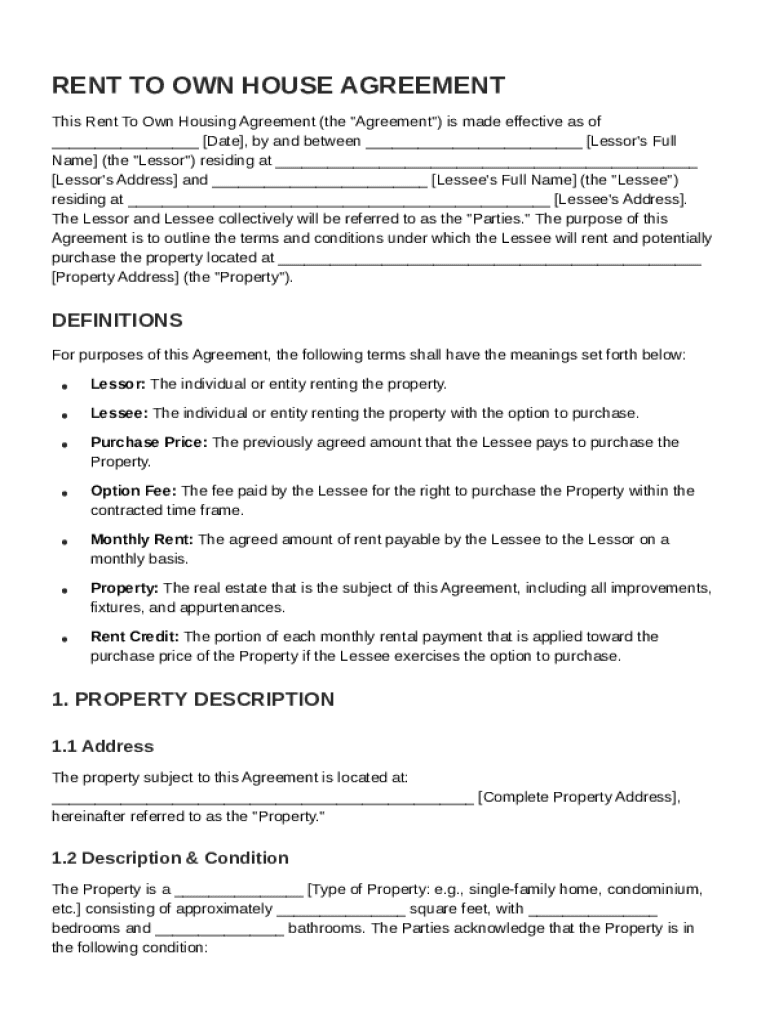
The Rent To Own House Contract Template outlines the terms and conditions that allow a Lessee to rent a property with an option to purchase. This agreement includes essential components such as property descriptions, rental terms, and acquisition options. It plays a crucial role in defining parties’ responsibilities, payment schedules, maintenance obligations, and legal jurisdictions.
Key Elements of the Contract
- Property Details: Contains comprehensive information about the property, including its location and physical characteristics.
- Rental Terms: Specifies the duration of the rental period, monthly rental payments, and due dates.
- Purchase Options: Details the terms under which the Lessee can exercise the option to purchase the property, including timeframe and pricing.
- Responsibilities: Clarifies the duties of both parties regarding maintenance, repairs, and upkeep of the property.
- Legal Jurisdiction: Identifies the legal framework governing the contract, often state-specific.
How to Use the Rent To Own House Contract Template
Steps to Fill Out the Contract
- Gather Property Information: Begin with the detailed property description.
- Clarify Rental Terms: Define the rental period, monthly payments, and specific terms.
- Outline Purchase Options: Include the option price and conditions under which it can be exercised.
- Define Responsibilities: Clearly differentiate between the Lessee's and Lessor's maintenance tasks.
- Set Legal Terms: Define the legal jurisdiction and compliance requirements.
- Example: A family may use this template when transitioning from renting to owning a property, gaining time to secure financing for the purchase.
Legal Use and Compliance
Important Legal Considerations
-
Legally Binding Terms: The contract must adhere to the applicable state laws to be enforceable.
-
Disclosure Requirements: Ensure all necessary disclosures are included to avoid future disputes.
-
Default Provisions: Include clauses addressing potential defaults by either party.
-
Scenario: Failure to exercise the purchase option within the agreed period may result in forfeiting the option.
Who Typically Uses the Rent To Own House Contract Template


Typical Users
-
Individuals seeking to transition from renters to homeowners.
-
Property Owners offering rent-to-own options to potential buyers.
-
Real Estate Agents facilitating lease-to-own transactions.
-
Use Case: Renters lacking immediate funds to purchase but willing to invest over time find this template beneficial.
Important Terms and Their Meanings
Definitions
-
Lessee: The tenant who rents the property and holds the option to purchase.
-
Lessor: The property owner who rents out the asset.
-
Option Consideration: A fee paid to secure the option to buy, often credited towards the purchase.
-
Detail: The "Option Consideration" can be non-refundable, applying it directly to the future purchase price.
Key Elements and Sections
Core Sections
-
Agreement Duration: Specifies the start and end dates.
-
Payment Structure: Breaks down monthly payments and any additional fees.
-
Purchase Option Terms: Details the chosen period to exercise the purchase option.
-
Example: An agreement might stipulate a two-year rental term with a purchase option exercisable at any point during the rental period.
State-Specific Rules and Differences
Variations Across States
-
Legal Provisions: Varying state laws govern real estate transactions, and each state's requirements must be met.
-
Disclosure Norms: States may have unique obligatory disclosures, such as environmental hazards.
-
Lease Option Terms: Some states require notarization; others may have specific limits on option fees.
-
Case Study: In California, the inclusion of specific earthquake hazard disclosures is mandatory for lease agreements.
Examples and Use Cases
Practical Applications
-
First-Time Buyers: Allows hesitant renters to try homeownership before fully committing.
-
Investment Properties: Opportunity for investors to test a property's location value before purchasing.
-
Market Exploration: Provides flexibility for tenants exploring neighborhoods to find their ideal home.
-
Real-World Scenario: An investor might use this template for properties in developing areas, offering it to potential buyers who are waiting for property appreciation before purchase.