






Definition and Meaning
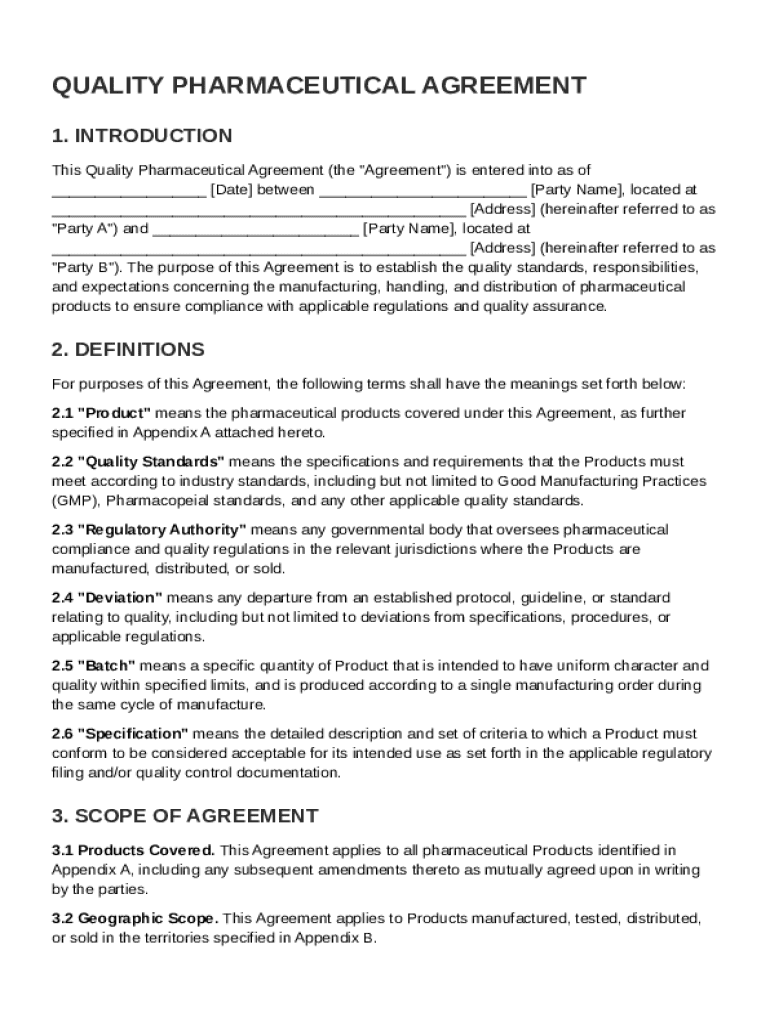
The Quality Pharmaceutical Agreement Template is a structured document used to outline the responsibilities and define quality standards between two parties involved in the manufacturing, handling, and distribution of pharmaceutical products. It delineates the roles of each party in ensuring product quality and regulatory compliance, addressing elements such as audits, change management, and dispute resolution. This agreement is vital for upholding high-quality assurance standards throughout the lifecycle of pharmaceutical products, ensuring both parties adhere to necessary guidelines and obligations.
- Responsibilities and Roles: Specifies the obligations of each party in maintaining product quality.
- Quality Standards: Sets out the criteria and benchmarks for product quality and compliance.
- Regulatory Compliance: Ensures that both parties comply with industry regulations and standards.
Key Elements of the Quality Pharmaceutical Agreement Template
A comprehensive Quality Pharmaceutical Agreement includes several crucial elements that ensure its effectiveness and enforceability:
- Audit Provisions: Outlines the process for auditing the quality systems and procedures of both parties to ensure compliance with the agreement.
- Indemnification Clauses: Specifies the conditions under which one party will indemnify the other for losses or damages.
- Dispute Resolution: Provides mechanisms for resolving disagreements, such as mediation or arbitration, instead of litigation.
- Change Management: Details procedures for implementing changes in the manufacturing process or product specifications.
Steps to Complete the Quality Pharmaceutical Agreement Template
Completing the Quality Pharmaceutical Agreement Template involves several methodical steps:
- Initial Review: Both parties should review the template to ensure it covers all necessary areas pertinent to their contractual relationship.
- Customization: Tailor the template to reflect specific responsibilities, quality standards, and processes unique to the partnership.
- Negotiation: Discuss and negotiate terms, ensuring both parties agree on responsibilities, standards, and legal requirements.
- Finalization: Finalize the document by incorporating any agreed-upon changes and ensuring all legal requirements are met.
- Signing: Both parties must sign the agreement to make it legally binding.
Who Typically Uses the Quality Pharmaceutical Agreement Template
This template is commonly used by various stakeholders within the pharmaceutical industry, including:
- Manufacturers: Engaged in the production of pharmaceutical products.
- Distributors: Responsible for the safe and compliant distribution of pharmaceutical goods.
- Regulatory Affairs Professionals: Ensuring that the agreement aligns with legal and regulatory standards.
- Quality Assurance Teams: Monitoring and maintaining the quality of the products as stipulated in the agreement.


Legal Use of the Quality Pharmaceutical Agreement Template
The use of the Quality Pharmaceutical Agreement Template must align with U.S. legal standards to ensure its enforceability:
- Compliant with the ESIGN Act: Agreements should be signed electronically using platforms that comply with the Electronic Signatures in Global and National Commerce Act.
- State-Specific Regulations: It is essential to consider any state-specific requirements that may affect the validity of the contract terms.
- Documentation: Maintain an audit trail and secure records for legal compliance and future reference.
Important Terms Related to the Quality Pharmaceutical Agreement Template
Understanding key terms associated with the Quality Pharmaceutical Agreement is crucial for both parties:
- GMP (Good Manufacturing Practices): Standards that manufacturers must adhere to ensure product quality and safety.
- CAPA (Corrective and Preventive Actions): Processes to address and rectify quality assurance issues.
- SOP (Standard Operating Procedures): Established procedures to ensure consistency in the production process.
Software Compatibility and Digital Versus Paper Version
The Quality Pharmaceutical Agreement Template can be used in both digital and paper formats:
- Digital Version: Offers advantages such as easy distribution, seamless updating, and integration with document management systems.
- Paper Version: May be preferred for traditional record-keeping or in cases where digital access is limited.
- Software Compatibility: Can be integrated with platforms like DocHub, Google Workspace, and other cloud-based services for ease of use.
Examples of Using the Quality Pharmaceutical Agreement Template
Several scenarios illustrate the use of this template:
- New Product Development: When collaborating on a new drug, outlining roles, responsibilities, and quality standards is essential.
- Quality Audits: Regular assessments ensure adherence to the agreement terms, highlighting areas needing improvement.
- Partnerships Between Manufacturers and Distributors: Each party's roles are clearly defined to prevent misunderstandings and ensure product quality.
State-by-State Differences in the Use of the Template
Different states might have unique requirements affecting the implementation of the Quality Pharmaceutical Agreement:
- State Regulations: Compliance with state-specific manufacturing and distribution laws is crucial.
- Implementation: Legal advice may be necessary to adapt the template to meet state regulations without compromising contractual efficacy.