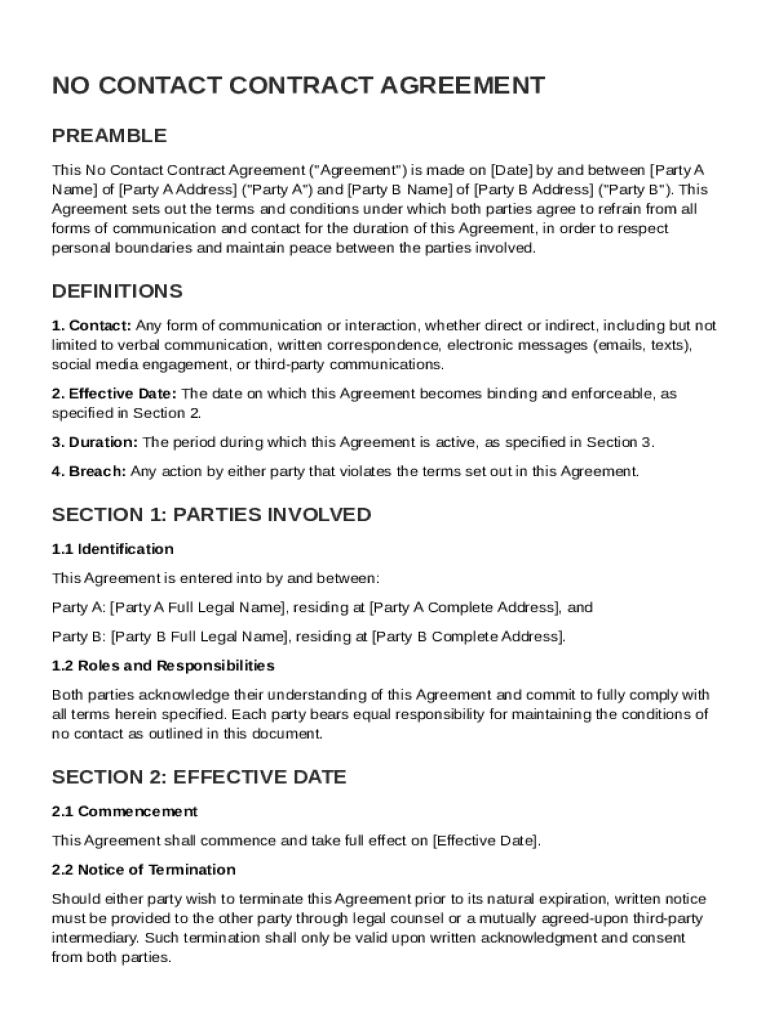







Definition & Meaning
The No Contact Contract Template is a document designed to formalize an agreement between two parties, known as Party A and Party B, to abstain from any form of communication for a designated period. This contract is typically used in situations where individuals or organizations need to ensure that all communication ceases, whether for personal, professional, or legal reasons. Key terms within the document, such as 'contact' and 'breach,' are defined clearly to prevent misunderstandings. The contract outlines the expectations for both parties, stipulating guidelines and potential consequences if any terms are violated.
Key Elements of the No Contact Contract Template
A comprehensive No Contact Contract Template includes several important components that ensure the agreement is clear and enforceable. The primary elements are:
- Parties Involved: Identification of Party A and Party B, including names, addresses, and any other relevant identifying information.
- Duration: Specification of the time frame during which the no-contact agreement will remain in effect, including start and end dates.
- Definition of Contact: A detailed list of what constitutes 'contact,' including direct communication such as phone calls and emails, as well as indirect contact through third parties or social media.
- Consequences of Breach: Outlines the repercussions if either party violates the terms of the contract, ranging from financial penalties to potential legal action.
- Exceptions: Specifies any circumstances under which contact would be permissible, such as emergencies or situations requiring legal compliance.
- Dispute Resolution: Guidelines for resolving disputes that may arise under the contract, including mediation or arbitration procedures.
How to Use the No Contact Contract Template
Utilizing a No Contact Contract Template effectively requires a systematic approach to ensure the agreement is comprehensive and clear for all parties involved. Here are the steps to follow:
- Identify Parties: Clearly list the names and contact information of the individuals or entities entering into the agreement.
- Define Contact Terms: Specify what types of communication are prohibited, such as phone calls, text messages, or social media interactions.
- Set Duration: Determine the start and end dates for the contract, ensuring both parties understand the time frame involved.
- Outline Breach Consequences: Explicitly state the penalties for violating the agreement, which could include financial costs or further legal action.
- Include Exceptions: Identify any situations where contact might be necessary or allowed, such as health emergencies or legal obligations.
- Review and Sign: Both parties should thoroughly review the terms, suggested amendments should be discussed and agreed upon, and signatures are required to make the contract legally binding.
Legal Use of the No Contact Contract Template
The No Contact Contract Template is a legal document, which means that its enforceability depends on its adherence to legal requirements. Different jurisdictions may have varying regulations, but general legal principles apply:
- Consent and Understanding: Both parties must voluntarily agree to the terms and understand the contract's implications.
- Clear Terms: All terms must be clearly defined to avoid ambiguity that could render parts of the agreement unenforceable.
- Legal Purpose: The agreement must serve a legitimate purpose and not violate any laws.
- Signatures: Signing by both parties is crucial for validity. Electronic signatures are often acceptable under the ESIGN Act.
Steps to Complete the No Contact Contract Template
Providing a step-by-step guide ensures the template is filled out correctly and logically, facilitating smooth execution and enforcement. Follow this structured approach:
- Download the Template: Obtain the appropriate version of the No Contact Contract Template for your jurisdiction.
- Fill in Identification Details: Enter the names and addresses for both parties involved in the contract.
- Define 'Contact': Clearly outline what forms of communication are restricted under this agreement.
- Determine Effective Dates: Set and agree upon the starting and ending dates for the contract.
- Outline Breach Penalties: Clearly document any consequences for not adhering to the agreement's terms.
- Discuss and Note Exceptions: Agree on any exceptions and list them in the appropriate section.
- Review by Legal Counsel: Consider having a lawyer review the terms to ensure they meet legal standards.
- Sign the Agreement: Have both parties sign the agreement, with electronic signatures accepted in most cases.
Important Terms Related to No Contact Contract Template
Understanding the terminology used within the No Contact Contract Template ensures all parties have a clear understanding of their commitments. Key terms often include:
- Contact: Any method of communication, direct or indirect, including but not limited to phone, email, social media, or through third parties.
- Breach: Any act that goes against the agreed upon terms, resulting in potential penalties.
- Exceptions: Pre-defined circumstances that allow for permitted communication.
- Duration: The specific period during which the no-contact conditions apply.
- Arbitration: A method of resolving disputes outside of court, often part of the dispute resolution clause.
Who Typically Uses the No Contact Contract Template
This type of contract is commonly used in various contexts where contact may exacerbate a situation or where legal or professional boundaries need enforcement:
- Personal Relationships: Often used in separation or divorce proceedings to provide a cooling-off period.
- Business Partners: Implemented during disputes or negotiations where contact may not be beneficial.
- Legal Situations: Used in situations where ongoing litigation requires parties to refrain from communication to avoid conflicts of interest.


State-Specific Rules for the No Contact Contract Template
While the general structure of a No Contact Contract Template can be universally applied, certain states may have specific requirements or variations that must be considered:
- State Statutes: Variations in state laws may dictate specific terms or necessary disclosures that must be included.
- Jurisdictional Binding: The agreement must clearly state which state’s laws govern the contract.
- Legal Advice: In states with unique rules, it's advisable to consult a legal professional to ensure compliance with local legal standards.