
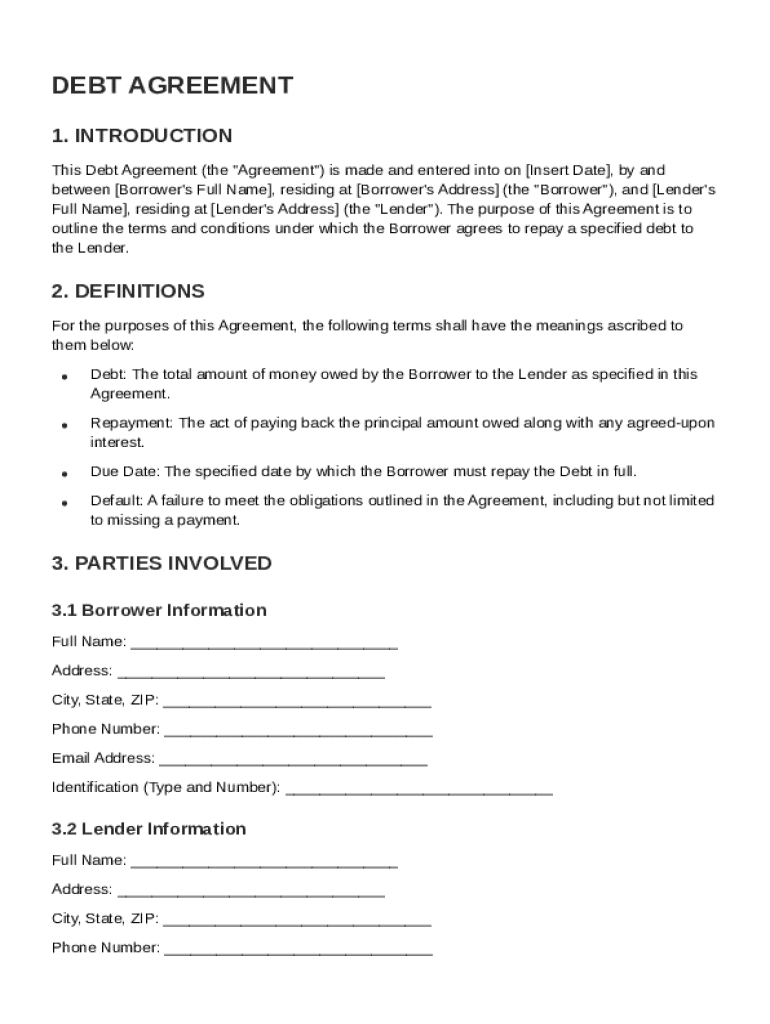







Definition & Meaning
A Debt Agreement Template is a document that formalizes an understanding between a borrower and a lender about the repayment of a specified debt. It is designed to ensure both parties are clear on their obligations and the agreement's terms. This template typically includes the loan amount, interest rate, repayment schedule, and conditions under which the lender can declare a default. Understanding and utilizing this document properly helps prevent disputes and provides a framework for debt management.
Elements of a Typical Debt Agreement
- Loan Amount: The principal sum borrowed.
- Interest Rate: The percentage applied to the principal for its use.
- Repayment Schedule: Details on when payments are due.
- Penalties for Late Payments: Consequences of missing payments.
- Default Conditions: Scenarios where terms are violated.
Importance for Legal Clarity
The template acts as a binding contract. Each inclusion, like the governing law clause, is essential to determine jurisdiction in case of disputes, ensuring both parties understand their legal standing.
Who Typically Uses the Debt Agreement Template


Individual Borrowers and Lenders
- Borrowers: Often individuals needing structured loans, such as personal loans or small business financing.
- Lenders: Both institutional and personal lenders can use this to formalize loan arrangements.
Business Entities
Different business structures, like LLCs or corporations, also utilize this template to delineate clear borrowing terms for operational or expansion needs.
Use in Real Estate
Debt agreement templates are frequently employed in real estate transactions for mortgages or property investment loans, providing clarity and legal backing for large financial commitments.
Key Elements of the Debt Agreement Template
Comprehensive Overview of Terms
A well-crafted template will include an array of sections necessary to detail all aspects of a loan agreement:
- Definitions: Key terms used within the agreement for clarity.
- Loan Details: Comprehensive breakdown of the amount, interest, and repayment.
- Amendments: Processes for altering agreement terms.
Security and Guarantees
A section in the template might cover collateral or guarantees that secure a loan, which is especially important in business and high-value personal loans.
Steps to Complete the Debt Agreement Template
Detailed Process for Completion
- Gather Information: Collect all relevant details - borrower and lender details, loan specifics.
- Fill Out Basic Information: Begin with the template's personal details section for both parties.
- Specify Loan Terms: Enter loan amount, interest rate, and repayment schedule.
- Detail Penalties and Defaults: Specify what constitutes a default and any penalties for late payment.
- Security Details: If collateral is used, include descriptions and terms.
- Review: Both parties should thoroughly review the filled template for errors or necessary additions.
- Sign the Agreement: Finalize by obtaining signatures from both parties under correct legal guidance.
Practical Tips
- Seek Legal Advice: It is advisable to have a lawyer review the completed agreement.
- Use Legally Complaining Signatures: Ensure signatures are obtained in a manner that holds legal weight.
Legal Use of the Debt Agreement Template
Ensuring Compliance with Laws
The template adheres to federal laws, such as the ESIGN Act in the U.S., ensuring electronic signatures are legally binding. It is crucial to revise the template's legal sections concerning state-specific laws to avoid potential disputes.
Protecting Both Parties
Using the template offers protection from potential legal claims by clearly defining each party's rights and obligations, mitigating misunderstandings.
State-Specific Rules for the Debt Agreement Template
Adapting to Different Jurisdictions
Certain states may have unique requirements for debt agreements, like additional disclosures or specific lender registration requirements. This makes it essential to adapt the template accordingly to avoid non-compliance.
Notable Differences Across States
- Usury Laws: These cap interest rates that vary by state.
- Disclosure Requirements: Some states require specific disclosures that must be included in the agreement.
Examples of Using the Debt Agreement Template
Real-World Scenarios
- Small Business Loans: A local startup using a template to formalize a loan from a family member.
- Personal Loans: An individual borrowing funds from a friend, securing terms with the template.
- Real Estate Purchases: Investors using the template for mortgage agreements with private lenders.
Customizing for Specific Needs
While standard templates offer a foundation, they can be tailored. For instance, a business might add sections pertinent to seasonal repayment fluctuations, proving the template's flexibility to diverse needs.
Software Compatibility
Seamless Integration with DocHub
Debt Agreement Templates can be efficiently managed and completed using DocHub's versatile platform. Its comprehensive tools allow seamless editing, signing, and sharing of debt agreements directly from cloud sources or stored files.
Cross-Platform Functionality
The document can be accessed and managed across various operating systems and devices, ensuring document management does not disrupt workflow or productivity across teams.




