






Definition and Meaning
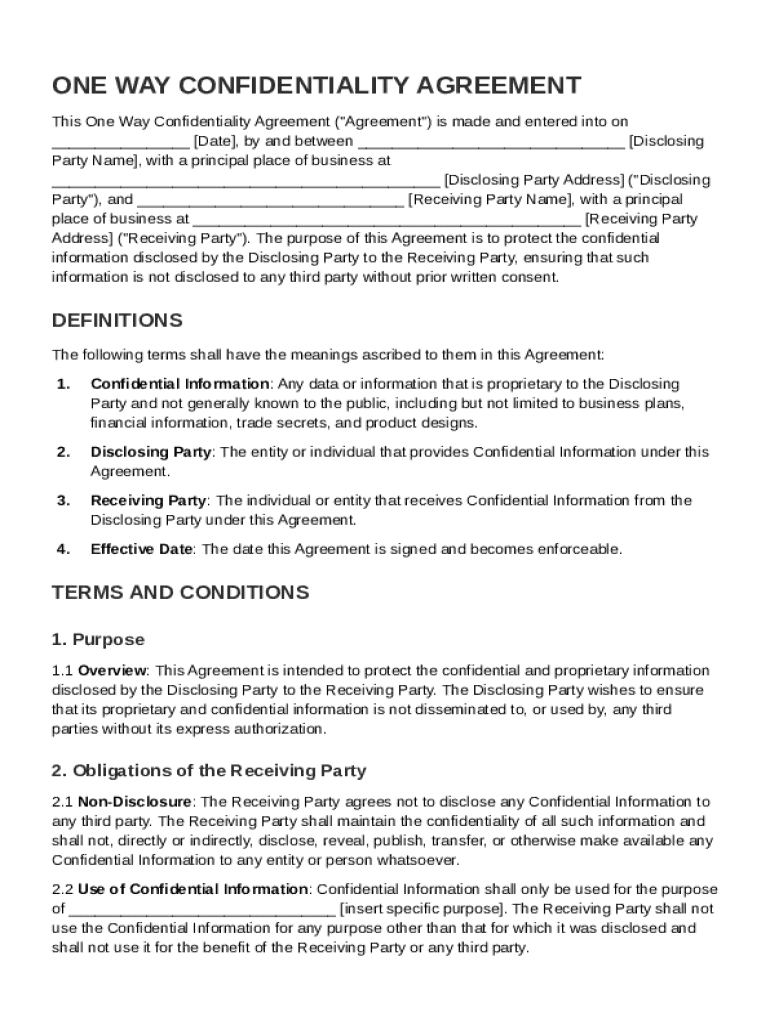
A One Way Confidentiality Agreement is a legal document designed to secure confidential information shared from a Disclosing Party to a Receiving Party. It primarily serves to shield proprietary data, trade secrets, or sensitive business details from unauthorized disclosure. The contract delineates the responsibilities of the Receiving Party in maintaining confidentiality and safeguarding the information provided. Such agreements are pivotal in business settings where one party discloses sensitive data that should not be shared or utilized beyond agreed purposes.
Core Elements
- Disclosing and Receiving Parties: Identifies the entity providing the confidential information and the one receiving it.
- Confidential Information: Clearly defines what is considered confidential under the agreement, ensuring both parties have a mutual understanding.
- Obligations: Details the Receiving Party’s duties in protecting the information from unauthorized access or distribution.
- Exceptions: Specifies scenarios where disclosure may be permissible, such as legal obligations.
- Duration: Outlines how long the confidentiality obligations remain in effect after the initial disclosure.
How to Use the One Way Confidentiality Agreement Template
Using a One Way Confidentiality Agreement Template is straightforward, facilitating the creation of a comprehensive and legally sound document. Here's how you can utilize it effectively:
- Download the Template: Obtain the template from a reputable provider such as DocHub, minimizing drafting time and ensuring legal compliance.
- Identify Parties: Clearly fill in the names and contact information of all parties involved.
- Detailed Description: Specify the confidential information, highlighting what encompasses proprietary data.
- Obligations and Exceptions: Define the obligations of the Receiving Party, and include any authentic exceptions to disclosure.
- Finalization: Ensure all relevant parties sign the document, acknowledging their understanding and acceptance of the terms.
Steps to Complete the One Way Confidentiality Agreement Template
Completing the One Way Confidentiality Agreement Template involves several key actions to ensure its effectiveness and legality:
- Legal Identification: Begin by entering the complete names and addresses of the Disclosing and Receiving Parties.
- Confidential Information: Accurately define the scope of information considered confidential, avoiding ambiguity.
- Responsibilities: Clarify the Receiving Party’s responsibilities in protecting the information.
- Exclusions and Duration: Note any exclusions to the confidentiality requirements and the duration of the agreement.
- Signatures: Secure signatures from both parties and include dates to validate the agreement.
Key Elements of the One Way Confidentiality Agreement Template
Critical to the confidentiality agreement are its key components that ensure mutual understanding and protection for the involved parties:
Essential Clauses
- Definitions: Clear explanation of terms used within the agreement.
- Obligations of the Receiving Party: An outline of the Receiving Party’s duties to prevent unauthorized use or disclosure.
- Confidentiality Exceptions: Provision for situations where disclosure is permissible.
- Expirations: When confidentiality obligations will cease.
Practical Example
An innovative software company might use this document when sharing proprietary code with a potential partner, ensuring the software’s unique features are not disclosed to competitors.
Who Typically Uses the One Way Confidentiality Agreement Template
This template is commonly employed across various sectors to protect sensitive information:


Business Sectors
- Tech Firms: Especially during investment or partnership discussions.
- Healthcare Organizations: For safeguarding patient data and medical innovations.
- Manufacturing: To protect trade secrets or new product designs.
Individuals
- Consultants: Engaging with clients while exchanging valuable proprietary knowledge.
- Inventors: When revealing new inventions to potential investors or collaborators.
Legal Use of the One Way Confidentiality Agreement Template
The legal validity of a One Way Confidentiality Agreement hinges on its adherence to contract law principles and transparency:
Core Legal Aspects
- Consent: Ensuring both parties understand and agree to the terms without coercion.
- Lawful Purpose: Confirming the agreement’s use for protecting legal business interests.
- Consideration: Often the mutual benefit which motivates the agreement – typically, information exchange for business potential increases.
U.S.-Centric Considerations
U.S. jurisdictions generally uphold these agreements provided they do not violate public policy or statutory law, and they specify reasonable limits on scope and duration.
State-Specific Rules for the One Way Confidentiality Agreement Template
Though largely standardized, certain states impose unique requirements impacting the enforceability of confidentiality agreements:
Notable Variations
- California: May restrict non-disclosure clauses that impede an individual’s ability to work in their field.
- New York: Requires specificity in scope and geographic limitations for protection of trade secrets.
Important Terms Related to One Way Confidentiality Agreement Template
Understanding the terminology associated with these agreements is pivotal for effective usage:
Glossary
- Trade Secret: Information that derives value from remaining unknown to competitors.
- Non-Disclosure: The obligation not to share designated information without proper authorization.
- Disclosing Party: The entity that shares proprietary information under the agreement.
- Receiving Party: The entity obligated to protect disclosed information.
In utilizing this information, businesses and individuals ensure they adequately protect their sensitive data while engaging in productive collaborations.