




Definition & Purpose of a Payment Term Contract Template
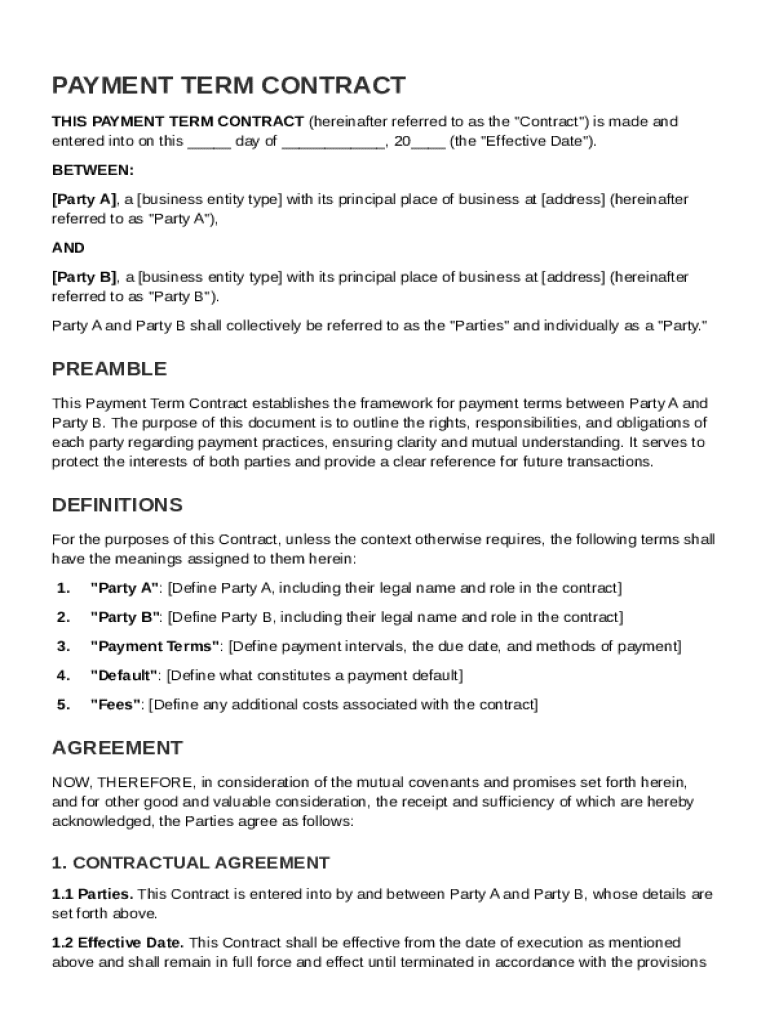
A Payment Term Contract Template is a structured document that outlines the payment terms and obligations between two parties, typically called Party A and Party B. This template serves as a vital tool to ensure transparency and clear understanding in financial agreements. Key components include definitions of payment types, the amounts involved, schedule timelines, payment methods, and each party's responsibilities. Additionally, it contains clauses covering default conditions, remedies for defaults, and processes for amendments. Encompassing miscellaneous provisions and governing law, the template aims to protect both parties by preempting potential disputes over payment terms.
How to Use the Payment Term Contract Template
Utilizing a Payment Term Contract Template involves several precise steps to ensure its effectiveness in various transactions:
-
Review the Template: Carefully read through the entire template to comprehend its components. Make note of sections that may require modifications specific to your agreement.
-
Tailor to Your Needs: Customize the template by filling in pertinent information such as payment amounts, deadlines, and methods. Ensure every section accurately reflects the terms agreed upon by both parties.
-
Clarify Legal Terms: Make sure all legal terminology used is understood by both parties. Consulting a legal expert may be beneficial for clarification and preventing potential pitfalls.
-
Get Mutual Agreement: Both parties must review and agree to the details included in the template before signing. This helps in avoiding misunderstandings or disputes later.
-
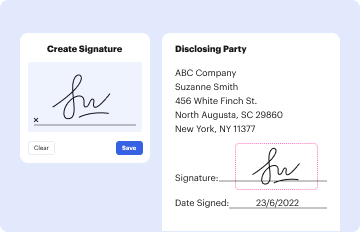
Sign and Save: Once agreed upon, both parties should sign the document. Keep a signed copy in a secure but easily accessible location for future reference.
Steps to Complete the Payment Term Contract Template
Completing a Payment Term Contract Template requires a detailed approach:
-
Identify Parties Involved: Clearly state the names and roles of both Party A and Party B at the beginning of the document.
-
Define Payment Details: Specify in detail the payment methods, amounts, and schedule. Include any conditions that must be met before payments are made.
-
Detail Responsibilities: Outline the responsibilities and obligations of both parties regarding payment processes, ensuring clarity on who is accountable for what.
-
Address Default Terms: Provide terms that define what constitutes a default and how it will be handled, including potential penalties or corrective actions.
-
Governing Law: Specify which state's law will govern the contract, ensuring compliance with relevant regional regulations.
-
Include Miscellaneous Provisions: Offer space for any additional clauses or conditions that may apply specifically to the agreement.
Key Elements of the Payment Term Contract Template
The template includes crucial elements essential for a complete contract:
- Payment Structure: Details on amounts, frequency, and method of payment.
- Revisions Clause: Terms for making amendments to the original contract.
- Default Conditions: Conditions under which one party might be in financial default.
- Legal Jurisdiction: Which local or state laws will govern the contract should disputes arise.
- Signature Block: Space for parties to sign and date, making the agreement legally binding.
Important Terms Related to Payment Term Contract Template
Several important terms need to be understood within the context of the Payment Term Contract:
- Default: Failure to meet contractual financial obligations.
- Consideration: The payment or benefit derived from the contract.
- Remedy: Steps that can be taken in response to a breach or default.
- Indemnity: Compensation for loss or damage as outlined in the contract.
- Force Majeure: Unforeseeable circumstances that prevent parties from fulfilling the contract.
Legal Use of the Payment Term Contract Template
The legal use of a Payment Term Contract Template is dictated by several factors to ensure compliance and enforceability:
-
Authentication: Ensuring each party fully understands the terms prior to signing.
-
Compliance: The contract must adhere to both federal and state laws governing financial agreements.
-
Electronic Signatures: According to the ESIGN Act, electronic signatures are recognized as legally binding, making digital contract execution valid.
-
Recording Keeping: Both parties should maintain copies of the signed document for legal and accounting purposes.
-
Dispute Resolution: The contract should outline mechanisms for resolving disputes, including mediation or arbitration clauses.
Who Typically Uses the Payment Term Contract Template
Various individuals and entities find a Payment Term Contract Template essential:
-
Businesses: Companies often engage in transactions requiring clear payment terms to avoid disputes.
-
Freelancers and Contractors: Independent workers utilize these templates to ensure they receive payments on-time and in full.
-
Suppliers and Vendors: Use templates for agreements with clients or customers to solidify terms and enhance business relationships.
-
Landlords and Tenants: Employ this template to outline rental payment terms and responsibilities.
-
Legal and Financial Advisors: These professionals use templates to guide clients in drafting agreements that protect their interests.


Examples of Using the Payment Term Contract Template
Practical scenarios highlight the utility of this template across industries:
-
Consulting Services Agreement: Establishing payment terms for project billing in consulting assignments.
-
Equipment Lease Agreement: Outlining payment structures for leasing industrial machinery.
-
Supplier Agreement: Clarifying terms in recurring monthly supply deliveries.
-
Freelance Contract: Ensuring payment conditions for project milestones are met in creative and technical fields.
-
Real Estate Transactions: Managing installment-based payments in property sales.
Examples of Using the Payment Term Contract Template
Practical scenarios highlight the utility of this template across industries:
-
Consulting Services Agreement: Establishing payment terms for project billing in consulting assignments.
-
Equipment Lease Agreement: Outlining payment structures for leasing industrial machinery.
-
Supplier Agreement: Clarifying terms in recurring monthly supply deliveries.
-
Freelance Contract: Ensuring payment conditions for project milestones are met in creative and technical fields.
-
Real Estate Transactions: Managing installment-based payments in property sales.
State-Specific Rules for the Payment Term Contract Template
Understanding state-specific rules is crucial when using this template, as requirements can vary:
-
Interest Rates: Some states cap the allowable interest on overdue payments.
-
Transaction Fees: Regional laws may stipulate limits on fees that can be charged.
-
Governing Law: Always specify in the contract which state's law applies in case of disputes.
-
Remedies and Penalties: Each state may have different rules about the enforceability of penalties for non-payment.
-
Consumer Protection Laws: Ensure the terms comply with local regulations protecting consumers in financial agreements.