






Definition & Meaning
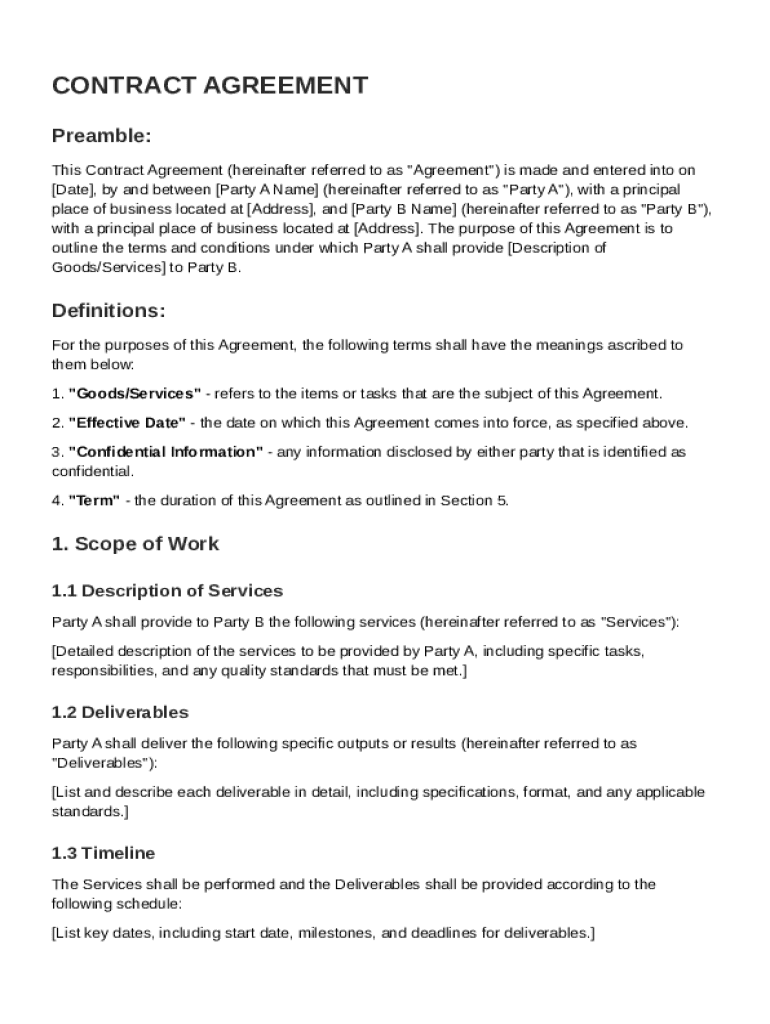
The "Example Contract Template" is a standardized legal document designed to outline agreements between two or more parties. It includes essential components that clarify the rights and responsibilities of each party involved, ensuring mutual understanding and legal protection. Typically, this type of contract is used in various industries to provide a reliable framework for cooperation, minimizing risks and potential disputes. By defining key contractual elements, such as scope of work, payment terms, and confidentiality clauses, the template ensures that all parties are aligned in their expectations and obligations.
Key Elements of the Example Contract Template
The "Example Contract Template" contains several critical sections that contribute to its effectiveness and comprehensiveness:
-
Scope of Work: Clearly defines the tasks and responsibilities each party agrees to undertake. This section helps prevent misunderstandings by detailing specific deliverables and timelines.
-
Compensation Structure: Outlines how and when payments will be made. This includes total compensation, payment schedules, and any penalties for late payments.
-
Confidentiality: Ensures sensitive information is protected by prohibiting unauthorized disclosure or use, thus safeguarding the interests of all parties involved.
-
Intellectual Property Rights: Specifies the ownership of intellectual property created during the contract. This section establishes who retains rights to creations or inventions developed throughout the contract duration.
-
Duration and Termination: States the contract's validity period and conditions under which it can be terminated. This ensures each party understands the timeframe and processes for ending the agreement if necessary.
-
Dispute Resolution: Provides procedures for resolving disagreements, such as mediation or arbitration, helping avoid costly legal battles.
Legal Use of the Example Contract Template
The "Example Contract Template" is legally binding, ensuring all included terms are enforceable under the law. Contract laws in the United States, for example, govern the enforceability of this template, which adheres to principles such as mutual consent, consideration, and competence of parties. Before using the template, parties should ensure all modifications are legal and appropriate for their specific context. For added legal assurance, some parties consult with legal professionals to adapt the template to fit unique organizational needs while remaining compliant with relevant regulations.
Who Typically Uses the Example Contract Template
A broad range of entities utilizes the "Example Contract Template," including:
-
Businesses: From sole proprietorships to large corporations, businesses use this template to formalize partnerships, vendor agreements, and client services.
-
Freelancers: Independent professionals use the template to secure client agreements, ensuring clear terms for their services and payments.
-
Nonprofits: These organizations use the template to engage with contractors, donors, and other stakeholders under clear terms.
-
Individuals: For personal services or simple agreements, individuals may find the template useful for setting unambiguous terms.


Steps to Complete the Example Contract Template
Completing the "Example Contract Template" involves a series of methodical steps:
-
Gather Information: Collect all necessary details required for the contract, including party names, contact information, and work specifics.
-
Input Contractual Details: Start by filling in the template, ensuring all fields are completed with accurate and thorough data.
-
Review Terms and Conditions: Read through all sections, including payment details, deadlines, and confidentiality clauses, to ensure all parties agree.
-
Modify as Needed: Make any necessary adjustments to the template to align with particular requirements or preferences.
-
Seek Legal Advice: Consider consulting with a legal professional to validate the contract's completeness and compliance before finalizing.
-
Finalize and Sign: Once all parties agree on the terms, signatures are obtained, making the contract officially binding.
Examples of Using the Example Contract Template
Several real-world scenarios illustrate the template's application:
-
Consulting Services: A company hiring a consultant to improve business processes uses the contract template to outline service expectations, payment terms, and confidentiality agreements.
-
Partnership Agreements: Two businesses entering a joint venture use the template to define their roles, contributions, and profit-sharing arrangements.
-
Vendor Contracts: An organization engaging a supplier for materials includes details of delivery schedules, prices, and service levels within the contract.
Each example underscores the template's adaptability and utility in structuring clear, enforceable agreements across various contexts.
Required Documents
Effective use of the "Example Contract Template" may require supplementary documents to support the agreement:
-
Proof of Identity: For verifying the identities of contracting parties.
-
Business Licenses: Evidence of legal standing for companies involved.
-
Previous Contracts: Historical agreements that can inform or contextualize new terms.
-
Supporting Financial Documents: Proof of fiscal capacity, ensuring compliance with financial commitments.
Form Submission Methods (Online / Mail / In-Person)
There are multiple methods available for distributing and finalizing the "Example Contract Template":
-
Online Platforms: Digital signatures through platforms like DocHub facilitate quick and efficient contract execution without the need for physical presence.
-
Mail: Sending printed contracts via postal services for parties who prefer traditional methods.
-
In-Person: Coordination meetings where parties physically sign documents can help resolve final concerns or discussions before contract finalization.
Each approach offers unique advantages and can be selected based on convenience, logistical considerations, or preference.