






Definition & Meaning
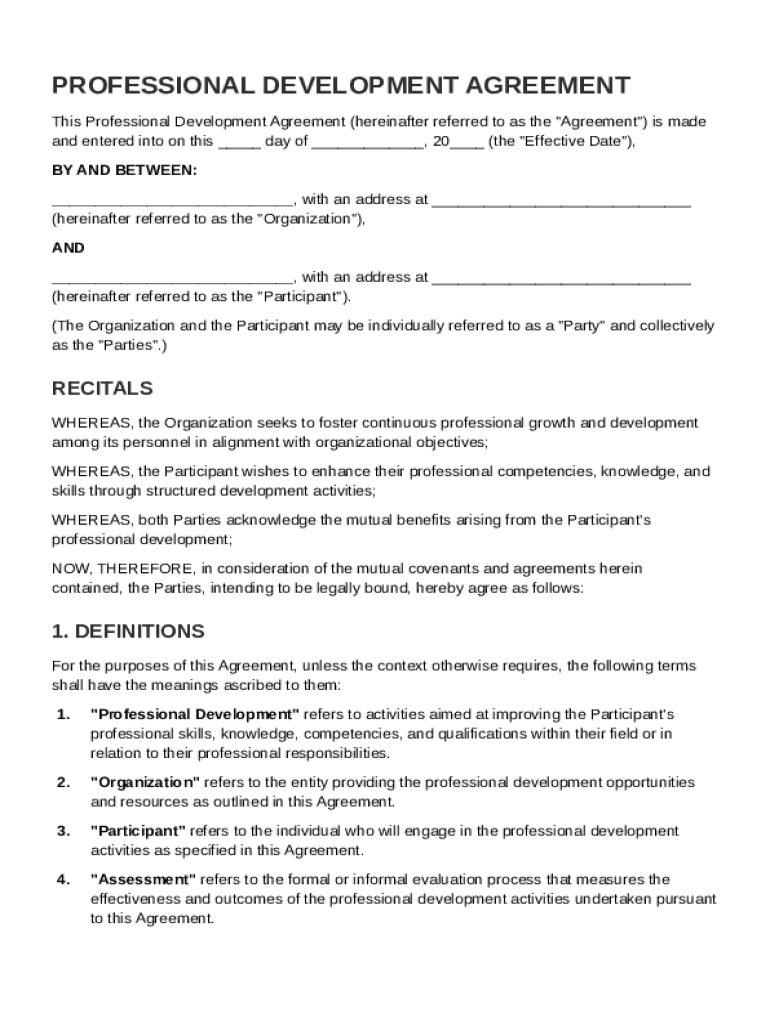
The Professional Development Agreement Template is a formal document that outlines the obligations and commitments of a participant involved in professional development initiatives facilitated by an organization. It serves as a baseline for structuring development activities that enhance the participant's skills while contributing to the organization's goals. This template typically encompasses various areas such as roles and responsibilities, types of development activities, evaluation criteria, and conditions for termination. It is imperative for both parties—the participant and the organization—to agree on the outlined terms to ensure a mutual understanding and compliance with the agreement.
Key Elements of the Professional Development Agreement Template
Roles and Responsibilities
- Participant's Responsibilities: Participants must actively engage in the specified development activities and apply the new skills and knowledge acquired.
- Organization's Obligations: The organization is responsible for providing adequate resources and opportunities necessary for the participant's professional growth.
Types of Professional Development Activities
- Workshops and Trainings: Participation in workshops relevant to the participant's field.
- Mentorship Programs: Engagement in mentorship relationships to guide growth.
- Online Courses: Enrolling in e-learning platforms that offer courses related to the participant’s career path.
Steps to Complete the Professional Development Agreement Template
- Review Agreement Terms: Both parties should thoroughly go through all sections of the agreement to understand each clause.
- Customizing the Document: Modify the template to fit specific requirements such as names, roles, and detailed activity plans.
- Obtain Necessary Approvals: Gather signatures from relevant stakeholders, ensuring that everyone is informed and in agreement with the outlined terms.
- Final Review and Sign Off: Conduct a final review to ensure completeness and accuracy before signing the document, making it legally binding.
How to Use the Professional Development Agreement Template
Preparing the Template
- Capture essential details by filling in the participant’s name, organization, and the intended development activities.
- Customize the evaluation methods to match organizational needs and participant expectations.
Utilizing Digital Tools with the Template
- Digital Platforms: Use platforms like DocHub to fill, edit, and manage the template digitally, allowing for efficient data handling and updates.
- Password Protection & Encryption: Securely share digital copies using encryption and password protection for confidential information handling.
Legal Use of the Professional Development Agreement Template
Ensuring Legal Compliance
- Confidentiality Clauses: Incorporate detailed confidentiality agreements to protect proprietary organization information.
- Dispute Resolution Procedures: Outline specific procedures to address any potential conflicts or disputes arising from the terms of the agreement.
Legal Validity and Binding Nature
- Signatures: Utilize electronic signatures, which are legally recognized, to complete the agreement. Ensure all parties involved have signed to validate the document.
Important Terms Related to Professional Development Agreement Template
- Participant: The individual partaking in professional development activities.
- Organization: The entity sponsoring or facilitating the professional development initiatives.
- Confidentiality: The requirement to keep information shared during the professional development process private and undisclosed to unauthorized parties.
Who Typically Uses the Professional Development Agreement Template

Intended Users
- Educational Institutions: For developing faculty members’ skills.
- Corporations: To enhance employee competencies in alignment with company goals.
- Non-Profit Organizations: Used for volunteer skill-building programs.
Examples of Using the Professional Development Agreement Template
Practical Applications
- Corporate Training Programs: Companies implement the template to ensure clear expectations and responsibilities for employees undergoing training.
- University Development Plans: Educational institutions use the template to formalize faculty enhancement programs, targeting research and teaching excellence.
Digital vs. Paper Version
Advantages of Digital Templates
- Easier Editing & Sharing: Digital templates can be effortlessly altered and disseminated, facilitating real-time collaboration.
- Eco-Friendly: Reduces paper usage and contributes to sustainable practices within organizations.
Use Cases for Each Format
- Digital Format: Ideal for organizations emphasizing digital transformation and remote workflows.
- Paper Format: Suitable for contexts where digital access may be limited or where a physical document is required.