Definition & Meaning
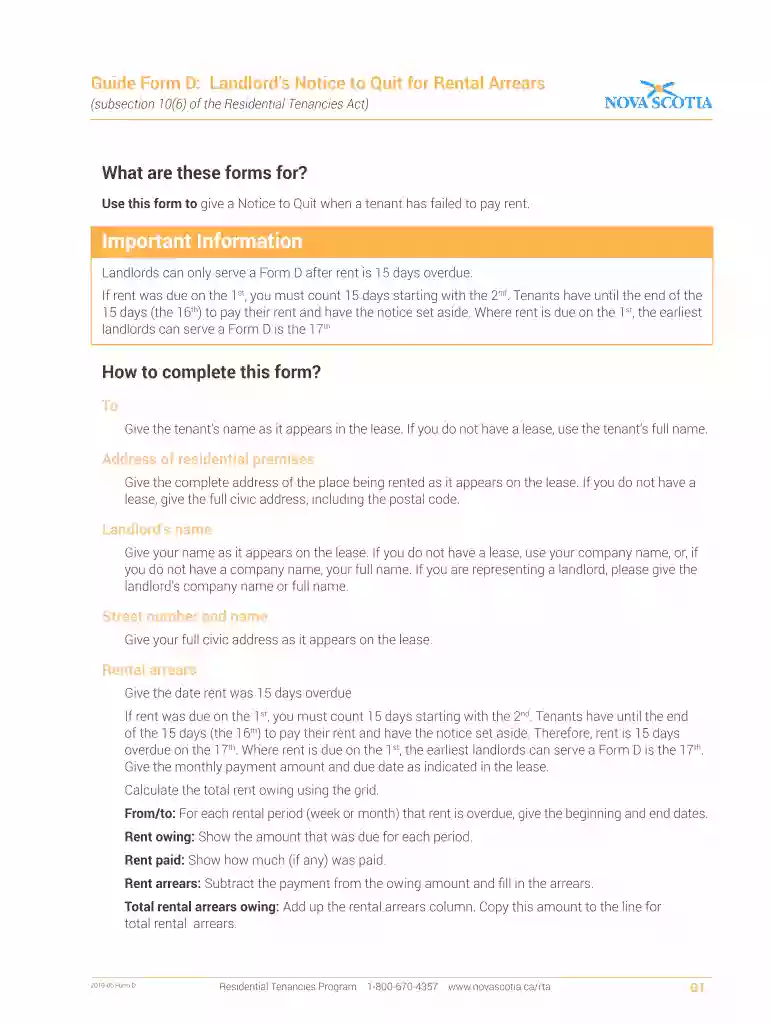
The Guide Form D: Landlords Notice to Quit for Rental Arrears is a legal document used by landlords to formally inform tenants of their obligation to vacate the rental property due to overdue rent payments. This form, typically governed under regional residential tenancy laws, serves as an official notice that the tenant has failed to fulfill their financial obligations as agreed in the lease or rental agreement. It provides a clear framework for landlords to follow when initiating the eviction process, ensuring compliance with legal standards.
Core Components
- Notice of Overdue Rent: Specifies the amount of rent overdue and the duration of the arrears.
- Eviction Instruction: Informs the tenant of the requirement to vacate by a specific date if the arrears are not paid.
- Legal Compliance: Aligns with local laws governing tenant and landlord relationships.
How to Use the Guide Form D: Landlords Notice to Quit for Rental Arrears
The usage of the Guide Form D involves several critical steps to ensure the process is carried out legally and efficiently. Success in using this form depends on following these steps diligently:
- Verify Overdue Rent: Confirm that rent is overdue and specify the amount due in the notice.
- Complete the Form: Accurately fill out the form, ensuring all sections are completed in line with legal requirements.
- Serve the Notice: Deliver the notice to the tenant according to prescribed legal methods, which may include registered mail or personal delivery.
- Allow Cure Period: Provide the tenant with the opportunity to rectify the arrears within a specified period, as required by law.
- Prepare for Follow-up: If the tenant does not comply, prepare to follow up with legal action to enforce the eviction.
Practical Examples
- A landlord in New York uses the notice to initiate eviction after a tenant fails to pay rent for 16 days.
- In California, a tenant receives the notice and utilizes the cure period to pay outstanding rent and avoid eviction.
Important Terms Related to Guide Form D
Understanding specific terminology associated with Form D is crucial for landlords and tenants alike. Here are key terms commonly used in the context of this document:
- Arrear(age): The unpaid and overdue rent amount owed by the tenant.
- Notice to Quit: A formal legal notice requiring a tenant to vacate the premises by a specified date.
- Cure Period: The allotted time a tenant has to rectify rent arrears before eviction proceedings commence.
Detailed Terms Context
- Cure Period Variations: In some states, a seven-day cure period is mandated, while others may require up to 30 days.
- Legal Notice: The classification of the notice as a legal document, emphasizing its enforceability.
Key Elements of the Guide Form D
To effectively prepare and utilize the Guide Form D, certain elements must be included to ensure its validity and effectiveness:
- Tenant Information: Complete details of the tenant, including name and address.
- Landlord Details: Name and contact information of the landlord or property manager.
- Rent Due Date: The original due date of the rent and the specific amount overdue.
- Signature: The landlord’s signature to authenticate the notice.
State-Specific Rules for the Guide Form D
Various states in the U.S. have specific regulations dictating how Form D should be used. It is vital to understand these regional differences to ensure compliance:
- New York: Requires a 14-day notice period for eviction due to rental arrears.
- Florida: Allows landlords to issue a three-day notice for payment or to vacate.
- Texas: Mandates that landlords provide a written 15-day notice.
Considerations for Compliance
- State Law Review: Always review state-specific landlord-tenant laws before issuing the notice.
- Legal Advice: Consult with a legal professional if unsure about state regulations.
Legal Use of the Guide Form D
The Guide Form D must be used in strict accordance with legal standards to protect both landlord rights and tenant rights. Here's how to keep the usage legal:
- Adhere to Legal Timeframes: Respect legally mandated timeframes for vacating and rectifying arrears.
- Avoid Self-Eviction: Refrain from removing tenants or their belongings without legal authority.
- Document Everything: Keep a thorough record of all communications and actions taken.
Maintaining Legal Standards
- Professional Consultation: Seek advice from a legal professional when drafting or serving Form D.
- Evidence Collection: Gather proof of service and delivery to prevent future disputes.
Steps to Complete the Guide Form D
Completing the Guide Form D involves a methodical approach to ensure all necessary information is included:
- Gather Information: Compile all relevant tenant and rental details.
- Fill Out the Form: Accurately complete each section with correct information.
- Review and Validate: Double-check the form for accuracy and completeness.
- Sign the Form: Ensure it is signed by an authorized party.
- Make Copies: Retain copies for records and potential legal proceedings.
Specific Considerations
- Accurate Details: Ensure tenant and property information are correct to avoid disputes.
- Deadline Adherence: Clearly state all deadlines and periods relevant to the process.
Examples of Using the Guide Form D
Using Form D involves real-world scenarios where landlords have successfully issued notices for rental arrears. Here are practical examples:
- Scenario 1: A landlord issues Form D to a tenant in Chicago who has not paid rent for over 15 days. The tenant pays the arrears within the given cure period, avoiding eviction.
- Scenario 2: In Boston, a landlord serves a notice to a tenant not responding to rent payment reminders. The tenant fails to pay, leading to legal eviction proceedings.
Effective Application Practices
- Timely Issuance: Ensure notices are issued promptly once arrears thresholds are met.
- Follow-through: Be prepared to take necessary legal steps if payment is not received.
Penalties for Non-Compliance
Failure to comply with the regulations surrounding the use of Guide Form D can result in significant penalties for landlords:
- Legal Sanctions: Facing lawsuits or legal fines for not adhering to eviction laws.
- Tenant Claims: Potential claims for unlawful eviction or tenant harassment.
Preventative Measures
- Legal Comprehension: Fully understand all laws and regulations before proceeding.
- Documentation: Maintain thorough and accurate documentation as protection against claims.