






Definition and Meaning
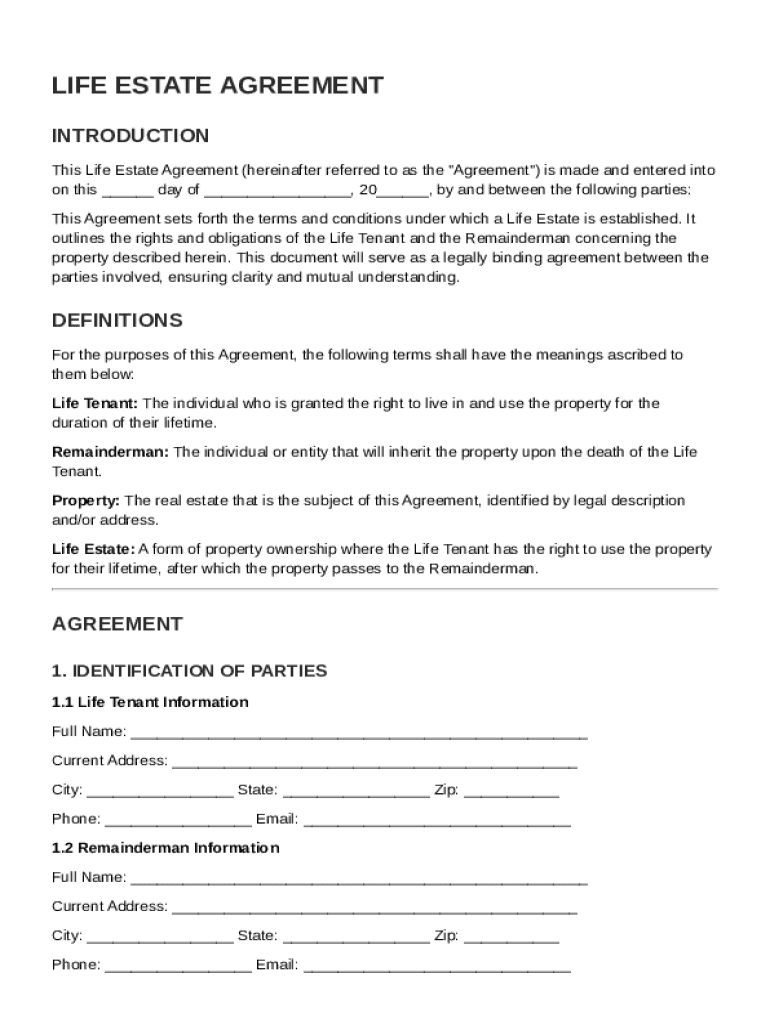
A Life Estate Agreement Template is a legal document used to define the terms of a life estate arrangement. This template provides a structured format for outlining the roles, responsibilities, and rights of involved parties, specifically the Life Tenant and the Remainderman. The Life Tenant holds the right to use and benefit from the property during their lifetime. After the Life Tenant's death, the property rights automatically transfer to the Remainderman, who becomes the full owner. The agreement ensures clarity by detailing property maintenance duties, the ability to transfer interests, and methods for resolving disputes.
Key Elements of the Life Estate Agreement Template
The Life Estate Agreement Template includes several essential components to cover various aspects of the arrangement:
- Identification of Parties: Clearly names the Life Tenant and Remainderman, offering transparency and reducing potential misunderstandings.
- Property Description: Provides a detailed description of the estate involved, often including the address and legal property description.
- Rights of Use: Specifies the Life Tenant's rights to live on, use, and profit from the property during their lifetime.
- Maintenance Responsibilities: Outlines who is responsible for maintaining the property, including general upkeep and repairs.
- Transfer Rights: Details any restrictions or permissions regarding the Life Tenant's ability to transfer their interest in the property.
- Dispute Resolution: Establishes the preferred or required methods for resolving disputes between the Life Tenant and Remainderman.
- Governing Law: Indicates which state's laws will govern the agreement, which is particularly important for ensuring legal enforcement.
How to Use the Life Estate Agreement Template
Utilizing the Life Estate Agreement Template involves several straightforward steps:
- Download the Template: Access the template through document workflow platforms like DocHub.
- Complete the Necessary Fields: Enter information about the Life Tenant, Remainderman, and the property.
- Review Key Terms: Ensure understanding and agreement with the outlined responsibilities, rights, and obligations.
- Finalize the Document: Use DocHub's editing tools to make necessary adjustments, add text, or insert images.
- Sign Electronically: With electronic signature capabilities, sign the document to make it legally binding; ensure all parties involved also sign.
- Distribute Copies: Share the finalized agreement with all involved parties, maintaining copies for records.
Important Terms Related to the Life Estate Agreement Template
Understanding specific legal and estate-related terms is crucial for interpreting the Life Estate Agreement Template accurately:
- Life Tenant: The individual entitled to use and benefit from the property during their lifetime.
- Remainderman: The person or entity who inherits the property after the Life Tenant's death.
- Encumbrances: Legal restrictions or liabilities on the property that might affect use or transfer.
- Easements: Granted rights for use or access to the property by individuals other than the owner.
- Habendum Clause: A section in a deed that defines the extent of ownership rights being transferred.
Steps to Complete the Life Estate Agreement Template
When completing the Life Estate Agreement Template, follow these detailed instructions:
- Gather Necessary Information: Collect full names, addresses, and relevant identification details of all parties.
- Specify Property Details: Include property address, legal description, and any specific terms related to its use.
- Outline Responsibilities: Clearly assign maintenance and financial responsibilities to prevent future conflicts.
- Set Transfer and Use Restrictions: Indicate any limitations or permissions concerning the Life Tenant's right to transfer interest.
- Include Legal Provisions: Add clauses for dispute resolution and specify the governing law according to the property's location.
- Review: Double-check entries for accuracy and completeness before signing.
- Sign and Validate: Use DocHub's legally binding electronic signature feature to sign. Ensure all parties sign in the designated order if applicable.
Legal Use of the Life Estate Agreement Template
The Life Estate Agreement Template serves several legal purposes:
- Establishing Clear Terms: Legally documents the rights and responsibilities of all parties involved in a life estate arrangement.
- Preventing Disputes: By clearly outlining responsibilities, such agreements minimize potential legal disputes.
- Facilitating Estate Planning: Serves as a tool in estate planning, allowing property owners to manage their assets effectively while alive.
- Ensuring Property Maintenance: Outlines who is responsible for property upkeep, providing legal recourse if obligations are not met.
State-Specific Rules for the Life Estate Agreement Template
Estate laws may vary significantly by state. It is essential to consider the following state-specific elements when preparing a Life Estate Agreement:
- Property Tax Implications: State laws may affect how property taxes are assessed and who is responsible for payment.
- Homestead Exemptions: Some states offer homestead exemptions that the Life Tenant might be eligible to maintain.
- Transfer on Death Deed: Availability of tools like a Transfer on Death Deed can influence decisions on using a life estate.
- State Recording Requirements: Certain states require formal recording of life estate documents to be valid and enforceable.
Who Typically Uses the Life Estate Agreement Template
The Life Estate Agreement Template is typically used by:
- Property Owners: Individuals seeking to retain use of their property during their lifetime while ensuring a seamless transfer upon their death.
- Estate Planners: Professionals who help clients plan for asset distribution as part of broader estate planning services.
- Legal Professionals: Attorneys drafting life estate agreements for clients seeking a formal arrangement.
- Family Members: Relatives vested in managing shared family assets without immediate division or sale.