




Definition and Meaning
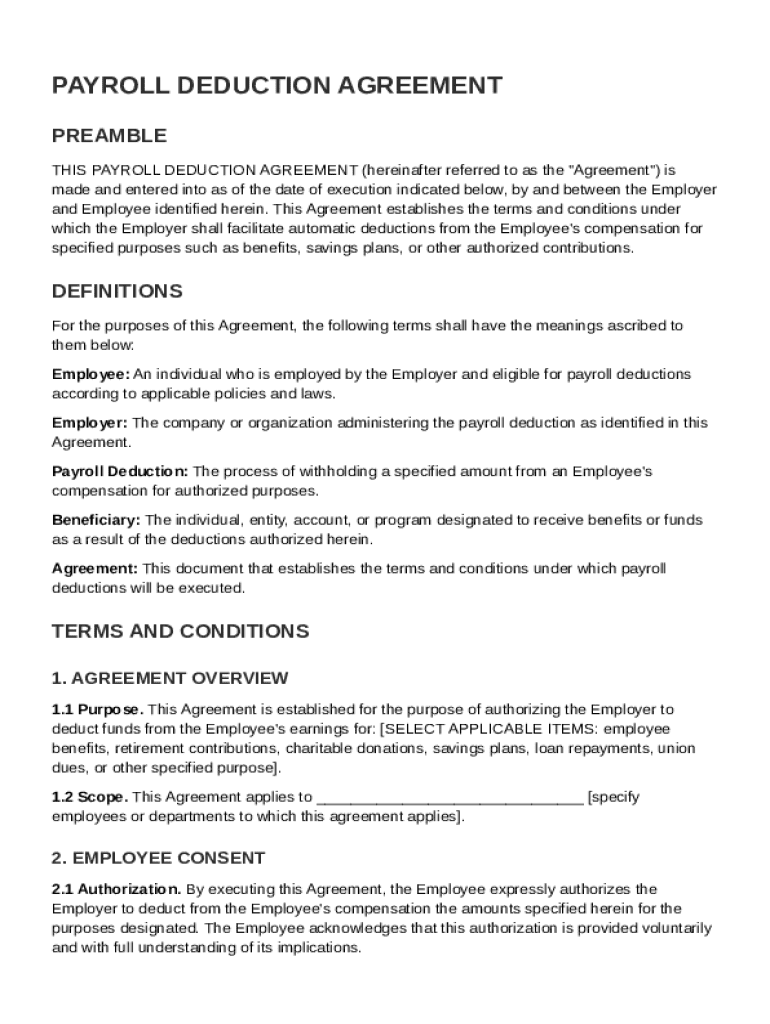
The Payroll Deduction Agreement Template is a formal document that outlines the conditions under which an employer can deduct specific amounts from an employee’s salary. It serves as a mutual agreement between the employer and employee regarding the automatic deduction of wages for varied purposes like health benefits, savings plans, or retirement contributions. The agreement typically includes the purpose of deductions, the calculated amounts, and the distribution strategy of the deducted funds. Importantly, it emphasizes the voluntary participation of the employee, ensuring that deductions only occur with their explicit consent, thus safeguarding their autonomy over salary management.
How to Use the Payroll Deduction Agreement Template
Utilizing the Payroll Deduction Agreement Template effectively requires a clear understanding of its structure and clauses. Firstly, familiarize yourself with the template sections, which usually include fields for personal information, deduction types, and authorization signatures. Here's how to proceed:
-
Fill Personal Details: Add basic employee information like the name, ID number, and job designation.
-
Specify Deduction Types: Clearly define the kinds of deductions involved, ranging from health insurance premiums to retirement fund contributions.
-
Calculate Deduction Amounts: Determine the precise amount to be deducted either as a percentage of the salary or a fixed figure.
-
Review Terms: Ensure full comprehension of the legal and financial implications detailed in the agreement, including any mentions of compliance with state laws.
-
Obtain Employee Consent: Secure the employee’s signature to finalize the agreement, signifying their voluntary consent to the deductions.
Steps to Complete the Payroll Deduction Agreement Template
Completing this template involves a series of steps designed to capture relevant information and secure mutual understanding between employer and employee:
-
Gather Necessary Information: Collect all essential data from the employee, including taxation identification numbers and beneficiary details.
-
Draft Initial Agreement: Using the template, enter details specific to the employment context, ensuring accuracy in the types and purposes of deductions.
-
Conduct a Review Session: Arrange a meeting with the employee to discuss and clarify the terms stated in the draft.
-
Adjustments and Amendments: Make necessary changes based on feedback received from stakeholders to ensure all parties are satisfied.
-
Finalize and Sign: Secure both parties' signatures to legally bind the agreement, retaining copies for record-keeping.
Key Elements of the Payroll Deduction Agreement Template
The template is comprehensive, encapsulating several critical components that guarantee clear and transparent communication between employer and employee:
- Employee Information: Full name, address, job title, and employee ID.
- Deduction Categories: Specific funds or benefits for which deductions are intended.
- Authorization Clause: Employee's consent to deductions, including modification and cancellation options.
- Distribution Details: Information on how and when the deducted amounts will be sent to beneficiaries.
- Compliance Statements: An assurance that the agreement adheres to federal and state laws.
- Revocation Terms: Steps and conditions under which employees can revoke their consent.
Legal Use of the Payroll Deduction Agreement Template
This agreement holds significant legal weight, acting as a safeguard for both employers and employees in financial transactions. Legally, it must:
- Be voluntary with explicit consent from the employee.
- Comply with state and federal regulations, ensuring lawful deduction practices.
- Allow employees the right to amend or terminate the agreement concerning fair labor practices.
- Act as a record to settle disputes related to unauthorized deductions effectively.
Important Terms Related to Payroll Deduction Agreement Template
Understanding certain terms will enhance comprehension and management of this template:
- Voluntary Deduction: Deductions consented to by the employee, not mandated by law.
- Garnishment: A court-ordered deduction, differing from voluntary payroll deductions.
- Net Pay: The amount an employee receives after deductions are withheld.
- Beneficiary: The entity or individual that ultimately receives the deduction proceeds.
State-Specific Rules for the Payroll Deduction Agreement Template
Regulations governing payroll deductions vary across states. Employers must ensure compliance with local laws, which may dictate:
- Maximum permissible deduction amounts.
- Required employee notification periods prior to agreements taking effect.
- Additional local regulatory compliance for specific deduction categories, like health benefits.
Examples of Using the Payroll Deduction Agreement Template
Employers and HR departments across various scenarios utilize this template to streamline pay management:
- Employee Savings Plans: Organize deductions for retirement savings like 401(k) plans.
- Health Coverage: Allocate funds towards employee health insurance premiums effectively.
- Union Dues: Facilitate automatic collection of membership dues for organizational members.
By aligning on these terms and procedures, employers can ensure a smooth, compliant, and mutually beneficial deduction process that aligns closely with regulatory standards and individual employee needs.