






Definition & Meaning
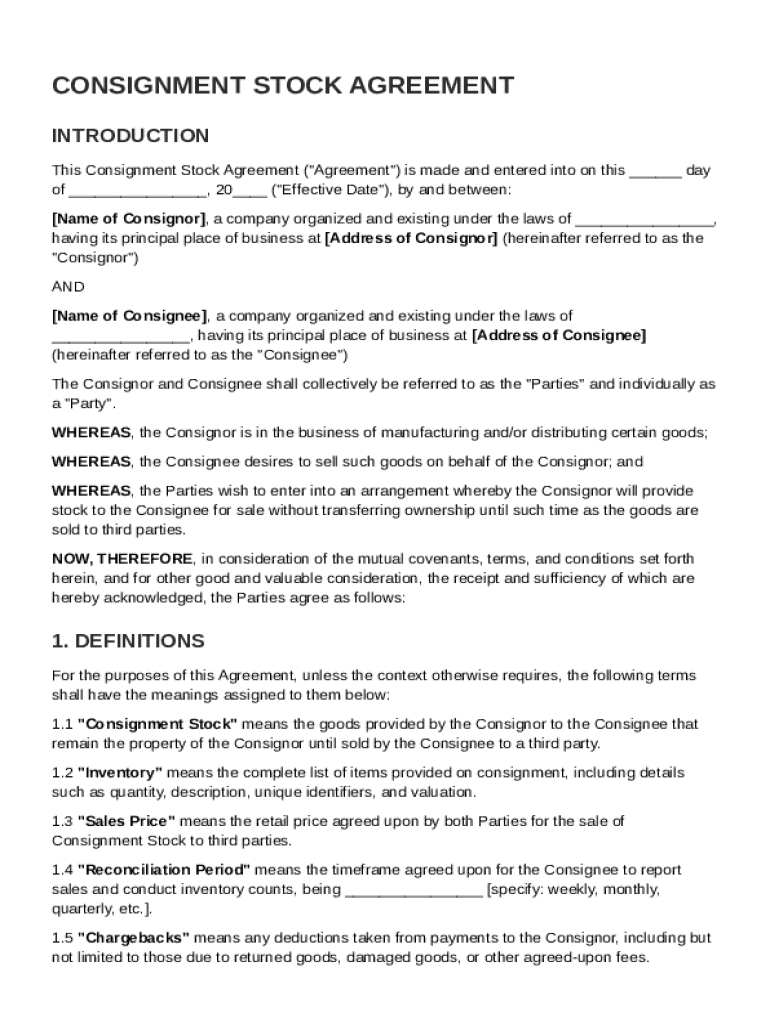
Consignment stock agreements are formal contracts that establish the terms and conditions between a consignor, who retains ownership of goods, and a consignee, who is responsible for selling these goods. The agreement sets out clear definitions, including roles, responsibilities, and financial arrangements, ensuring both parties understand their obligations. This type of agreement facilitates a smooth transaction by delineating who retains the title and risk associated with the goods until they are sold. Understanding this foundational aspect helps both parties operate within legal and commercial boundaries, maintaining a healthy business relationship.
Key Elements of the Consignment Stock Agreement Template
The consignment stock agreement template includes several critical elements designed to protect the interests of both the consignor and consignee. Key components consist of:
- Definitions and Roles: Clarifies the responsibilities and expectations of both parties.
- Sales Terms and Price: Details the pricing structure, payment method, and schedule.
- Inventory Management: Specifies how inventory levels will be monitored and reported.
- Risk and Title Conditions: Outlines when the risk and title of goods transfer from consignor to consignee.
- Termination Conditions: Describes how and under what circumstances the agreement can be terminated.
Understanding these elements ensures that both parties are aware of their rights and obligations, minimizing disputes and facilitating smooth business operations.
How to Use the Consignment Stock Agreement Template
To utilize the consignment stock agreement template effectively, start by reviewing the document and understanding each section. You should:
- Define Your Needs: Identify specific terms that pertain to your business relationship.
- Fill Out Essential Details: Input relevant details such as party names, contact information, and specific terms related to goods or services.
- Customize the Template: Make necessary adjustments to fit the specific requirements of your industry or business model.
- Verify Legal Compliance: Ensure the agreement complies with relevant laws and regulations.
- Review and Edit: Double-check all entries for accuracy and completeness.
Ultimately, the template serves as a foundational tool to establish a clear and legally sound agreement between parties engaged in consignment transactions.
Steps to Complete the Consignment Stock Agreement Template
Completing the consignment stock agreement template requires a structured approach to ensure accuracy and compliance:
- Gather Information: Collect all necessary data about the consignor, consignee, and the goods involved.
- Fill Out Party Details: Record the legal names and contact details of both parties.
- List Goods Description: Provide a detailed description of the goods being consigned, including quantities and condition.
- Agree on Sales Terms: Specify sales prices, payment terms, and any commissions or fees.
- Outline Responsibilities: Clearly define the obligations of each party in terms of inventory management and reporting.
- Define Risk and Title Transfer Rules: State when and how the transfer of risk and title occurs.
- Include Termination Requirements: Establish how either party may conclude the agreement.
- Review the Document: Ensure all information is correct and get legal advice if necessary.
- Signature and Date: Both parties should sign and date the final document to signify agreement.
Following these steps carefully can help avoid misunderstandings or disputes during the consignment partnership.
Legal Use of the Consignment Stock Agreement Template
The legal application of a consignment stock agreement entails understanding and adhering to local, state, and federal laws governing consignment sales. Key legal aspects to consider include:
- Authorization: Ensure both parties have the authority to enter into the agreement.
- Jurisdiction: Revise the agreement to comply with jurisdiction-specific laws regarding consignment transactions.
- Transfer of Ownership: Clearly state when ownership of goods transfers, to comply with legal stipulations and avoid disputes.
- Risk Allocation: Properly document which party holds the risk for goods being consigned.
By carefully drafting the agreement with legal oversight, parties can ensure the consignment relationship is legally enforceable and protects their interests.
Important Terms Related to the Consignment Stock Agreement Template
Some critical terms routinely encountered within a consignment stock agreement include:
- Consignor: The party providing goods for consignment.
- Consignee: The party responsible for selling the consigned goods.
- Title of Goods: Legal ownership of the goods consigned.
- Commission: Fee the consignee earns from the sale of goods.
- Inventory Report: Document detailing the status of goods in possession of the consignee.
Grasping these terms is vital for interpreting the agreement correctly and understanding each party's obligations under the contract.
Examples of Using the Consignment Stock Agreement Template
Real-world applications of a consignment stock agreement are varied and industry-specific. Some examples include:
- Retail: A local store agreeing to sell artisan goods on behalf of a craftsman.
- Art Galleries: An artist providing paintings to a gallery for exhibition and sale.
- Auto Sales: A car dealership selling vehicles on behalf of individuals or smaller consignment companies.
These scenarios illustrate how businesses can leverage consignment agreements to expand product offerings without assuming risk until a sale occurs.
State-by-State Differences
Consignment stock agreements can vary significantly due to state-specific regulations concerning contract law and sales. Differences may include:
- Sales Tax Requirements: States may have varying obligations for sales tax on consigned goods.
- Contractual Clauses: State-specific consumer protection laws can affect contract wording.
- Inventory Laws: Certain states impose distinct legal requirements on how inventory levels are reported and managed.
Businesses should adapt their consignment stock agreements to align with the laws in the states where they operate to ensure validity and compliance.