






Definition & Meaning
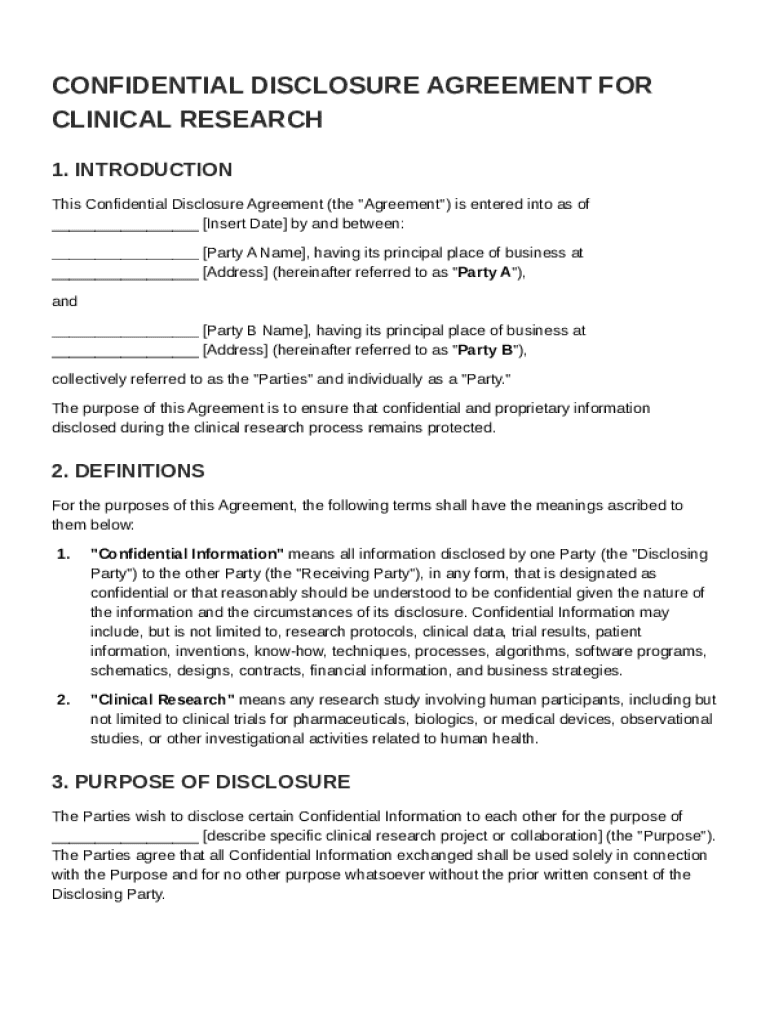
A Confidential Disclosure Agreement (CDA), specifically in the realm of clinical research, serves as a legally binding document between two parties that outlines the terms and conditions for protecting confidential and proprietary information shared during the research process. Within the context of clinical research, it defines what constitutes 'Confidential Information,' stipulates the obligations of both parties to maintain confidentiality, and delineates any exceptions to these confidentiality provisions.
- Confidential Information: Typically includes proprietary data, patient information, research outcomes, methodologies, and any unpublished works that could impact a party's competitive positioning or intellectual property rights.
- Purpose: Aims to prevent unauthorized dissemination or utilization of sensitive information, ensuring that both ethical and competitive interests are safeguarded during and after the research period.
Key Elements of the Confidential Disclosure in Clinical Research Agreement Template
The template for a CDA in clinical research typically includes several critical elements designed to ensure comprehensive coverage and protection.
- Identification of Parties: Clearly denotes the entities involved, including their roles (e.g., sponsor, researcher, institution).
- Definition of Confidential Information: Outlines what data and types of information are protected under the agreement.
- Obligations and Responsibilities: Specifies actions each party must take to protect confidential data, such as implementing security measures and limiting information sharing to authorized personnel.
- Exclusions from Confidentiality: Lists any data not covered by the agreement, such as publicly available information or data disclosed under judicial orders.
- Duration of Confidentiality: Defines the time frame during which confidentiality obligations are in effect, commonly extending several years beyond the termination of the agreement.
Steps to Complete the Confidential Disclosure in Clinical Research Agreement Template
Completing a CDA template involves several key steps to ensure all necessary information is accurately captured and the agreement is legally sound.
- Identify Parties Involved: Accurately record the names and details of all parties entering the agreement.
- Define Confidential Information: Clearly categorize the types of information considered confidential.
- Agree on Terms: Outline the responsibilities, duration, and exceptions regarding confidentiality for each party.
- Review Legal Requirements: Ensure the agreement complies with relevant legal standards and regulations, particularly within the United States.
- Signatures: Obtain signatures from authorized representatives of each party to validate the agreement.
Legal Use of the Confidential Disclosure in Clinical Research Agreement Template
The CDA template is intended for legal use in situations where sensitive information needs protection during clinical research activities.
- Compliance: Must adhere to applicable laws, including intellectual property and privacy regulations.
- Enforceability: Being legally binding, parties can enforce terms in a court of law if breaches occur.
- Dispute Resolution: Includes provisions for resolving disagreements, often through arbitration or mediation.
Important Terms Related to Confidential Disclosure in Clinical Research Agreement Template
Understanding key legal terms related to a CDA helps ensure clarity and compliance for all parties involved.
- Non-Disclosure: Refers to the prevention of sharing confidential information beyond specified individuals or entities.
- Intellectual Property: Includes patents, trademarks, and proprietary methodologies related to the research.
- Arbitration: A formal dispute resolution method, often used as an alternative to courtroom litigation.
State-Specific Rules for the Confidential Disclosure in Clinical Research Agreement Template
While CDAs are relatively uniform, state-specific regulations can impact various aspects of these agreements.
- California: Generally stringent on confidentiality clauses, ensuring they are not overly broad and comply with state privacy regulations.
- New York: Emphasizes the importance of clear definitions and justifiable terms within non-disclosure agreements to uphold enforceability.
Software Compatibility
For those utilizing document workflow and editing tools, compatibility with popular software platforms is crucial.
- DocHub Compatibility: The CDA template can be used with DocHub, which allows for editing, commenting, and sharing documents directly through the platform.
- Third-party Integration: Supports integration with cloud services, enhancing flexibility in document handling and storage.
Examples of Using the Confidential Disclosure in Clinical Research Agreement Template
Case studies and practical examples illustrate how CDAs are effectively applied in clinical research settings.
- Pharmaceutical Research: A pharmaceutical company collaborating with a research institution might use a CDA to share drug formulation data without risking public dissemination.
- Academic Research Partnerships: When universities and biotech companies work together, a CDA ensures that innovative methodologies remain protected, benefiting both parties in the publication and patent processes.
Versions or Alternatives to the Confidential Disclosure in Clinical Research Agreement Template
While the primary template suits many situations, variations and alternatives can cater to different needs.
- Bilateral vs. Unilateral Agreements: Bilateral agreements involve mutual sharing obligations, whereas unilateral agreements impose confidentiality primarily on one party.
- Standard vs. Customized Templates: Standard templates offer general protection, while customized templates allow for specific terms tailored to unique requirements of a research collaboration.