





Definition & Meaning
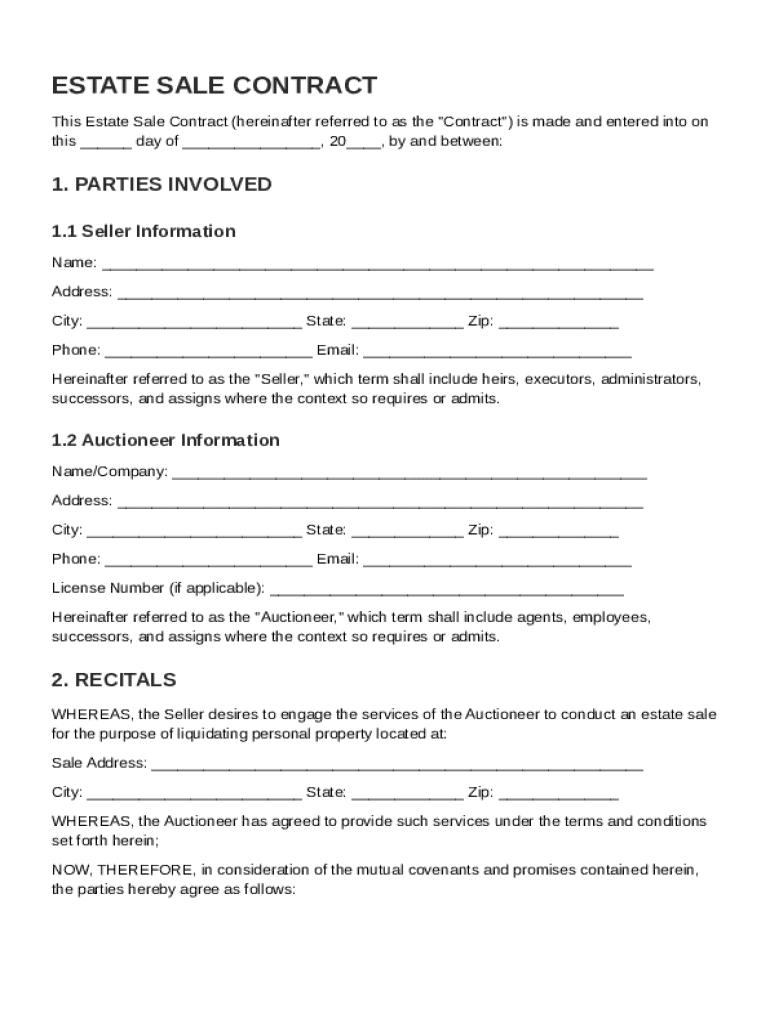
The Estate Sale Contract Template serves as a formal agreement outlining the terms and conditions between a seller (often the estate owner or manager) and an auctioneer or estate sale company. This contract specifies the scope of the estate sale, delineating responsibilities such as item description, sale terms, and payment methods. It also includes clauses related to liability, dispute resolution, and termination conditions, providing a comprehensive framework to ensure all parties understand their roles and obligations.
Key Elements of the Estate Sale Contract Template
The Estate Sale Contract Template comprises several essential components designed to offer clarity and protection for all involved parties. Key elements include:
- Item Descriptions: Detailed listings of all items included in the sale, complete with condition reports and appraisals.
- Sale Terms: Outlines the logistics of the sale, including dates, times, and marketing strategies.
- Payment Methods: Specifies acceptable forms of payment and schedules for disbursement to the seller.
- Commission Rates: Determines the auctioneer's remuneration, typically a percentage of the total sales.
- Liability Provisions: Defines the responsibilities for loss, damage, or theft of items during the sale process.
Steps to Complete the Estate Sale Contract Template
Completing the Estate Sale Contract Template involves a systematic series of actions to ensure thorough documentation:
- Gather Item Information: Compile comprehensive details for each item that will be sold.
- Define Sale Logistics: Determine the date, time, and location of the sale, along with any promotional activities.
- Negotiate Payment Terms: Agree on commission rates, payment schedules, and acceptable payment methods with the auctioneer.
- Detail Liability Terms: Clearly state which party is accountable in case of loss or damage to items.
- Review and Sign: Both seller and auctioneer should review all terms to avoid misunderstandings, then sign to formalize the agreement.
Legal Use of the Estate Sale Contract Template
In the United States, the use of the Estate Sale Contract Template is guided by legal standards ensuring enforceability and fairness for all parties. Contracts must comply with state-specific regulations and include all required information for validity. This ensures that in case of disputes, the contract will hold up in court, providing a legal recourse based on agreed-upon terms.
Who Typically Uses the Estate Sale Contract Template
The Estate Sale Contract Template is used by a variety of individuals and entities involved in estate liquidation, including:
- Estate Executors: Individuals appointed to manage the estate's assets.
- Family Members: Sellers who are liquidating family belongings.
- Estate Sale Companies: Firms specializing in organizing and conducting estate sales.
- Auction Houses: Entities managing the sale of estate items through auctions.

Important Terms Related to Estate Sale Contract Template
Understanding key terms is vital to navigating the Estate Sale Contract Template effectively:
- Consignor/Consignee: The seller and the auctioneer or estate sale company, respectively.
- Buyer's Premium: An additional charge on the winning bid in an auction, paid by the buyer.
- Reserve Price: A minimum bid amount set for items, ensuring they are not sold below market value.
- Provenance: The history of ownership of an item, often impacting its value and authenticity.
Examples of Using the Estate Sale Contract Template
Consider practical scenarios where the Estate Sale Contract Template is employed:
- Estate Downsizing: When a household downsizes, the contract helps manage the sale of non-essential items.
- Inheritance Liquidation: Heirs may use the template to auction inherited items, clarifying terms in complex estates.
- Business Asset Disposal: Companies selling off assets use the contract to detail sale terms and safeguard interests.
- Charity Auctions: Non-profits utilizing estate items for fundraising can set expectations clearly through the contract.
State-Specific Rules for the Estate Sale Contract Template
Estate sale regulations can vary significantly across states within the U.S., impacting how the contract is structured:
- Licensing Requirements: Some states may require auctioneers to be licensed, affecting who can conduct sales.
- Tax Implications: The tax treatment of estate sales can differ, necessitating tailored clauses within the contract.
- Consumer Protection Laws: States enforce different rules on advertising and the disclosure of item defects, requiring careful compliance.
Understanding these variations ensures the contract is legally sound and suitable for the specific location of the sale.