
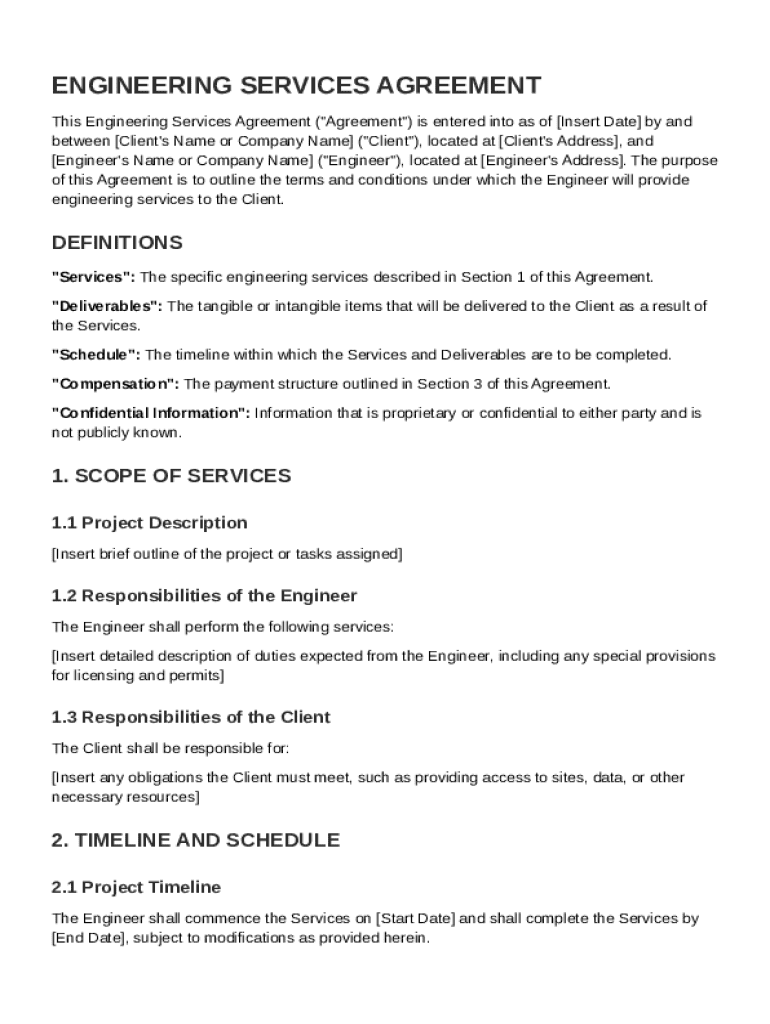







Definition and Purpose of the Engineer Contract Template
The Engineer Contract Template is a standardized document utilized to outline the terms and conditions under which an engineer will provide services to a client. This template serves as a comprehensive agreement that details the scope of work, rights, and obligations of both parties involved. By having a structured template, it simplifies the drafting process, ensuring consistency and clarity in contractual relationships. Companies and individuals can customize it to fit specific project requirements while maintaining essential legal safeguards. Commonly included in this document are clauses pertaining to confidentiality, indemnification, and termination conditions.
How to Use the Engineer Contract Template
To effectively employ the Engineer Contract Template, parties involved should follow a step-by-step process:
- Initial Review: Both the client and engineer should thoroughly read through the entire template to understand the sections relevant to their agreement.
- Customization: Modify specific sections to accurately reflect the unique details of the project, such as the scope of services, timelines, and compensation structure.
- Consultation with Legal Professionals: Consider having a legal professional review the customized contract to ensure that it complies with relevant laws and accurately reflects the agreed-upon terms.
- Mutual Agreement: Both parties should discuss potential adjustments and come to a mutual understanding before finalizing the document.
- Finalization and Signing: Once both parties agree on the terms, the document should be signed in the presence of witnesses, if necessary. Signed copies should be distributed to all relevant parties for their records.
Steps to Complete the Engineer Contract Template
Completing the Engineer Contract Template involves several key steps:
- Personal and Company Information: Fill in details regarding both parties, including names, addresses, and contact information.
- Scope of Work: Clearly define the tasks, responsibilities, and deliverables expected from the engineer.
- Timeline and Milestones: Specify the project duration, key milestones, and any critical deadlines to assure timely delivery.
- Compensation Details: Outline the payment terms, including rates, schedules, and any conditions for payment adjustments.
- Confidentiality Agreement: Insert clauses that protect sensitive information shared between both parties during the project.
- Indemnification and Liability: Define the responsibilities of each party in the event of legal disputes or claims.
- Review and Approve: Carefully review the completed section to ensure all required information is accurately detailed.
Key Elements of the Engineer Contract Template
Critical components to include in the Engineer Contract Template encompass:
- Clear Scope of Services: A precise outline of the tasks and responsibilities the engineer will perform.
- Project Timeline: Important dates and deadlines that structure the project timeline.
- Payment Terms: Details on how payments will be processed, including any penalty or incentives tied to performance.
- Confidentiality Obligations: Terms detailing how both parties must handle sensitive information.
- Termination Clauses: Conditions under which the contract may be terminated by either party.
- Governing Law: The legal framework that will apply in interpreting the contract.
- Liability and Insurance Requirements: Defining who bears responsibility in case of damages or loss.
Who Typically Uses the Engineer Contract Template
The Engineer Contract Template is a versatile tool used by a variety of individuals and organizations, including:
- Engineering Firms: Firms providing a broad spectrum of engineering services often use this template to standardize contracts with different clients.
- Independent Engineers: Freelance or independent engineers who engage in various projects use this template to formalize agreements with clients.
- Businesses Requiring Engineering Services: Companies that require one-time or continued engineering services utilize this template to ensure clarity and protection in their engagements.
- Project Managers: Professionals who oversee engineering projects use this template to manage expectations and responsibilities effectively.

Legal Use of the Engineer Contract Template
The legal use of the Engineer Contract Template ensures compliance with regulatory standards and protects the interests of both parties:
- Contractual Agreement: Establishes a legally binding contract between the engineer and client, specifying mutual obligations and expectations.
- Legal Compliance: Ensures that the contract aligns with current laws and regulations relevant to engineering services.
- Dispute Resolution: Provides frameworks for resolving any disputes arising from the contract terms, often stipulating mediation or arbitration.
- Intellectual Property Rights: Addresses the ownership of any intellectual property developed during the course of the agreement.
Examples of Using the Engineer Contract Template
Real-world instances where the Engineer Contract Template is valuable:
- Infrastructure Projects: Engineering firms use this template to detail contracts for projects like bridge construction or road development, clearly defining responsibilities related to design, inspection, and materials testing.
- Consulting Projects: Independent consultants utilize this template when providing specialized engineering advice, ensuring the scope and billing are explicit.
- Product Development: In developing new products, companies engage engineers through such templates to delineate the development process phases and deliverables expected at each stage.
Important Terms Related to the Engineer Contract Template
Understanding key terms associated with the Engineer Contract Template is essential for effective use:
- Independent Contractor: An engineer providing services without becoming an employee of the client.
- Indemnification: Security against legal responsibility for one's actions.
- Non-Disclosure Agreement (NDA): A clause that ensures confidential information is not disclosed to unauthorized parties.
- Force Majeure: A provision freeing parties from liability due to catastrophic events beyond their control.
- Arbitration Clause: A dispute resolution term specifying the arbitration process as the means of settling conflicts.




