




Definition & Meaning
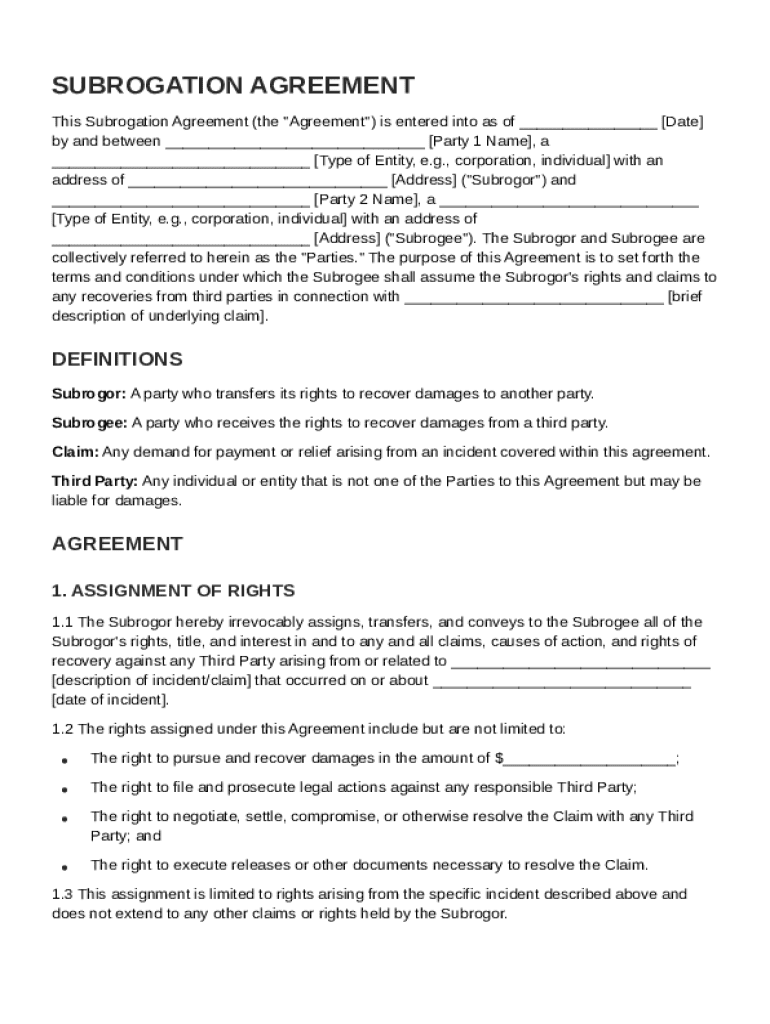
A Subrogation Agreement is a legal document that outlines the procedure by which one party, known as the Subrogor, assigns its rights to recover damages from a third party to another entity, referred to as the Subrogee. This agreement is pivotal in sectors like insurance and finance, where entities often seek to recover funds from third parties responsible for losses. It clearly delineates responsibilities, the process of damage recovery, and the distribution of any funds obtained. Key legal considerations include confidentiality, amendment conditions, and termination provisions, ensuring clarity and protection for both parties.
Examples in Practice
- Insurance Sector: Insurers often use subrogation to recover the costs from at-fault parties after settling a claim with the insured party.
- Finance: Financial institutions may engage in subrogation when a client defaults, allowing them to pursue third parties directly.
- Real Estate: Property managers utilize subrogation to claim damages from contractors or tenants responsible for property damage.
Key Elements of the Subrogation Agreement Template
Core Components
- Parties Involved: Identification of the Subrogor and Subrogee, including their respective rights and duties.
- Assignment of Rights: Detailed description of the rights being transferred, and any limitations or conditions.
- Recovery Process: Steps to be taken by the Subrogee to recover damages, including legal actions and negotiations.
- Distribution of Recoveries: How any recovered amounts will be distributed between the parties.
- Confidentiality Clause: Terms ensuring that sensitive information remains private.
- Termination Conditions: Circumstances under which the agreement can be terminated early.
- Dispute Resolution: Methods for handling disputes, such as mediation or arbitration.
Steps to Complete the Subrogation Agreement Template
Initial Preparation
- Gather Information: Collect all necessary details about the parties involved, the rights to be assigned, and any relevant background information.
- Legal Consultation: Consider consulting legal counsel to understand liabilities and obligations fully.
- Template Customization: Using DocHub, customize the template to reflect the specific terms agreed upon by the parties.
Completing the Document
- Insert Details: Input the names, addresses, and roles of both the Subrogor and Subrogee.
- Define Terms: Clearly state the rights being transferred and any conditions or limitations that apply.
- Draft the Recovery Clause: Specify the actions the Subrogee will take to recover damages.
- Clarify Distribution Terms: Outline how any funds recovered will be divided.
Finalization
- Review: Carefully review the completed agreement to ensure accuracy and clarity.
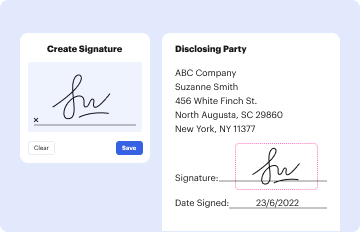
- Signatures: Both parties should sign the document electronically through DocHub for a legally binding agreement.
- Storage: Keep a digital copy securely stored, ensuring easy access for both parties.
Legal Use of the Subrogation Agreement Template
Compliance Considerations
Subrogation agreements must comply with applicable federal and state laws to be enforceable. Ensure the agreement aligns with laws such as the ESIGN Act for electronic signatures and data security standards. Reviewing federal guidelines ensures that the legal nuances, particularly in cross-state agreements, are appropriately addressed.
Confidentiality and Data Protection
- Encryption Standards: Follow industry standards for encryption (e.g., 256-bit SSL) to protect the agreement during digital communications.
- Legal Notices: Include disclaimers about compliance with relevant privacy laws, such as GDPR or CCPA, if data transfer involves jurisdictions outside the U.S.
Who Typically Uses the Subrogation Agreement Template

Common Users
- Insurance Companies: To manage claims where costs can be recovered from third parties.
- Law Firms: Facilitating legal actions pertaining to damage recovery.
- Businesses: Involved in managing properties or services prone to third-party liability issues.

Role-Specific Utilization
- Claims Adjusters: Use agreements to formalize the transfer of recovery rights from the insured to the insurer.
- Property Managers: Document subrogation when addressing tenant-caused damages recoverable from third parties.
State-Specific Rules for the Subrogation Agreement Template
Navigating Jurisdictional Differences
Subrogation laws can vary significantly between states, affecting enforceability and procedural requirements. Key considerations include statutory limitations, particular formatting requirements, and specific clauses that may be mandated or restricted by state law.
- California: Requires specific disclosures related to rights assignment and differentiates between types of subrogation (contractual, legal, equitable).
- New York: Emphasizes compliance with local contract laws and may involve specific mediation requirements in dispute resolution.
Important Terms Related to Subrogation Agreement Template
Glossary of Terms
- Subrogor: The party transferring rights to recover damages.
- Subrogee: The party receiving the assignment of rights.
- Assignment: The act of transferring rights from one party to another.
- Recovery: The process of obtaining damages from a third party.
- Arbitration: A form of alternative dispute resolution used to settle disagreements outside of court.
Common Clauses
- Indemnification: Protects either party from third-party claims arising from the agreement.
- Force Majeure: Covers unforeseen events that prevent a party from fulfilling their obligations under the agreement.
Software Compatibility and Digital vs. Paper Version
Digital Solutions
Utilizing DocHub, users can seamlessly manage the Subrogation Agreement Template. Whether digitizing paper versions or working entirely online, DocHub ensures compatibility across different file types such as PDF, DOC, and others. This digital approach offers significant advantages in terms of security, ease of access, and flexibility.
Benefits of Digital
- Real-Time Collaboration: Multiple users can work on the document simultaneously.
- Security: Protects sensitive legal information with advanced encryption.
- Ease of Updates: Simplifies the process of making amendments or updates to the document when necessary.
In summary, the Subrogation Agreement Template serves as a comprehensive tool for individuals and businesses seeking to manage the assignment of recovery rights. Whether used for insurance claims, property management, or other applications, understanding the template’s structure and adhering to relevant legal standards ensures its effectiveness and enforceability.