






Definition and Meaning
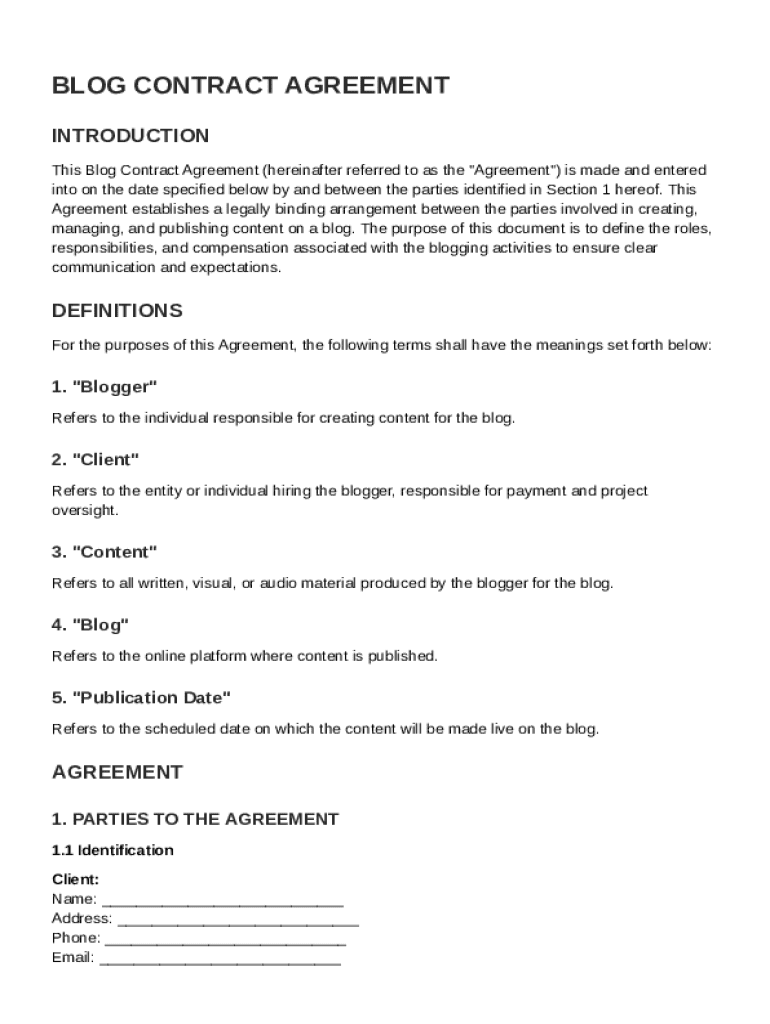
The Blog Contract Template serves as a formal agreement between a blogger and a client, defining the specifics of content creation, management, and publication on a blog. This document outlines crucial elements like roles, responsibilities, compensation, ownership rights, and confidentiality arrangements. By clearly specifying these terms, the template ensures that both parties have a mutual understanding of their expectations and obligations. Such a structure reduces the risk of misunderstandings and disputes, promoting a harmonious professional relationship.
Key Elements of the Blog Contract Template
A comprehensive Blog Contract Template must include several core elements to be effective. These typically encompass:
- Scope of Work: Defines the specific tasks the blogger is expected to perform, including content type, frequency, and deadlines.
- Compensation Details: Outlines payment terms, methods, and schedules, ensuring clarity on financial arrangements.
- Ownership Rights: Clarifies who retains rights to the content, addressing potential intellectual property concerns.
- Confidentiality Clause: Ensures that sensitive information shared between parties is protected from unauthorized disclosure.
- Termination Conditions: Specifies how and under what circumstances either party can terminate the agreement.
How to Use the Blog Contract Template
Using the Blog Contract Template involves a clear set of steps to ensure that all required information is accurately captured:
- Review the Template: Carefully examine each section of the template to understand its content and purpose.
- Customize the Sections: Tailor the template to reflect the specific details of your agreement, such as payment terms and content delivery schedules.
- Consult Legal Advice: Before finalizing, consider consulting with a legal professional to ensure all requirements are met and the contract is enforceable.
- Obtain Signatures: Once both parties agree on the terms, ensure that the document is signed and dated by both the blogger and the client.
Legal Use of the Blog Contract Template
The legal enforceability of a Blog Contract Template depends on adhering to standard contract law principles. The template must reflect a mutual agreement between both parties, include lawful obligations, and ensure all parties are legally competent to enter into a contract. It's crucial that the agreement does not violate any laws, and any ambiguities or conflicts need to be resolved before signing. Considering the U.S. legal context, it's often beneficial to confirm that the contract complies with relevant local and federal regulations.
State-Specific Rules for the Blog Contract Template
Although a standard Blog Contract Template can be used across various jurisdictions, some state-specific considerations might affect its application:
- Different Termination Regulations: Certain states may have unique stipulations regarding contract terminations, requiring additional conditions or notices.
- Varying Confidentiality Standards: State laws might influence how confidentiality clauses are enforced, particularly regarding what constitutes confidential information.
- Different Regulatory Bodies: Some states may have specific guidelines for contractual agreements overseen by state-specific regulatory agencies.
Steps to Complete the Blog Contract Template
Completing a Blog Contract Template requires attention to detail and careful adherence to its structure:
- Fill in Basic Information: Include the names and contact information of both the blogger and the client.
- Define Work Scope: Clearly detail the expected deliverables, including types of content and delivery timelines.
- Establish Payment Terms: Specify the agreed-upon compensation method and schedule.
- Outline Rights and Responsibilities: Ensure both parties' responsibilities and ownership rights are explicitly defined.
- Include Termination and Amendment Provisions: Detail the process for ending or modifying the contract if necessary.
Who Typically Uses the Blog Contract Template
The Blog Contract Template is widely used by various parties engaged in digital content creation, including:
- Freelance Bloggers: Independent writers seeking to formalize their content creation agreements with clients.
- Businesses: Companies hiring bloggers to enhance their online presence and need a structured agreement to manage expectations.
- Digital Marketing Agencies: Agencies acting as intermediaries between clients and bloggers, often formalizing agreements on behalf of their clients.


Examples of Using the Blog Contract Template
A Blog Contract Template can be adapted to numerous real-world scenarios:
- Influencer Partnerships: Influencers use such contracts when collaborating with brands to produce sponsored content for their blogs.
- Guest Blogging Arrangements: Websites that host guest authors often formalize terms using this template to manage contributions and ownership rights.
- Company Blogs: Corporations employing freelance writers for their official blogs utilize these contracts to ensure content aligns with company policies and objectives.