






Definition and Meaning
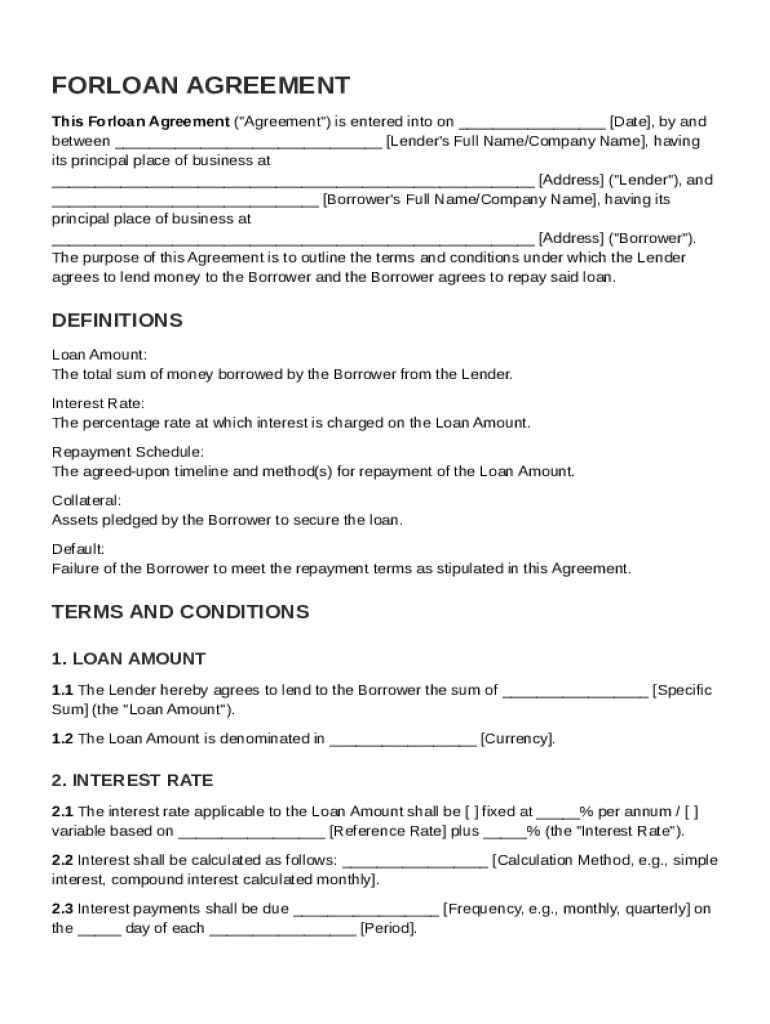
The "Forloan Agreement Template" is a legal document that establishes the terms and conditions under which a lender provides a loan to a borrower. It serves as a binding contract that ensures both parties understand their obligations regarding the loan. Key elements typically included are the loan amount, interest rate, repayment schedule, collateral, and default conditions. Additionally, the governing law that applies to the agreement is specified to ensure both parties adhere to the legal standards of the relevant jurisdiction.
Importance of a Loan Agreement
A loan agreement is crucial as it provides legal protection and clarity for both the lender and the borrower. By clearly outlining the responsibilities and expectations of each party, it reduces the risk of misunderstandings and disputes. This document is an essential tool for formalizing any lending arrangement, ensuring that both parties are legally covered should any issues arise during the term of the loan.
How to Use the Forloan Agreement Template
Using a Forloan Agreement Template involves several key steps to ensure that the document is both comprehensive and tailored to the specific situation. The template serves as a starting point, providing a structured format that users can customize to fit their needs. It is important to carefully fill in all the required fields, such as the details of the loan terms and both parties' personal information. Specific attention should be given to the sections covering the loan amount, interest rates, and repayment terms, as these are fundamental to the agreement.
Customizing the Template
- Loan Amount and Duration: Specify the exact amount being lent and the term of the loan.
- Interest Rate: Clearly state the interest rate that will be applied, whether it is fixed or variable.
- Repayment Schedule: Define the payment plan, including due dates and any grace periods.
- Collateral: Describe any assets that are provided as security for the loan.
- Default Terms: Outline the consequences of failing to meet payment obligations.
Each section should be reviewed and adjusted based on the specific circumstances of the loan. Consulting with a legal professional experienced in contract law can help ensure that all necessary legal protections are in place.
Steps to Complete the Forloan Agreement Template
Completing the Forloan Agreement Template requires careful attention to detail and an understanding of the necessary elements that make the document enforceable. Below is a step-by-step guide:
- Gather Information: Collect all pertinent details about the lender and borrower, including identification, contact information, and any necessary financial details.
- Define the Loan Terms: Clearly outline the loan amount, interest rate, and repayment schedule.
- Set Conditions and Collateral: Determine any conditions precedent and identify collateral, if applicable.
- Draft the Agreement: Using the template, fill in all required fields and add any additional clauses that may be necessary for the specific context.
- Review and Revise: Carefully review the document for completeness and accuracy. Amend any clauses that need further clarification or detail.
- Consult Legal Advice: Have the agreement reviewed by a legal expert to ensure compliance with the applicable laws and regulations.
- Finalization and Execution: Once reviewed, both parties should sign the document in the presence of a witness or notary, if required.
These steps help ensure that the agreement is valid and enforceable, protecting the interests of all parties involved.
Key Elements of the Forloan Agreement Template
Each Forloan Agreement Template includes several critical components, without which the document would not serve its intended legal purpose. These key elements include:
- Parties: Accurate identification of the lender and borrower.
- Principal Amount: The agreed loan amount.
- Interest Rate: Details about how interest will be calculated and applied.
- Repayment Terms: Specifics on how and when payments are to be made.
- Collateral: Information on any assets securing the loan.
- Default Terms: Clear statements concerning penalties or actions on default.
- Governing Law: Which jurisdiction's laws will apply to the agreement.
These components ensure that the agreement is comprehensive and enforceable.
Legal Use of the Forloan Agreement Template
Legal use of the Forloan Agreement Template involves ensuring that the document complies with relevant laws and provides a legally binding framework for the lending arrangement. This requires adherence to contractual principles such as mutual consent, consideration, and legality of purpose.
Ensuring Compliance
- Jurisdiction-Specific Laws: Adapt the template to incorporate the specific state or local laws that govern loan agreements in the applicable jurisdiction.
- Fair Lending Practices: Make sure the terms of the loan do not violate any anti-discrimination laws or predatory lending statutes.
- Disclosure Requirements: Include all necessary disclosures to inform the borrower of the key terms and risks associated with the loan.
Ensuring compliance with these legal requirements is essential to the enforceability of the agreement in court.
State-Specific Rules for the Forloan Agreement Template
Loan agreements may be subject to differing rules and regulations based on the state in which they are executed. Understanding the state-specific variations can be critical in drafting an enforceable document.
Notable State Differences
- Interest Rate Caps: Some states impose maximum allowable interest rates to prevent usury, which must be adhered to when drafting your agreement.
- Required Disclosures: States may mandate specific disclosures about payment terms, interest calculations, and potential penalties.
- Forms of Collateral: Certain states have specific rules regarding acceptable forms of collateral, particularly for personal loans.
Having an awareness of these differences ensures that the loan agreement adheres to local laws, avoiding legal pitfalls that could invalidate the contract.
Examples of Using the Forloan Agreement Template
The Forloan Agreement Template can be used in a variety of real-world scenarios to formalize lending relationships.
Practical Cases
- Personal Loans: Individuals lending money to friends or family can use the template to ensure clear terms are established.
- Business Loans: Companies may use these agreements to borrow funds for operational needs or capital expenditures.
- Real Estate Transactions: Real estate investors may leverage a loan agreement to formalize funding arrangements for property acquisitions or renovations.
In each case, the template provides a structured format to ensure all critical details are documented, helping to mitigate risk for both parties.
Required Documents
In addition to the Forloan Agreement Template itself, certain supplementary documents may be required to finalize the loan agreement.
Commonly Required Documentation
- Identification Documents: Such as driver’s licenses or passports to verify the identities of both parties.
- Credit Report: Often needed to assess the creditworthiness of the borrower.
- Proof of Income: Payslips or tax returns to demonstrate the borrower's ability to repay the loan.
- Collateral Documentation: Valuation and ownership papers for any security offered against the loan.
These documents support the terms outlined in the agreement and provide additional protection for the lender by confirming the legitimacy and feasibility of the arrangement.