
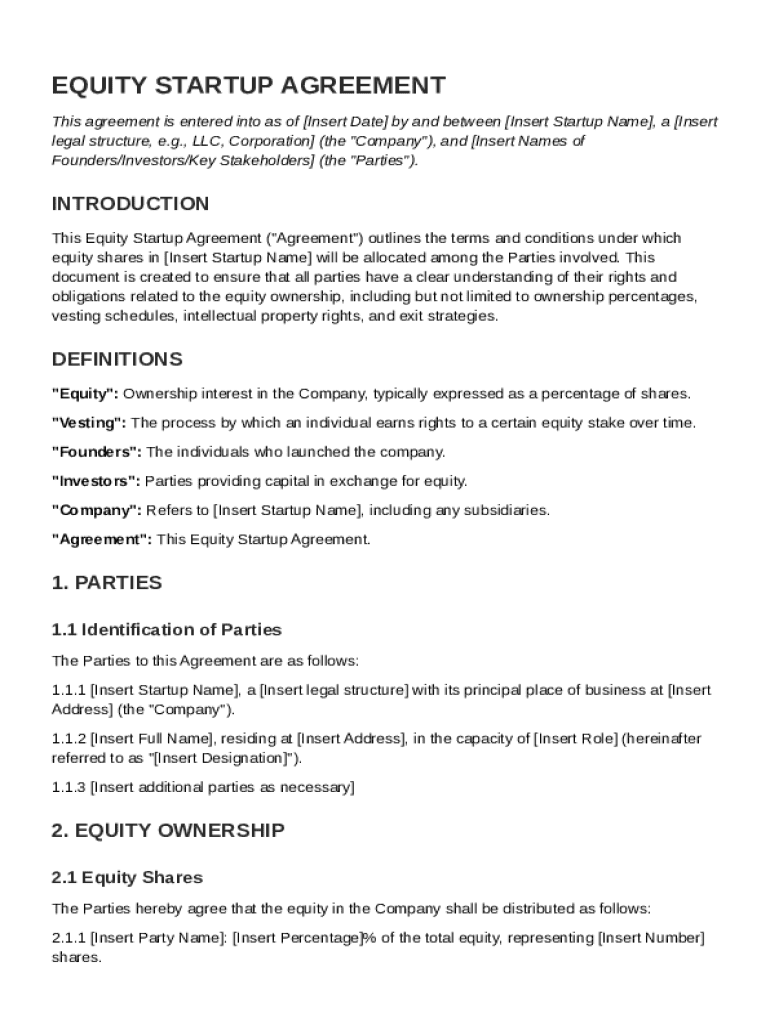







Definition & Meaning
The Equity Startup Agreement Template is a legal document that delineates the distribution of equity among the founders, investors, and other key stakeholders involved in a startup. It specifies essential aspects such as ownership percentages, vesting schedules, and governance structures. By outlining the terms of equity allocation, the template ensures clarity and alignment among stakeholders regarding their rights and responsibilities within the company. This agreement is a cornerstone for maintaining transparent and fair relationships in a startup, enabling parties to understand their roles and expectations from the onset.
Key Elements of the Equity Startup Agreement Template
The template incorporates multiple critical components that collectively ensure the comprehensive coverage of equity-related matters in a startup. Key elements include:
- Ownership Percentages: Specifies how equity is distributed among founders, early employees, and investors.
- Vesting Schedules: Details the timeline over which stakeholders earn their equity, often contingent upon continued involvement with the company.
- Intellectual Property Rights: Outlines the ownership and usage rights of intellectual property created by founders and employees.
- Confidentiality Obligations: Establishes the duty of parties to maintain the confidentiality of sensitive information.
- Dispute Resolution Processes: Provides mechanisms for settling disagreements that arise from the interpretation or implementation of the agreement.
- Exit Strategies: Defines conditions under which stakeholders can sell their equity.
Each element plays a vital role in safeguarding the interests of all parties involved, ensuring smooth operation and growth of the startup.
Steps to Complete the Equity Startup Agreement Template
Creating a comprehensive Equity Startup Agreement involves several methodical steps. Here's a guide to effectively filling out the template:
- Identify Stakeholders: Clearly list all parties involved in the equity agreement, including founders and initial investors.
- Discuss Equity Distribution: Engage in negotiations to decide on ownership percentages, ensuring all parties are aligned.
- Define Vesting Terms: Establish vesting schedules to incentivize stakeholders’ continued participation.
- Establish Governance Structures: Lay out decision-making processes and roles within the company.
- Outline Intellectual Property Rights: Agree on who owns what intellectual properties and the conditions for their usage.
- Set Confidentiality Terms: Define what information is considered confidential and the obligations of parties to protect it.
- Draft Dispute Resolution Clauses: Incorporate mechanisms to handle potential disputes, ideally through arbitration or mediation.
- Review and Sign: Thoroughly review the agreement for completeness and accuracy before all parties sign to make it legally binding.
Legal Use of the Equity Startup Agreement Template
The Equity Startup Agreement Template serves multiple legal purposes essential for the smooth functioning of a startup. Legally, it acts as a preventive measure against potential conflicts by formalizing the mutual understanding among stakeholders. Its adherence to legal standards provides:
- Protection under Business Laws: Ensures that all parties' rights are preserved in compliance with relevant corporate laws.
- Enforcement of Stakeholders' Rights: Legal enforceability of equity distribution, vesting schedules, and other terms stipulated.
- Framework for Future Investments: Prepares the startup for future investment rounds by having clear and legally voicing equity structuring.
- Guidelines for Intellectual Property Management: Maintains a legal record of IP ownership, which is crucial during mergers and acquisitions.
Who Typically Uses the Equity Startup Agreement Template
Numerous stakeholders, each with distinct interests and roles, engage with the Equity Startup Agreement Template:
- Founders: To establish fair initial equity distribution and align on vision and objectives.
- Investors: For assurance on investment terms, equity stake, and future involvement.
- Legal Advisors: To guide startups in complying with legal standards and avoiding pitfalls.
- Early Employees: Engaged with interests secured by vesting schedules and potential equity offers.
Through this template, each participant gains clarity on their involvement and incentives, fostering a cooperative company culture.


Important Terms Related to Equity Startup Agreement Template
Several terms are crucial for understanding and utilizing the Equity Startup Agreement Template effectively:
- Dilution: The reduction in existing shareholders’ ownership percentage due to new shares being issued.
- Cap Table: A spreadsheet that outlines the equity capitalization for a startup, providing a snapshot of company ownership.
- Cliff: The initial six to twelve-month period wherein no vesting occurs, after which a percentage of shares becomes vested.
- Strike Price: The fixed price at which an option holder can buy or sell the underlying asset.
A thorough grasp of these terms enables stakeholders to engage with the agreement knowledgeably, making informed decisions.
Application Process & Approval Time
Deploying the Equity Startup Agreement Template involves an application-like process, typically requiring consensus and approval from all parties involved. The sequence follows:
- Draft Preparation: Initial draft developed, often with legal counsel input to ensure alignment with business goals.
- Negotiation Phase: Intense discussions to finalize terms related to equity, vesting, and IP rights.
- Review by Legal Advisors: Examination by legal professionals to confirm agreement compliance with applicable laws.
- Approval by Stakeholders: Formal approval through stakeholders' signatures, validating mutual consent.
- Filing and Record Keeping: Storing the signed agreement within corporate records for legal and operational reference.
Time taken can vary based on the complexity of negotiations and legal reviews but typically spans a few weeks to several months.
Examples of Using the Equity Startup Agreement Template
Real-world application of this template offers varied scenarios:
- Tech Startups: Use extensive vesting schedules for co-founders and early tech talent to retain essential skills.
- Biotech Firms: Employ the template to secure intellectual property rights crucial for drug development.
- E-commerce Ventures: Structure equity agreements to accommodate rapid scale-up phases and investor integration.
- Nonprofit Organizations: Adjust the template for stakeholder equity contributions towards philanthropic goals.
Each use case underlines the template's versatility, providing robust solutions tailored to different business contexts.




