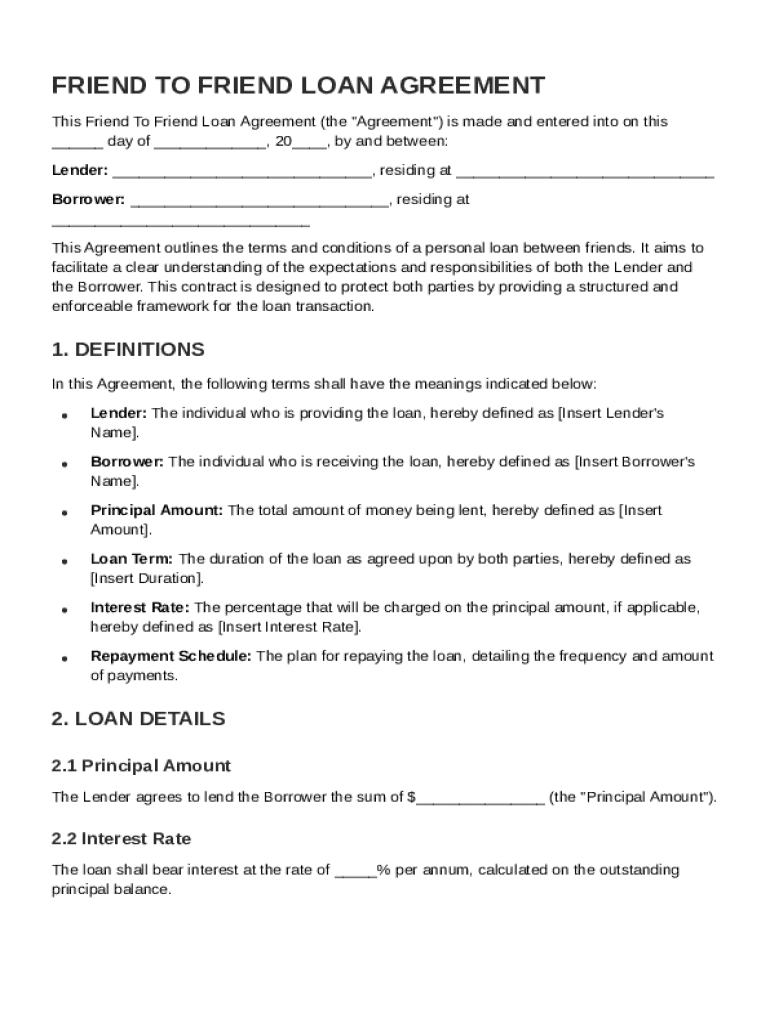







Definition and Meaning
A Friend To Friend Loan Contract Template is a formal document designed to specify the terms of a personal loan between two individuals, known as the Lender and the Borrower. This template sets out essential details such as definitions, loan amount, interest rate, repayment schedule, responsibilities, default conditions, and governing law. Its primary purpose is to ensure transparent communication and provide legal protection for both parties in the transaction. By clearly defining terms and obligations, it helps to prevent potential misunderstandings or disputes.
Key Elements of the Friend To Friend Loan Contract Template
The Friend To Friend Loan Contract Template comprises several critical components. These elements ensure that the agreement is comprehensive, legally enforceable, and tailored to the unique needs of the parties involved.
- Loan Amount and Interest Rate: Clearly states the total loan amount and the interest rate, if applicable.
- Repayment Terms: Outlines the payment schedule, including the frequency of payments and the final due date.
- Default Conditions: Specifies the conditions under which the Borrower would be considered in default, such as missed payments.
- Governing Law: Identifies the state laws that will govern the contract, which is particularly important for legal enforceability.
- Signatures: Both parties must sign the document, confirming their agreement to the stated terms.
Important Terms Related to the Friend To Friend Loan Contract Template
There are several key terms and phrases within the Friend To Friend Loan Contract Template that users should be familiar with to ensure complete understanding and effective use of the contract.
- Principal: The original sum of money loaned to the Borrower.
- Interest Rate: The percentage charged on the outstanding principal.
- Maturity Date: The date by which the loan must be fully repaid.
- Collateral: An asset pledged by the Borrower to secure the loan, if applicable.
- Amortization: The process of paying off debt over time in regular installments.
Steps to Complete the Friend To Friend Loan Contract Template
Completing the Friend To Friend Loan Contract Template involves several straightforward steps to ensure all necessary information is accurately captured.
- Enter Personal Information: Fill in the names and contact details of both the Lender and Borrower.
- Specify Loan Terms: Input the total loan amount, interest rate, and repayment schedule.
- Define Collateral and Security: If applicable, describe any collateral provided by the Borrower.
- Review Payment Terms: Double-check all repayment details, ensuring they match both parties’ agreement.
- Add Signatures and Date: Both parties should sign and date the document to confirm acceptance.
How to Use the Friend To Friend Loan Contract Template
Using the Friend To Friend Loan Contract Template is a practical approach to formalize a personal loan and offers several advantages.
- Establishes Clear Expectations: The template helps both parties understand their roles and responsibilities.
- Provides Legal Protection: It creates a legal document that can be used in court if disputes arise.
- Facilitates Communication: By clearly stating terms, it reduces the likelihood of misunderstandings.
Legal Use of the Friend To Friend Loan Contract Template
The Friend To Friend Loan Contract Template serves as a legal instrument to memorialize the personal loan agreement. It should always be used in compliance with state laws governing loan agreements. Detailed attention must be given to state-specific requirements, particularly the interest rate and governing law provisions, which can vary significantly.
Examples of Using the Friend To Friend Loan Contract Template
Real-world scenarios where the Friend To Friend Loan Contract Template can be invaluable include:
- Short-Term Bridge Loans: When a friend needs quick financial assistance to bridge a temporary cash flow gap.
- Business Start-Up Capital: As seed money provided to a friend starting a new business.
- Emergency Expenses: To cover unforeseen expenses such as medical bills or home repairs.
State-Specific Rules for the Friend To Friend Loan Contract Template
State-specific rules can influence how the Friend To Friend Loan Contract Template is drafted and enforced. Particular attention should be paid to:
- Usury Laws: These laws limit the amount of interest that can be charged on a loan.
- Contractual Requirements: Certain states may require additional disclosures or specific language in loan agreements.
- Legal Enforceability: The contract must comply with state laws to be enforceable in a court of law.
Who Typically Uses the Friend To Friend Loan Contract Template
The template is designed for a wide range of users, particularly those engaged in informal lending arrangements:
- Individuals: Friends or family members lending money for personal reasons.
- Small Business Owners: Entrepreneurs seeking initial funding from close acquaintances.
- Retirees or Students: Individuals who may be temporarily supporting each other financially.