






Definition & Meaning
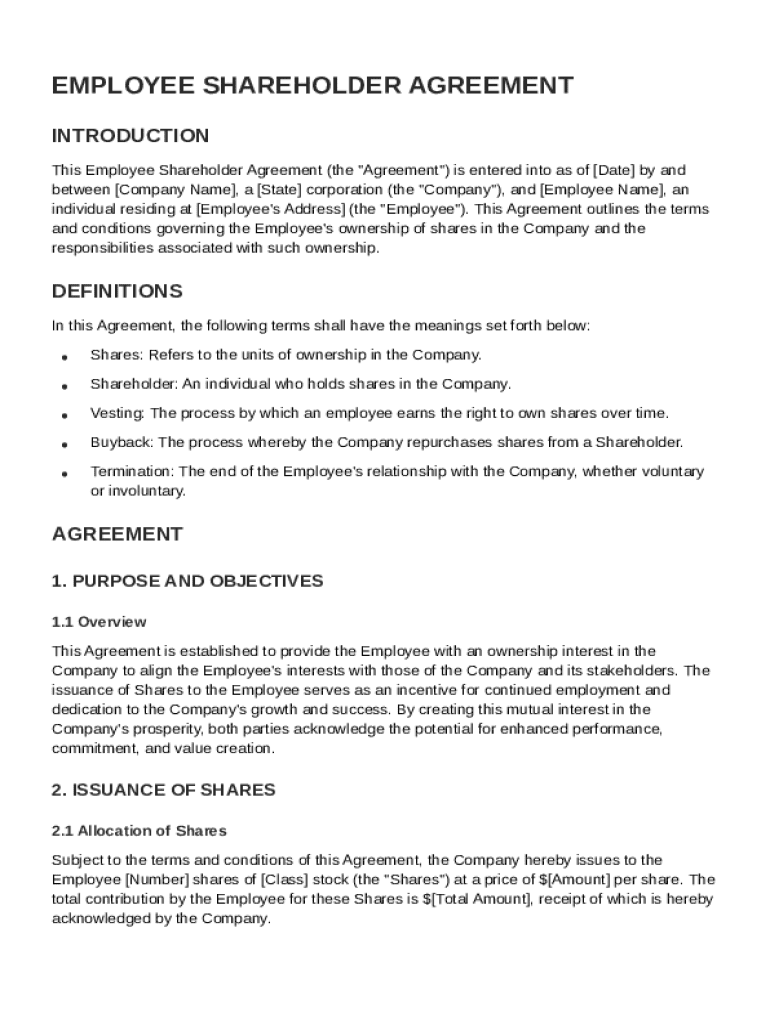
The Employee Shareholder Agreement Template is a legal document that outlines the terms and conditions under which an employee is granted shares in a company. It serves as a framework to align the employee’s interests with those of the company, detailing aspects like vesting schedules, shareholder rights, and confidentiality obligations. This template is pivotal in clarifying the rights and responsibilities of both parties, fostering a mutual understanding that can strengthen commitment and performance.
Key Elements of the Employee Shareholder Agreement Template
Essential components of the Employee Shareholder Agreement Template include:
- Vesting Schedules: Defines how and when an employee gains full ownership of shares, which can be time-based or performance-based.
- Buyback Options: Conditions under which the company can repurchase shares, often applicable if the employee leaves the organization or breaches the agreement.
- Confidentiality Obligations: Ensures that sensitive company information is protected and can’t be disclosed by the shareholder without consent.
- Non-Compete Clauses: Restricts employees from joining competitors or starting similar businesses for a specified period after leaving the company.
- Shareholder Rights and Responsibilities: Outlines voting rights, dividend entitlements, and any other privileges granted to the shareholder.
How to Use the Employee Shareholder Agreement Template
Using the Employee Shareholder Agreement Template involves a series of steps:
- Review the Template: Begin by carefully reading through the template to understand its provisions and ensure they align with the specific goals and legal requirements of your organization.
- Customize the Terms: Modify sections like vesting schedules and confidentiality clauses to suit your company’s policies and the employee’s role.
- Legal Consultation: It’s advisable to consult with a legal professional to ensure the customized agreement complies with relevant laws and effectively protects the company’s interests.
- Employee Review: Provide the customized agreement to the employee, allowing ample time for questions and clarifications.
Steps to Complete the Employee Shareholder Agreement Template
Completing the Employee Shareholder Agreement Template requires attention to detail:
- Fill in Employee Details: Include the full legal name, position, and any identifying information necessary to personalize the document.
- Specify Share Terms: Clearly define the number of shares, conditions for vesting, and any specific terms related to the issuance of shares.
- Define Buyback Circumstances: Articulate conditions that would trigger a buyback, such as resignation or termination with cause.
- Outline Restrictions: Enumerate non-compete conditions and restrictions related to share transferability and third-party engagement.
- Final Review and Signing: Conduct a final review with both parties and obtain signatures to validate the agreement.
Important Terms Related to Employee Shareholder Agreement Template
Understanding these terms is crucial:
- Vesting Period: The timeframe over which the employee earns their shares, typically encouraging long-term commitment.
- Dilution: Occurs when new shares are issued, potentially reducing the value of existing shares.
- Equity Incentive: Type of compensation to motivate employees towards company success.
- Shareholders’ Agreement: A broader agreement that encompasses various shareholders, of which the Employee Shareholder Agreement could be a part.
Legal Use of the Employee Shareholder Agreement Template
The Employee Shareholder Agreement Template holds significant legal weight. It is legally binding once signed, meaning all specified obligations must be adhered to by both the company and the employee. Legal use of this template ensures:
- Compliance with Corporate Laws: Aligning the agreement with federal and state laws to protect company interests.
- Enforceability in Case of Disputes: Provides a clear basis for resolution if disputes arise regarding ownership or other terms.
- Protection of Intellectual Property: Ensures employees cannot use proprietary information to benefit competitors.
Examples of Using the Employee Shareholder Agreement Template
Real-world examples illustrate the application of this template:
- Tech Startups: Use these agreements to attract talent by offering potential equity, assisting in retaining employees through vesting schedules aligned with company growth.
- Established Corporations: Implement buyback options to protect shareholder equity and plan for seamless transitions if employees leave.
- Family-Owned Businesses: Facilitate smooth generational transitions by defining clear paths of share ownership and vesting.
State-Specific Rules for the Employee Shareholder Agreement Template
While the Employee Shareholder Agreement Template can be universally applied, certain states may impose additional regulations or require specific clauses related to:
- Employment Law Variances: Some states have unique requirements concerning non-compete agreements and shares as compensation.
- Tax Implications: State laws may influence how employee shares are taxed, necessitating tailored provisions.
- Corporate Governance: Rules around shareholder rights can vary, particularly regarding voting and dividend entitlements.
Versions or Alternatives to the Employee Shareholder Agreement Template
While the Employee Shareholder Agreement Template is widely applicable, alternative documents or variations may include:
- Stock Option Agreements: Focus specifically on options rather than direct share ownership, commonly issued by startups.
- Restricted Stock Agreements: Offers shares over time based on achievement of certain conditions or milestones.
- Phantom Stock Plans: Simulates stock ownership without transferring actual shares, beneficial for businesses not ready to dilute equity.