






Definition and Meaning of the Employee Reimbursement Agreement Template
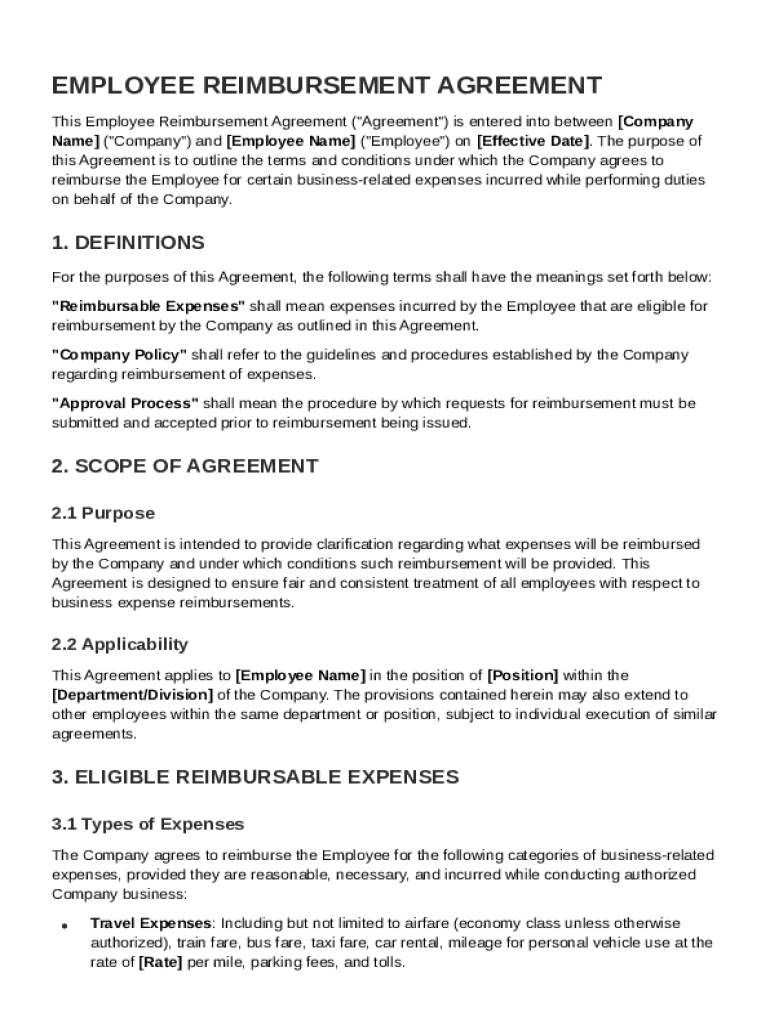
The Employee Reimbursement Agreement Template serves as a structured framework for defining the terms under which an employee will be reimbursed for expenses incurred on behalf of an employer. This agreement outlines the specific categories of reimbursable expenses, such as travel costs, business meals, or office supplies, and specifies what constitutes non-reimbursable expenses. By doing so, it establishes clear guidelines that help prevent misunderstandings and ensure compliance with company policies. Additionally, the document addresses procedures for submission, approval, and timelines to streamline the reimbursement process.
How to Use the Employee Reimbursement Agreement Template
To effectively utilize the Employee Reimbursement Agreement Template, an organization should first customize the template to reflect its unique policies and regulations. This process involves:
- Identifying and listing categories of expenses that are eligible for reimbursement.
- Clarifying any spending limits or caps on specific categories.
- Detailing the submission process, including required documentation like receipts or invoices.
- Outlining the approval process, specifying which department or individuals are responsible for reviewing requests.
- Including any deadlines for submission to ensure timely processing.
Employees can then use this customized template to submit reimbursement requests, ensuring they align with company policies.
Steps to Complete the Employee Reimbursement Agreement Template
Completing the Employee Reimbursement Agreement Template involves several key steps that ensure accuracy and adherence to company policy:
-
Review Company Policy: Before initiating the template, familiarize yourself with company policies regarding expense submissions to align the form correctly.
-
Complete Expense Details: Fill in all necessary fields regarding the nature and amount of each expense. Ensure clarity and precision to avoid rejection.
-
Attach Documentation: Gather all relevant receipts and invoices as verification and attach them to the template.
-
Submit for Approval: Forward the completed document to the designated authority or department for review and approval.
-
Track Submission: Keep track of the submission status. Follow up with the approving authority if necessary to confirm acceptance or address any queries.
Key Elements of the Employee Reimbursement Agreement Template
Several critical elements form the foundation of the Employee Reimbursement Agreement Template:
-
Expense Categories: Identifies which types of expenses are eligible for reimbursement.
-
Reimbursement Limits: Outlines maximum allowable amounts for different categories of expenses.
-
Submission Procedure: Details formats and mediums for submitting claims, including deadlines and documentation requirements.
-
Approval Workflow: Specifies who must approve expense claims and the hierarchy of reviewing authorities.
-
Confidentiality Clauses: Ensures sensitive information disclosed in the process is handled appropriately and protects both the company and the employee.
Legal Use of the Employee Reimbursement Agreement Template
The Employee Reimbursement Agreement Template must align with legal standards to ensure compliance and protect against disputes:
-
Compliance with Labor Laws: Ensure the agreement reflects applicable labor laws and regulations, such as those set by the Department of Labor in the U.S.
-
Tax Implications: Address any relevant tax obligations, especially potential reimbursements considered as employee income.
-
Protection Clauses: Include clauses that protect against misuse of funds or fraudulent claims, thereby safeguarding company resources.
Important Terms Related to the Employee Reimbursement Agreement Template
Understanding key terms can facilitate the accurate interpretation and execution of the Employee Reimbursement Agreement Template:
-
"Reimbursable Expenses": Costs incurred by an employee that qualify for compensation under company policy.
-
"Approval Hierarchy": The structured sequence of authority figure endorsements required for the sanctioning of reimbursement.
-
"Expense Cap": Predefined maximum limit imposed on reimbursable expenses, aimed at controlling and regulating expenditure.
Examples of Using the Employee Reimbursement Agreement Template
Practical scenarios for utilizing the Employee Reimbursement Agreement Template might include:
-
Business Travel: An employee attending a conference out of town uses the template to claim travel, lodging, and meal expenses.
-
Office Supply Purchases: An employee buys necessary supplies for remote work and uses the template to seek reimbursement.
-
Client Entertainment: Expenses incurred during a business lunch with clients are documented and submitted via the template for approval.
State-Specific Rules for the Employee Reimbursement Agreement Template
The application of the Employee Reimbursement Agreement Template might vary based on state-specific regulations:
-
California: Employers are mandated to reimburse employees for necessary expenses incurred in direct consequence of their duties. Ensure templates reflect these legal requirements.
-
New York: While not expressly requiring reimbursements, any compensation must align with state labor standards, particularly concerning wage theft laws.
These variations necessitate careful review and adaptation of the template to remain in compliance with state laws.