
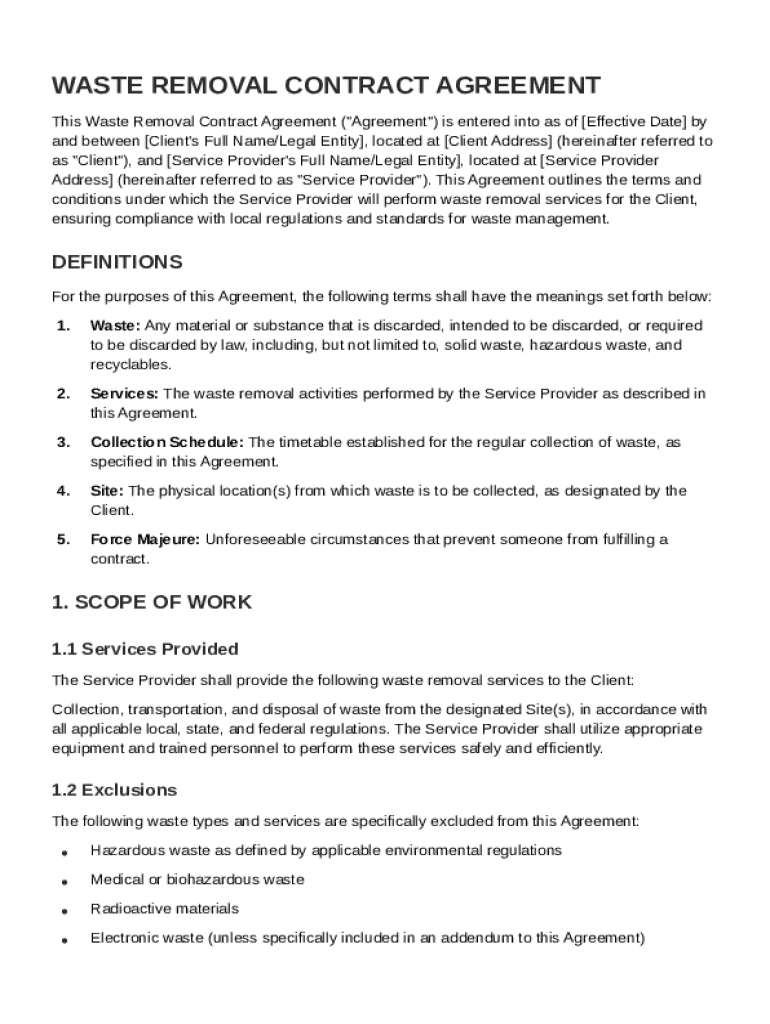







Definition and Purpose of a Waste Removal Contract Template
A Waste Removal Contract Template is a standardized document used to formalize agreements between clients and service providers for waste removal services. This template outlines the responsibilities of each party and includes important elements such as the scope of work, payment terms, and liability clauses. By using this template, parties ensure clear communication and compliance with regulatory standards while minimizing misunderstandings during the engagement.
Key Elements Included in the Template
- Scope of Services: Specifies the types and volume of waste to be removed, as well as the methods of disposal or recycling.
- Payment Details: Outlines agreed pricing, billing cycles, and payment methods.
- Collection Schedule: Details the frequency and timing of waste pick-ups.
- Liability and Insurance: Defines the responsibilities for damages or accidents, including insurance requirements.
- Termination Conditions: Specifies the circumstances under which the contract can be ended by either party.
- Governing Law: Determines the legal jurisdiction governing the contract.
How to Use the Waste Removal Contract Template
To effectively use a Waste Removal Contract Template, follow these steps to customize it according to your specific needs:
- Download and Open: Obtain the template in a compatible format suitable for your editing software, such as DOC or PDF.
- Identify Key Parties: Clearly specify the client and service provider's names and contact information.
- Define Scope and Terms: Tailor the scope, payment details, and other sections to fit the particular waste removal agreement.
- Legal Review: It's advisable to have the contract reviewed by a legal expert to ensure compliance with regional regulations.
- Sign and Execute: Obtain signatures from both parties for the contract to become legally binding.
Customization Factors
- Volume and Type of Waste: Adjust details according to the kind of waste being managed, such as hazardous vs. non-hazardous.
- Geographic Considerations: Include any location-specific clauses that may affect service delivery, like transportation restrictions.
Steps to Complete the Waste Removal Contract Template
Completing a Waste Removal Contract Template involves several key steps to ensure the document encompasses all required details:
- Enter Basic Information: Start with the names, addresses, and contact details of both the client and the service provider.
- Detail the Service Scope: Specify what waste types are covered, expected volumes, and any special handling procedures required.
- Set Financial Terms: Clarify the pricing model, whether it's a flat fee or based on volume, and establish the payment schedule.
- Schedule of Services: Set a calendar for pick-up dates and any conditions under which times may be altered.
- Review and Agree on Terms: Both parties should carefully read through each section to confirm mutual understanding before signing.
Key Terms Related to the Waste Removal Contract Template
When dealing with a Waste Removal Contract Template, several specialized terms are commonly used, which are critical to understanding the agreement fully:
- Indemnification Clause: A contractual term that protects one party from certain damages or liabilities.
- Force Majeure: This clause relieves both parties from obligations if extraordinary events prevent service delivery.
- Statutory Compliance: Ensures adherence to relevant waste management and disposal laws and regulations.
Importance of Clarity
Clarifying these terms is vital to prevent disputes and ensure both parties have a mutual understanding of expectations and obligations.
Legal Considerations for Waste Removal Contracts
Legal compliance is a cornerstone of the Waste Removal Contract Template. It ensures that both parties are protected under applicable laws:
- Compliance with Environmental Regulations: Contracts must align with local and federal waste management legislation to avoid legal penalties.
- Insurance Requirements: Ensure both parties have adequate insurance coverage as specified in the contract.
- Certification and Licensing: Service providers might need specific licenses, which should be validated and documented in the template.
Real-World Scenario
In states with strict waste management laws, non-compliance can lead to significant fines or even halt services. An example could be the varied requirements in waste management laws from California versus Texas, requiring adjustments in contracts accordingly.
Examples of Using Waste Removal Contract Templates in Different Business Scenarios
A Waste Removal Contract Template can be applied in various business contexts to address specific needs:
- Construction Companies: Engage in contracts for removing debris and hazardous materials post-construction.
- Manufacturing Plants: Require regular removal of by-products and chemical waste.
- Restaurants and Hospitality: Need routine food waste management services.
Case Studies
- Scenario 1: A construction firm using the template to manage waste from multiple project sites across different counties.
- Scenario 2: A hotel chain adjusting service delivery standards to include eco-friendly waste solutions as part of the contractual terms.
Business Benefits of Implementing a Waste Removal Contract Template
Using a Waste Removal Contract Template can offer numerous benefits to businesses by streamlining operations and reducing risk:
- Enhanced Operational Efficiency: By setting clear expectations, both the client and service provider work more productively.
- Risk Mitigation: Legal terms within the contract help mitigate risks associated with accident liability or service disruption.
- Cost Control: Predetermined rates and schedules aid in financial planning and avoiding unexpected expenses.
Supplementary Advantages
- Improved Service Quality: Comprehensive terms ensure accountability and adherence to service standards.
- Regulatory Alignment: Enhanced compliance with environmental laws and industry regulations.
State-Specific Regulations Affecting Waste Removal Contracts
Waste removal contracts must often be tailored to meet specific state regulations that can influence contract terms and obligations:
- California: Has strict environmental laws requiring specific disposal methods for hazardous waste.
- New York: Mandates detailed reporting of waste management activities as part of compliance.
Adaptation Strategies
Businesses operating in multiple states need to customize the waste removal contract templates to fit each state's regulatory environment. This might include differing insurance requirements or specific waste disposal processes.




