
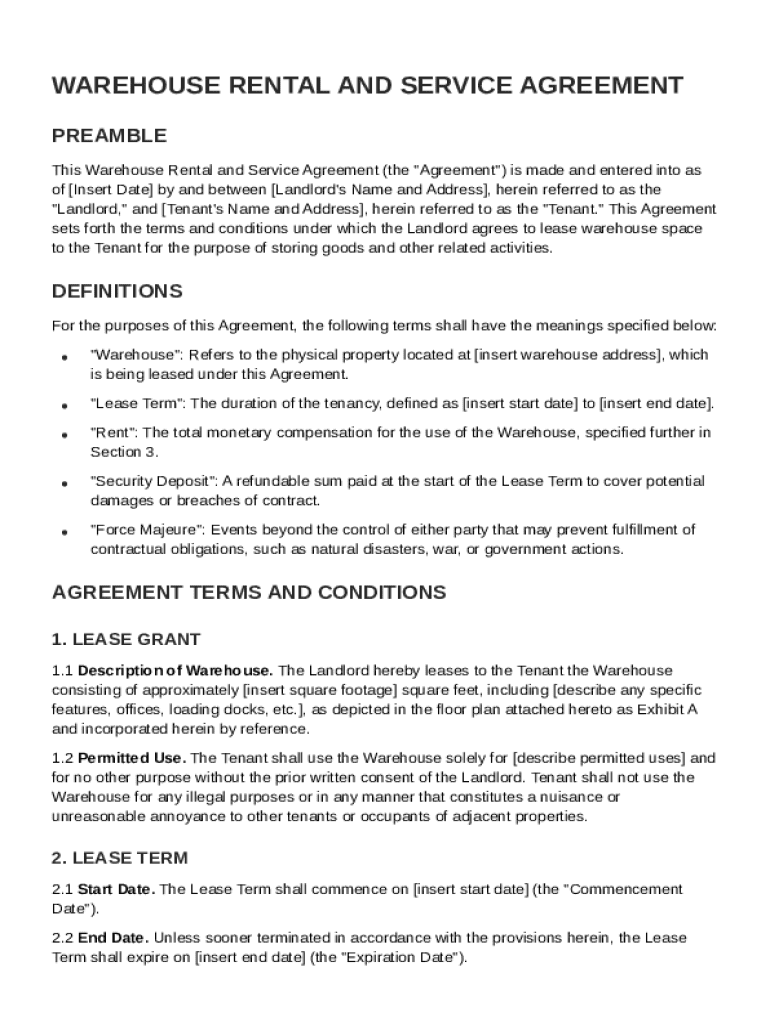







Definition and Meaning of the Warehouse Contract Template
A Warehouse Contract Template is a detailed legal document that establishes the terms and conditions under which a warehouse space is leased for storage purposes. It delineates the rights and responsibilities of both the landlord and the tenant, ensuring clear expectations and legal protection. The contract encompasses elements such as definitions of key terms, lease duration, and rent payment details. By providing a structured template, parties can ensure consistency and legal conformity across various agreements.
Key Components
- Lease Duration: Specifies the length of time the lease will be in effect, including start and end dates.
- Payment Details: Outlines the rent amount, payment schedule, and acceptable methods of payment.
- Security Deposit: Details the security deposit amount and conditions under which it can be reclaimed or forfeited.
- Maintenance Responsibilities: Describes the responsibilities of both parties regarding maintaining the property.
- Insurance Requirements: Mandates insurance coverage types and limits for the tenant and landlord.
How to Use the Warehouse Contract Template
Using a Warehouse Contract Template involves several detailed steps to ensure that all necessary elements are completed correctly and legally binding. First, both parties should review the template to understand the general structure and standard clauses. Following this, each party can customize specific sections to align with their particular circumstances or legal requirements.
Customizing the Template
- Insert Party Information: Include the names and contact information for both the landlord and tenant.
- Personalize Terms: Adjust terms such as lease duration and payment intervals to meet the specific needs of the agreement.
- Add Unique Conditions: Incorporate conditions relevant to the specific situation, such as provisions for subleasing or special maintenance agreements.
Steps to Complete the Warehouse Contract Template
Completing the Warehouse Contract Template is a systematic process involving multiple key steps. Detailed guidance through these steps ensures comprehensive coverage and compliance with legal obligations.
- Review and Understand the Template: Both parties should carefully read through the entire template to understand all included sections.
- Fill in Required Information: Input relevant data, such as the lease duration, payment terms, and personal information of the involved parties.
- Modify Clauses as Necessary: Adjust any standard clauses to fit the specific needs or legal stipulations of the involved parties.
Additional Steps
- Consult Legal Advisors: It is advisable to have a legal professional review the completed document for compliance and accuracy.
- Sign and Execute the Agreement: Both parties need to sign the document to make it legally binding. Ensure all pages are initialed and the final page is duly signed.
Key Elements of the Warehouse Contract Template
The Warehouse Contract Template includes critical elements that set the foundation for legally sound and enforceable agreements. Each element plays a pivotal role in defining the operational and legal framework of the lease arrangement.
Fundamental Elements
- Governing Law: Identifies the jurisdiction under which the terms of the contract will be interpreted.
- Termination Clauses: Outlines the conditions under which the contract may be terminated before the expiration date.
- Miscellaneous Provisions: Includes clauses on dispute resolution, waiver of rights, and amendments to the contract.
- Signature Blocks: Provides spaces for signature and dates from both parties, validating the contract.
Who Typically Uses the Warehouse Contract Template
Warehouse Contract Templates are versatile tools used by a range of individuals and businesses who require clear, legally binding agreements for leasing storage space.


Common Users
- Real Estate Companies: Developers and property management firms often use these templates for consistency and efficiency.
- Small Business Owners: Businesses needing extra storage for inventory or equipment lease warehousing spaces.
- Logistics Companies: Organizations focused on supply chain management employ these contracts for temporary storage solutions.

Legal Use of the Warehouse Contract Template
Understanding the legal implications of the Warehouse Contract Template is crucial for ensuring compliance with jurisdictional regulations. This document must be adhered to, reflecting both standard legal practices and any location-specific legislation.
Compliance Considerations
- Ensure Legality: Contracts should comply with the state and federal laws governing warehousing and rental agreements to prevent enforcement issues.
- Incorporate Necessary Legalese: Crafting the legal wording accurately to cover potential disputes or litigation is fundamental.
- Maintain Records: Keeping signed copies of the contract is essential for legal protection and reference.
State-Specific Rules for the Warehouse Contract Template
Each state in the U.S. may have specific regulations and nuances affecting warehouse lease agreements, necessitating attention to local laws beyond the general template provisions.
Variations and Requirements
- Lease Regulations: States like California may have unique tenant rights or procedural requirements influencing contract structure.
- Environmental Compliance: Certain jurisdictions demand adherence to local environmental guidelines within warehousing operations.
- Licensing and Permits: Various states have specific licensing requirements for businesses that lease warehouse spaces, affecting lease terms.
Examples of Using the Warehouse Contract Template
Real-world applications of the Warehouse Contract Template illustrate its flexibility and utility across different scenarios. These examples highlight its adaptability to diverse leasing arrangements and business models.
Application Scenarios
- Seasonal Inventory Storage: Retailers who need additional space for seasonal goods can use this template for short-term leases.
- Logistics and Distribution: A logistics company can lease warehouse space in different regions to facilitate faster distribution and supply chain management.
- Hybrid Office and Storage Needs: Startups and e-commerce companies that blend office and storage needs may find this template ideal for outlining their specific requirements.
By adhering to these comprehensive guidelines and ensuring legal compliance, tenants and landlords alike can benefit from clear, enforceable agreements, minimizing disputes and facilitating smoother business operations.




