
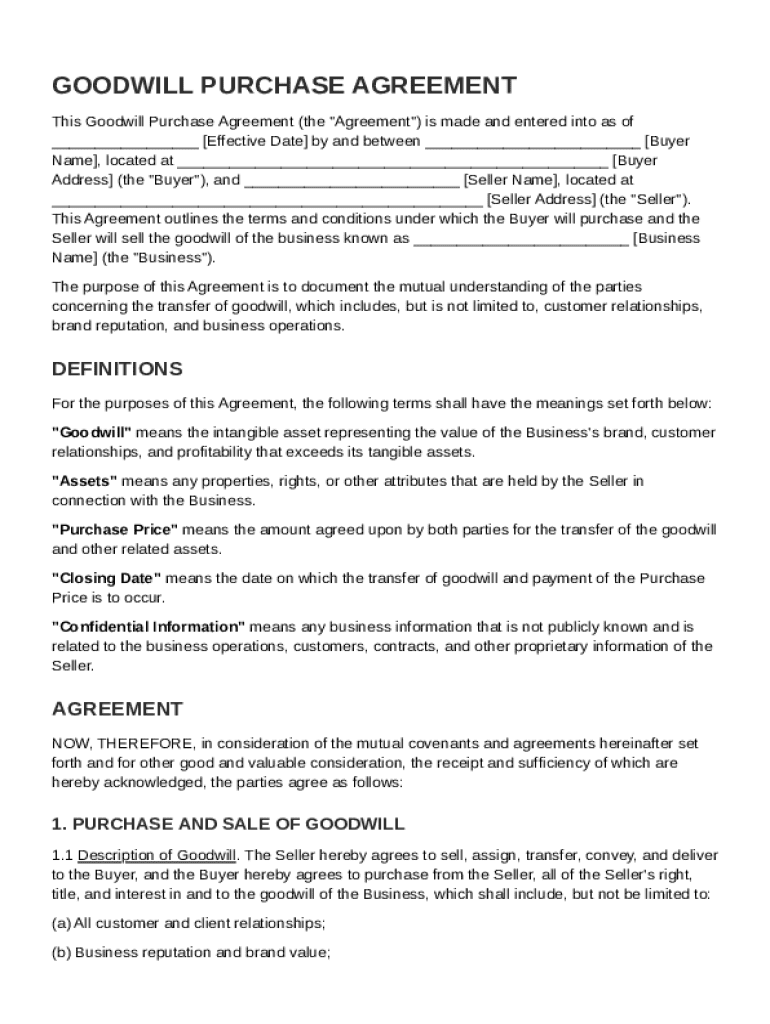







Definition and Purpose of a Goodwill Purchase Agreement
A Goodwill Purchase Agreement is a legal document that outlines the terms under which a buyer agrees to purchase the goodwill of a business from a seller. Goodwill represents the intangible assets linked to the business, such as customer loyalty, brand reputation, and other non-physical assets that contribute to a company’s earnings beyond the value of its tangible assets. This agreement formalizes the transfer, ensuring that all parties understand the scope, price, and obligations involved in the transaction.
Key Elements of the Agreement
- Goodwill: An essential element, defining the intangible value beyond physical assets.
- Purchase Price: Specifies the amount and payment terms agreed upon for the goodwill.
- Obligations of Buyer and Seller: Details the duties each party must fulfill for a successful transaction.
- Closing Conditions: Outlines prerequisites for the finalization of the purchase.
- Representations and Warranties: Legal assurances provided by both parties to affirm the validity of their statements.
- Confidentiality Covenants: Protects sensitive information exchanged during negotiations and after the deal.
- Indemnification: Determines liability for possible future losses or claims relating to the transaction.
How to Use the Goodwill Purchase Agreement Template
The Goodwill Purchase Agreement Template provides a structured framework to guide buyers and sellers through executing the transfer of business goodwill.
- Download and Review: Start by downloading the template from the trusted source. Review each clause to ensure it aligns with the specific terms of your transaction.
- Customization: Personalize the template with specific details, including party names, financial terms, and any unique provisions pertinent to your arrangement.
- Legal Counsel Review: Consult with a legal professional to ensure the agreement complies with applicable laws and accurately reflects the parties' intentions.
- Signatures: Once satisfied, ensure all relevant parties sign the document to enforce the agreement legally.
Steps to Complete the Goodwill Purchase Agreement Template
- Fill in Basic Information: Input the full legal names of the buyer and seller and pertinent business details.
- Specify Purchase Terms: Clearly outline the purchase price and payment structure.
- Detail Goodwill Components: Identify specific elements of goodwill that are part of the sale, such as trademark rights or customer lists.
- Outline Obligations and Conditions: Define any conditions precedent to closing and the responsibilities of each party.
- Include Representations and Warranties: Clearly state any promises each party makes about their ability to complete the transaction.
- Finalize with Legal Review: Before signatures, have the agreement reviewed by legal counsel to ensure compliance and clarity.
Important Terms Related to the Template
- Assets: Includes both tangible and intangible properties affiliated with a business.
- Purchase Price Allocation: Distribution of the payment into various categories like equipment, goodwill, and intellectual property.
- Covenant Not to Compete: Agreement restricting the seller from starting a similar business within a certain timeframe and geographic area.
- Due Diligence: Investigative process undertaken by the buyer to verify the business's financial and operational standing.
Legal Use of the Goodwill Purchase Agreement Template
The good intention is to legally protect the interests of both parties, ensuring a clear understanding of responsibilities and expectations. The agreement must adhere to federal and state laws governing the transfer of business assets. Below are key legal considerations:
- State Law Compliance: Ensure it conforms with relevant state regulations applicable to business asset transfers.
- Enforceability: Proper execution, including all necessary signatures, to create a legally binding document.
- Legal Recourse: Establish procedures in case of disputes, including mediation or arbitration clauses.
Example Scenario of Using the Agreement
Consider a family-owned bakery looking to sell its business to a health-focused company seeking to expand its brand presence. The Goodwill Purchase Agreement would explicitly outline the transfer of goodwill, including the bakery’s name, loyal customer base, and recipe rights, while omitting physical kitchen equipment covered under separate asset deals.
Who Typically Uses the Goodwill Purchase Agreement Template
- Small Business Owners: Those transferring ownership to new buyers seeking to capitalize on established brand equity and customer trust.
- Corporate Entities: Larger firms acquiring smaller businesses to leverage existing market presence.
- Legal and Financial Advisors: Professionals assisting clients with the due diligence and transaction structuring elements of business sales.


State-Specific Rules and Adaptations
While the Goodwill Purchase Agreement serves as a general template, it must be customized to accommodate state-specific regulations that impact business sales. These adaptations may include tax considerations unique to each state or variations in enforceability of covenants not to compete.
Each section of the Goodwill Purchase Agreement is vital for ensuring a smooth and legally sound transaction, safeguarding the interests of both buying and selling parties.




