
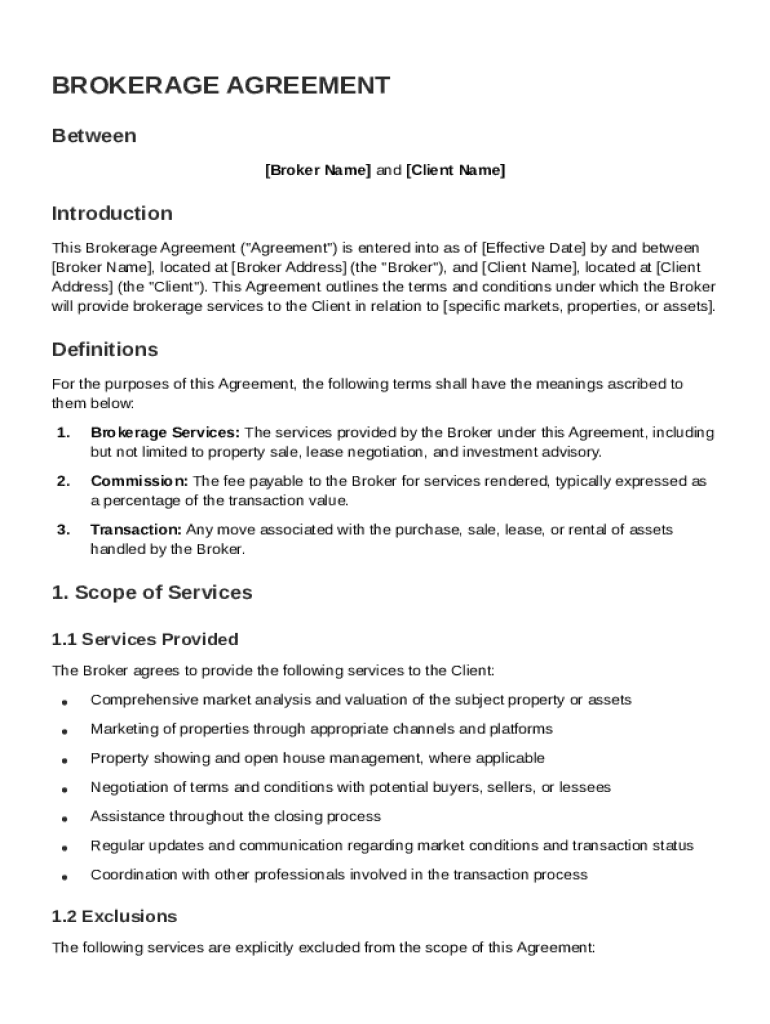







Definition & Meaning
A Brokerage Contract Template is a legal document designed to formalize the relationship between a broker and a client. It details the terms and conditions under which brokerage services are provided, which can pertain to various markets, properties, or assets. The primary objective of this template is to offer a standardized framework, making it easier for both parties to understand and agree on their respective roles and responsibilities. The document typically covers crucial elements such as 'Brokerage Services,' 'Commission,' and 'Scope of Services,' which delineate the broker's obligations and compensation.
Key Elements of the Brokerage Contract Template
The Brokerage Contract Template contains several vital components essential for a well-defined agreement. These elements include:
- Brokerage Services: Defines the specific services the broker will provide, ensuring clarity on what the client can expect and any limitations.
- Commission Structure: Establishes how and when the broker will be compensated, which could be in the form of a flat fee, a percentage of sales, or other arrangements.
- Duties and Obligations: Specifies the responsibilities of both the broker and the client, including timelines, deliverables, and any conditions for terminating the agreement.
- Confidentiality Requirements: Protects sensitive information shared between the parties, setting guidelines on how data should be handled and disclosed.
- Indemnification and Liability Clauses: Provides security for both parties by outlining liability issues and indemnification procedures in case of disputes or errors.
Steps to Complete the Brokerage Contract Template
Completing the Brokerage Contract Template involves several steps to ensure all required information is accurately captured:
- Input Party Information: Enter the detailed information of both the broker and the client, including names, addresses, and contact details.
- Define Services and Scope: Clearly articulate the services the broker will provide and the project scope to prevent any future misunderstandings.
- Set Compensation Terms: Outline the commission structure and payment terms, ensuring both parties agree to the financial arrangements in advance.
- Outline Confidentiality Terms: Draft clauses related to the confidentiality of shared information, making sure they align with legal standards.
- Include Governing Law: Specify the legal jurisdiction that will govern the agreement, which is often determined by the state where the services are provided.
- Review and Sign: Both parties should thoroughly review the document, suggesting changes if necessary, before signing the agreement to finalize it.
Legal Use of the Brokerage Contract Template
The Brokerage Contract Template is legally enforceable, providing the framework for any disputes that may arise. Legal compliance hinges on several factors:
- Jurisdictional Alignment: Ensure the contract meets the specific legal requirements of the state where it applies. Certain clauses may need adjustments depending on local laws.
- ESIGN Act Compliance: Use electronic signatures, which are legally binding, for executing contracts digitally, streamlining the process without sacrificing legality.
- Clear Contractual Language: Utilize precise language to prevent ambiguity. A well-drafted contract minimizes misunderstandings and legal challenges.
Important Terms Related to Brokerage Contract Template
Understanding commonly used terms in a Brokerage Contract is essential for creating a clear and effective agreement. Some key terms include:
- Exclusive Listing: An agreement where the broker has the sole right to sell a property.
- Non-Exclusive Listing: Permits multiple brokers to sell the property, but only the broker who completes the sale receives the commission.
- Retainer Fee: An initial payment made to the broker to secure their services and offset preliminary costs before commission payments.
- Termination Clause: Defines the conditions under which the agreement can be terminated by either party.
Who Typically Uses the Brokerage Contract Template
The Brokerage Contract Template is leveraged by various entities within and related to the real estate industry:
- Real Estate Brokers: Use this document to outline terms for buying, selling, or leasing properties.
- Clients/Buyers: Engage brokers with a formal agreement to ensure services are provided as promised.
- Business Entities: Companies employing brokers for asset or property management also utilize this template to specify expectations and services.


Examples of Using the Brokerage Contract Template
Real-world scenarios often illuminate the template's application:
- Residential Sales: A homeowner entering into agreement with a real estate broker to sell their home uses the template to establish commission-based services.
- Commercial Leases: Businesses seeking office space engage commercial brokers, using the template to detail leasing terms and broker responsibilities.
- Investment Opportunities: Investors utilize brokers for market analysis and asset procurement, formalizing these relationships through the contract template.
State-Specific Rules for the Brokerage Contract Template
State-specific regulations can influence how Brokerage Contracts are structured:
- Licensing Requirements: Brokers must comply with state licensing laws, which can affect contractual agreements.
- Disclosure Obligations: Certain states mandate disclosures within these contracts regarding agency relationships and broker duties.
- Market-Specific Variations: Real estate markets have unique trends and regulations that the contract may need to address, especially in states with notable housing industries.
Digital vs. Paper Version
Choosing between digital and paper versions of the Brokerage Contract can impact convenience and functionality:
-
Digital Version: Offers benefits like electronic signatures, easy sharing, and seamless edits, accessible via platforms like DocHub.
-
Paper Version: May be preferred in traditional or less tech-savvy environments but lacks the adaptability and efficiency of digital formats.
-
Hybrid Approach: Some users may start with a digital version for drafting and execution but retain a paper copy for record-keeping, combining benefits of both methods.




