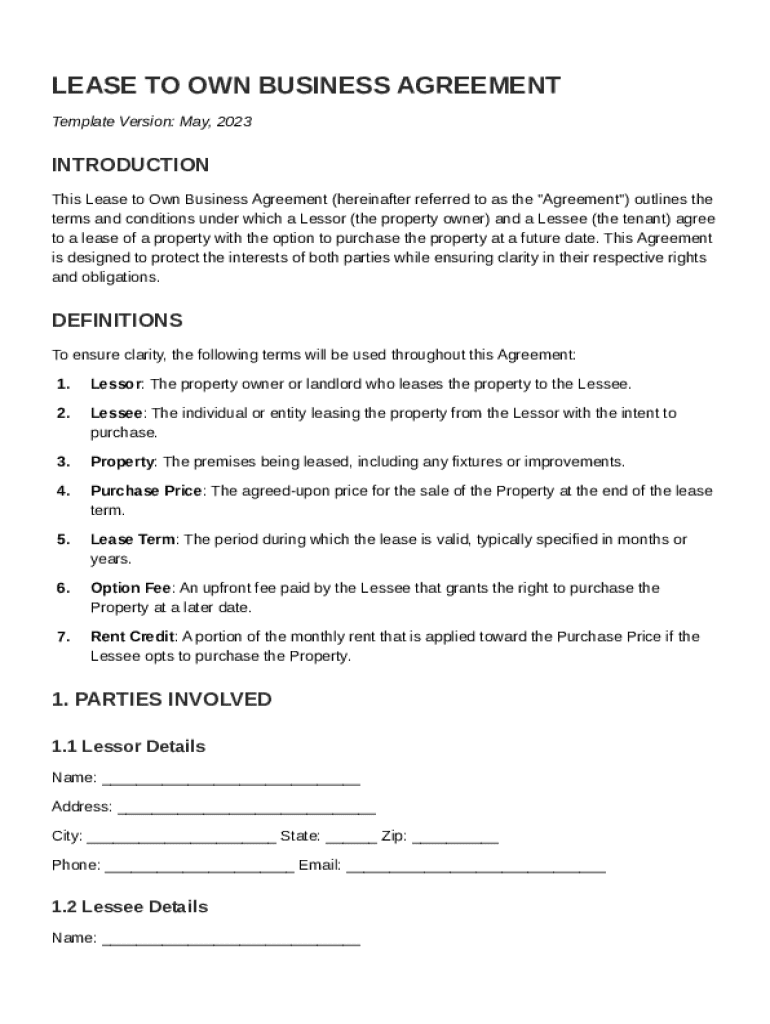







Definition & Meaning
The Lease to Own Business Agreement Template is a legal document that facilitates the leasing of a business property with an integrated option for purchase at a later date. This template clearly defines the rights and responsibilities of both parties involved: the lessor, who is the property owner, and the lessee, the one leasing the property. It outlines the terms under which the lessee can occupy the premises, as well as the conditions to transform the lease into an ownership agreement. Crucial components include the financial arrangements for rent and option fees, the stipulations for property maintenance, and the conditions necessary for either party to modify or terminate the agreement.
Key Responsibilities
- Lessor Responsibilities: Include maintaining the structural integrity of the property and ensuring it meets all legal requirements.
- Lessee Responsibilities: Involves timely payment of rent, proper use of the property, and adherence to agreed-upon rules.
- Financial Obligations: Rent payment details, option fees, and potential penalties for late payments.
Financial Implications
Understanding financial obligations is vital. Rent and option fees can vary, and specific terms outline when and how payments should be made.
Key Elements of the Lease to Own Business Agreement Template
The template comprises several vital sections that ensure both lessor and lessee are protected and informed.
- Parties Involved: Identifies the lessor and lessee, including contact information and legal identifiers.
- Lease Terms: Specifies lease duration, rental amount, payment schedule, and penalty clauses for breach of contract.
- Option to Purchase: Details the process, timeline, and conditions to exercise the purchase option.
- Maintenance and Repairs: Outlines the division of responsibilities for property upkeep between the parties.
- Default and Termination: Conditions under which the agreement can be terminated due to failure to comply with its terms.
Understanding these components ensures both parties can fulfill their obligations and utilize their rights effectively.
How to Use the Lease to Own Business Agreement Template
Utilizing the Lease to Own Business Agreement Template involves several steps to ensure legal validity and practical applicability.
- Review Terms and Conditions: Thoroughly read the template to ensure it meets the specific business needs and legal requirements.
- Customization: Customize the template by filling in specific details related to the lessor and lessee, property description, financial terms, and any negotiated clauses.
- Legal Consultation: It might be beneficial to have a legal professional review the customized document to verify compliance with relevant state laws.
Practical Examples
- An entrepreneur looking to eventually purchase a retail space could use this template to secure immediate operational space while working towards ownership.
- A small business owner aiming to stabilize finances could lease-to-own to spread out financial costs over time before finalizing the property purchase.
Steps to Complete the Lease to Own Business Agreement Template
Effectively completing the Lease to Own Business Agreement Template involves several critical steps:
- Gather Essential Information: Collect all necessary data such as property details, lessor and lessee identifiers, and financial amounts.
- Complete the Document: Fill in the gathered information accurately, paying attention to financial terms and obligations.
- Review and Sign: Both parties need to thoroughly review the completed agreement. Ensure all information is correct before signing.
- Store and Distribute: Once signed, distribute finalized copies to both parties. Keep a digital version saved securely.
This ensures the agreement is legally binding and serves its purpose effectively.
Important Terms Related to the Lease to Own Business Agreement Template
Several key terms are essential for understanding and using the Lease to Own Business Agreement Template:
- Lessor and Lessee: The lessor is the owner leasing out the property, while the lessee is the one leasing the property with potential to purchase.
- Purchase Option: The agreed opportunity for the lessee to purchase the property during or at the end of the lease term.
- Option Fee: A non-refundable fee paid for the right to purchase the property in the future.
- Default: The failure to meet contractual obligations, which could lead to penalties or termination of the agreement.
Understanding these terms is pivotal for effective utilization of the template.
Legal Use of the Lease to Own Business Agreement Template
Legal validity is a cornerstone of the Lease to Own Business Agreement Template, ensuring the rights of both parties are protected.
Legal Compliance
- State Laws: Ensure compliance with the state-specific laws governing lease-to-own agreements to prevent legal disputes.
- Compliance with ESIGN Act: Electronic signatures within the template are legally binding, adhering to national standards.
By meeting these legal requirements, both parties can protect their interests and utilize the agreement authentically.
State-Specific Rules for the Lease to Own Business Agreement Template
If the lease to own agreement is to be used in different states, understanding state-specific laws is crucial as they can affect terms and enforceability.
State Examples
- California: Requires disclosures about any environmental hazards associated with the property.
- Texas: Allows specific remedies for contract breaches that differ from other states.
Adapting the agreement to accommodate these nuances ensures it remains valid and enforceable across various jurisdictions.
Business Types Benefiting Most from Lease to Own Business Agreement Template
Different business types can significantly benefit from the Lease to Own Business Agreement Template to support their growth and financial planning.
Ideal for:
- Startups: Provides flexibility to acquire property even with limited initial capital, supporting long-term growth plans.
- Retail Businesses: Offers an opportunity to stabilize their location for the long term while focusing on customer base expansion.
- Expanding Enterprises: Businesses looking to expand operations without immediate property purchase pressure can leverage this arrangement to secure new locations.
Overall, the lease-to-own mechanism can provide strategic advantages for business sustainability and growth.