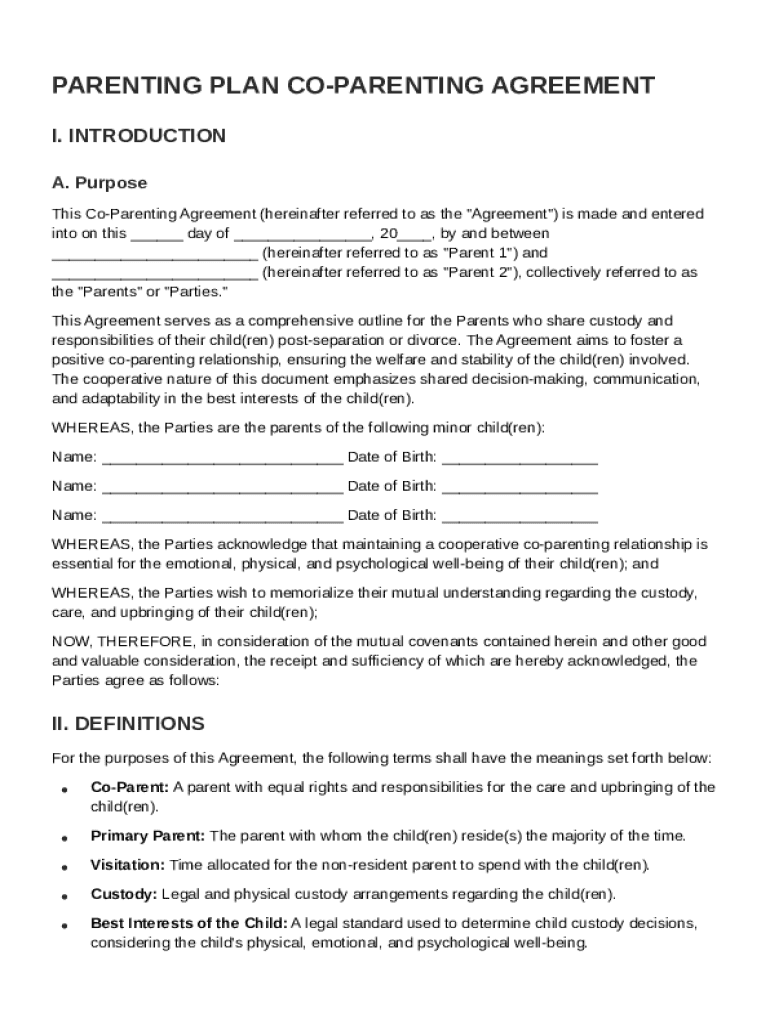







Definition & Meaning
A Parenting Plan Co-Parenting Agreement Template is a structured document that outlines the roles, responsibilities, and arrangements between separating or divorcing parents regarding the upbringing of their children. This template provides a formal framework to facilitate cooperation and coordination between parents to ensure the child's welfare. It covers critical aspects like custody, visitation, communication protocols, decision-making processes, and conflict resolution methods.
- Custody Arrangements: Details whether custody is joint or sole, physical or legal, determining who the child lives with and who has the authority to make significant decisions.
- Visitation Schedules: Specifies regular and holiday visits, ensuring both parents have scheduled time with the child.
The intention behind the agreement is to promote a harmonious co-parenting environment by clearly delineating each parent's duties and expectations.
Key Elements of the Parenting Plan Co-Parenting Agreement Template
The template comprises several essential components that form the backbone of the agreement. Understanding these elements is crucial for parents to effectively utilize the form.
- Communication Guidelines: Establishes how and how often parents will communicate about the child's well-being, educational progress, and any changes in the parenting schedule.
- Financial Responsibilities: Outlines each parent's financial obligations, including child support, medical costs, and educational expenses.
- Decision-Making Authority: Specifies whether one or both parents will be responsible for making significant decisions regarding the child's education, healthcare, and extracurricular activities.
- Dispute Resolution: Provides mechanisms for resolving disagreements, potentially including mediation or arbitration clauses, to avoid court interventions.
- Modification Procedures: Details how the agreement can be amended over time to adapt to changing circumstances, ensuring long-term viability.
These elements are structured to minimize conflicts and promote a stable environment for the child.
How to Use the Parenting Plan Co-Parenting Agreement Template
Utilizing the Parenting Plan Co-Parenting Agreement Template involves a systematic approach to ensure all aspects of co-parenting are addressed.
- Review the Template: Both parents should thoroughly read the template to understand each section and its implications.
- Customize the Template: Adjust the document to reflect specific family needs, such as bespoke visitation times or special conditions about the child's education or health needs.
- Consult a Legal Advisor: While the template provides a structured framework, legal advice can ensure that the agreement complies with state laws and addresses any unique circumstances.
- Discuss with the Co-Parent: Open discussions and negotiations can help both parties agree on terms that best support their child's interests.
- Finalize and Sign: Once both parents agree, the document should be reviewed for accuracy, signed by both parties, and potentially notarized to affirm its legal standing.
Following these steps ensures the agreement is comprehensive, mutually acceptable, and legally sound.
Legal Use of the Parenting Plan Co-Parenting Agreement Template
The legal use of the Parenting Plan Co-Parenting Agreement Template involves its formal adoption as a legally enforceable agreement between parents, subject to applicable family laws.
- Court Approval: In some jurisdictions, parenting plans must be submitted for court approval to become legally binding, providing the court's endorsement of the arrangement.
- Enforcement: If disputes arise, the parenting plan serves as a reference for mediation or court intervention, facilitating enforceability of the agreed terms.
- State Laws: Legal validity can depend on adherence to state-specific requirements regarding custody arrangements, child support, and visitation rights.
The template functions as a formalized agreement that anticipates and addresses potential disagreements, offering a clear path for enforcement.
Steps to Complete the Parenting Plan Co-Parenting Agreement Template
Completing the Parenting Plan Co-Parenting Agreement Template requires attention to detail, cooperation between parents, and legal oversight.
- Initial Discussion: Start by communicating with the co-parent to establish general principles and priorities that will guide the agreement.
- Draft Initial Terms: Use the template to create an initial draft, detailing custody arrangements, schedules, and decision-making processes.
- Review and Revise: Conduct multiple rounds of review and revision to refine the draft and capture all necessary details.
- Seek Legal Review: An attorney specializing in family law should review the draft for legal compliance and effectiveness.
- Finalize: Make any final adjustments, ensure both parties agree, and prepare the final document for signatures.
A thorough completion process ensures the agreement is tailored to the family's needs and is legally sound.
State-Specific Rules for the Parenting Plan Co-Parenting Agreement Template
Different states in the U.S. may have specific legal requirements and considerations that affect the creation and enforcement of a parenting plan.
- Variation in Custody Laws: States may differ in how they define legal and physical custody, affecting how plans are structured.
- Child Support Guidelines: Each state has unique child support calculation methods, which need to be incorporated into the plan.
- Documentation Requirements: Variances exist in required documentation or forms to accompany the primary agreement for court submission.
Understanding state-specific rules is essential for ensuring the agreement is valid and enforceable.
Important Terms Related to the Parenting Plan Co-Parenting Agreement Template
Familiarity with the terminology used within the Parenting Plan Co-Parenting Agreement Template can facilitate a smoother drafting process and clearer communications.
- Joint Custody: Both parents share custody, either equally or with a primary residential parent.
- Sole Custody: One parent holds exclusive rights to make major decisions regarding the child's upbringing.
- Visitation Rights: Non-custodial parent privileges to spend time with their child as outlined in the parenting plan.
- Mediation: A non-binding resolution process involving a third-party mediator to help resolve disputes without going to court.
These terms play a vital role in interpreting and applying the provisions within the template.
Examples of Using the Parenting Plan Co-Parenting Agreement Template
Examples can provide practical illustrations of how the Parenting Plan Co-Parenting Agreement Template can be effectively used.
- Scenario 1: Parents residing in different states set up a detailed visitation schedule including travel arrangements for the child.
- Scenario 2: A family with a special needs child customizes educational sections to ensure tailored support and intervention plans.
- Scenario 3: Parents incorporate a conflict resolution mechanism involving regular check-ins and mediation clauses to preempt escalating disputes.
These examples demonstrate the template's adaptability to various family situations, ensuring each unique situation is supported by a robust plan.