
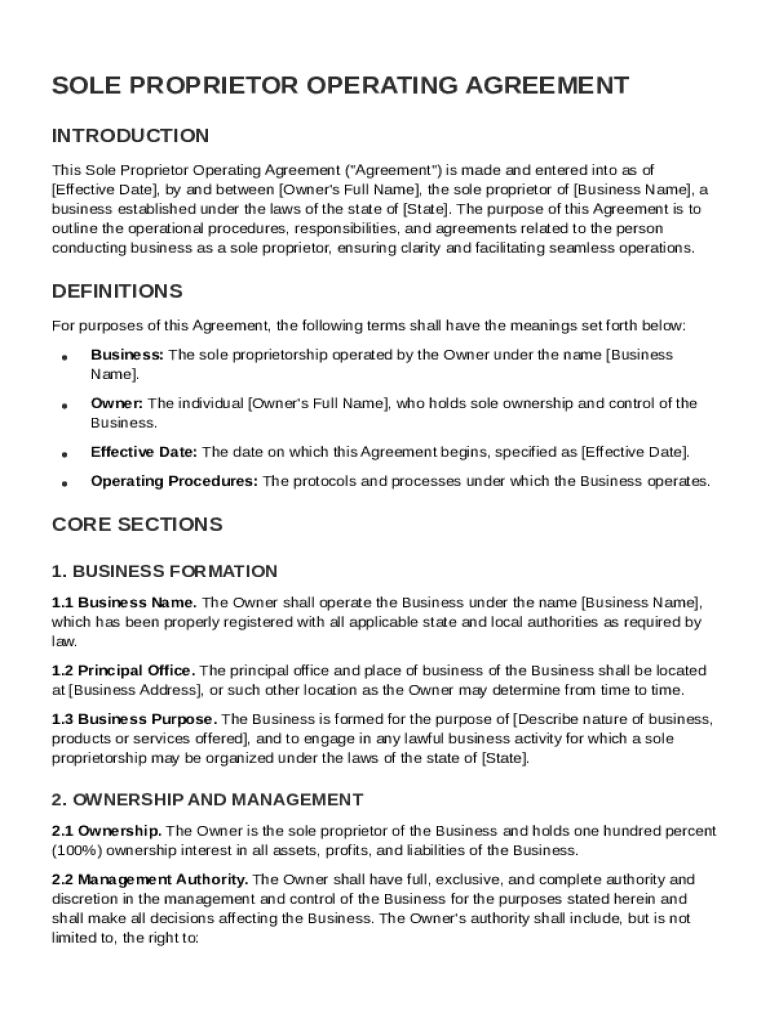







Definition & Meaning
The Sole Proprietor Operating Agreement Template is a legal document that outlines the operational procedures, responsibilities, and agreements for a sole proprietorship. While sole proprietorships typically do not require formal operating agreements like corporations or LLCs, this template serves as a comprehensive guide to manage business operations effectively. It covers essential areas such as business formation, ownership, financial responsibilities, and governance, providing clarity for the sole proprietor and any involved parties about the conduct and expectations within the business framework.
Key Components
- Business Formation: Details regarding the legal name of the business, registration information, and the inception date.
- Ownership Structure: Clarifies that the sole proprietor maintains full ownership and decision-making power.
- Financial Responsibilities: Guidelines for managing financial resources, including capital contributions and profit allocations.
- Operational Guidelines: Day-to-day business activities management, employee policies, and resource allocations.
- Legal Provisions: Inclusions for conflict resolution, amendments, and compliance with applicable laws.
How to Use the Sole Proprietor Operating Agreement Template
Utilizing the Sole Proprietor Operating Agreement Template requires careful consideration of the business's unique needs and goals. The document serves as a formal but flexible framework that can be adapted to suit specific operational dynamics.
Step-by-Step Utilization
- Customization: Begin by entering the sole proprietor’s and the business’s details, tailoring the template to reflect specific business operations and state regulations.
- Consultation: Consider consulting with a legal adviser to ensure the agreement adheres to legal standards and adequately covers all business aspects.
- Implementation: Apply the template to guide daily operations, align activities with outlined procedures, and maintain organizational consistency.
- Review and Revise: Regularly review and update the document to reflect any changes in laws, business strategies, or operational structures.
Practical Example
Consider a small coffee shop run as a sole proprietorship. By adapting the template for this context, the owner can clearly delineate responsibilities related to inventory management, staffing, and daily financial operations.
Steps to Complete the Sole Proprietor Operating Agreement Template
Completing the Sole Proprietor Operating Agreement Template involves several precise steps to ensure all aspects of the business are covered.
Detailed Process
-
Initial Preparation
- Gather all necessary business information, including legal names, contact details, and business registration numbers.
- Outline the business's operational goals and strategies.
-
Filling Out the Template
- Input information into relevant sections such as business formation, ownership structure, and financial arrangements.
- Use clear, concise language to describe operational guidelines and legal provisions.
-
Review and Approval
- Carefully review the filled template for accuracy and completeness.
- Seek legal review to verify compliance and effectiveness.
- Finalize and adopt the agreement for regular business use.
Key Elements of the Sole Proprietor Operating Agreement Template
The template includes several vital elements that ensure comprehensive coverage of the sole proprietorship's operations.
Principal Components
- Business Information: Captures all fundamental business details required for legal and operational clarity.
- Operating Procedures: Describes routines for conducting business and managing key resources.
- Financial Arrangements: Provides guidelines for managing accounts, distributions, and financial accountability.
- Legal Stipulations: Ensures compliance with industry standards and provides a basis for resolving potential disputes.
- Amendment Process: Outlines the method for making modifications to the agreement as business needs evolve.
Legal Use of the Sole Proprietor Operating Agreement Template
Although not legally required, the Sole Proprietor Operating Agreement Template provides a structured legal framework that can prevent misunderstandings and facilitate smoother operations.
Compliance and Governance
- Conflict Resolution: Serves as a legal reference in case of disputes, providing documented proof of agreed-upon terms.
- Guidance for Decisions: Offers a touchstone for making strategic business decisions aligned with documented policies.
- Legal Protection: Establishes a clear record that can defend the sole proprietor’s decisions and manage liabilities effectively.
Who Typically Uses the Sole Proprietor Operating Agreement Template
The Sole Proprietor Operating Agreement Template is primarily utilized by individual business owners who prefer to keep business structures straightforward yet efficient.


User Profiles
- Small Business Owners: Owners who run small enterprises, such as freelancers, consultants, and artisans, rely on the template for clarity and efficiency.
- Entrepreneurs: Start-up founders seeking an uncomplicated method for detailing business operations.
- Independent Professionals: Legal and accounting professionals who may use the agreement to regulate client relations and service deliverables.
Important Terms Related to Sole Proprietor Operating Agreement Template
Understanding specific terms included in the Sole Proprietor Operating Agreement Template is crucial for its effective usage.
Essential Terminology
- Capital Contributions: Refers to the funds or assets invested by the owner into the business.
- Governing Law: The legal jurisdiction under which the agreement is interpreted.
- Ownership Clause: A section that affirms sole ownership rights and responsibilities.
- Profit Allocation: Details how profits are distributed or reinvested back into the business.
State-Specific Rules for the Sole Proprietor Operating Agreement Template
Although the template serves a universal purpose, state-specific modifications may be necessary to comply with local regulations.
State Variations
- Registration Requirements: Certain states require additional documentation or specific registration steps for business operations.
- Tax Obligations: State-level tax implications for sole proprietorships may differ, necessitating customized financial sections.
- Industry Regulations: State-specific industry compliance standards may affect certain operational guidelines within the template.




