






Definition & Meaning
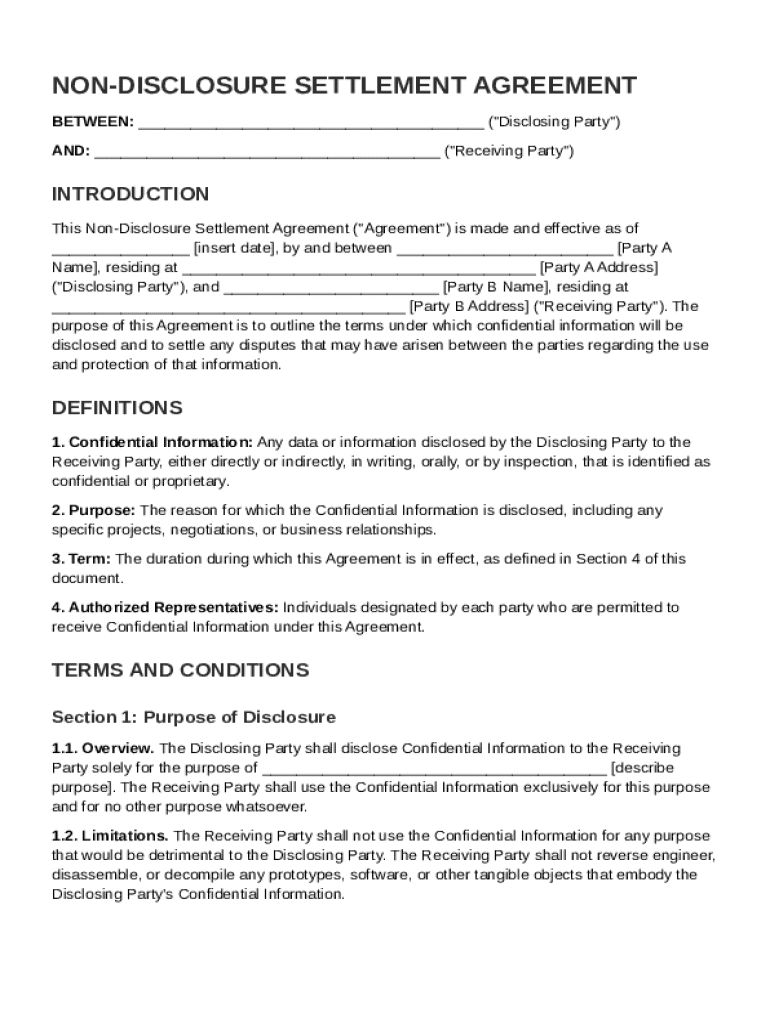
A Non Disclosure Settlement Agreement (NDSA) is a legally binding contract that outlines the terms under which confidential information is shared between parties, typically referred to as the Disclosing Party and the Receiving Party. This agreement is crucial in protecting sensitive data from unauthorized disclosure and use. It ensures that proprietary information such as trade secrets, business strategies, or client information remains confidential and is only used for specified purposes as laid out in the agreement. The document often includes definitions of what constitutes confidential information, a list of exclusions, and the obligations of both parties regarding the safeguarding and non-disclosure of the information.
Key Elements of the Non Disclosure Settlement Agreement Template
An NDSA template typically contains key sections that establish the framework for confidentiality and information sharing:
- Parties Involved: Identification of which entities or individuals are agreeing to maintain confidentiality.
- Definition of Confidential Information: Detailed listing of what information is considered confidential.
- Non-Disclosure Obligations: Specific obligations and duties each party has in protecting and sharing the confidential information.
- Use of Information: Conditions under which the confidential information can be used by the Receiving Party.
- Exceptions to Confidentiality: Circumstances under which certain information may not be subject to confidentiality, such as information that becomes publicly available.
- Duration of the Agreement: Timeframe for which the confidentiality obligations are valid.
- Dispute Resolution: Procedures for mediation and arbitration in case of any disputes arising from the agreement.
Legal Use of the Non Disclosure Settlement Agreement Template
Non Disclosure Settlement Agreements are used in various legal and business contexts to protect sensitive information. They are commonly employed in:
- Business Transactions: During mergers, acquisitions, or partnerships where sensitive information is exchanged.
- Employment Agreements: When employees are exposed to confidential company information as part of their role.
- Product Development: To protect proprietary information during joint ventures or collaborations.
- Litigation: To maintain the confidentiality of settlement discussions and terms.
The agreement must comply with applicable state and federal laws, ensuring that it is enforceable in the event of a breach.
How to Use the Non Disclosure Settlement Agreement Template
To effectively use an NDSA template, follow these steps:
- Identify the Parties: Clearly specify the Disclosing and Receiving Parties.
- Detail the Confidential Information: Precisely outline what information is protected under the agreement.
- Determine the Obligations: Define the responsibilities each party holds in protecting the confidential information.
- Set the Duration: Agree upon how long the non-disclosure obligations will last.
- Include Any Exclusions: Note any information not covered by the agreement.
- Establish Dispute Mechanisms: Clarify how any disagreements under the agreement will be resolved.
- Sign the Document: Ensure that all parties sign the agreement to acknowledge understanding and acceptance.
It's advisable to consult with a legal professional to tailor the template to specific needs and to comply with respective regulations.
Steps to Complete the Non Disclosure Settlement Agreement Template
The completion process involves several critical steps to ensure all necessary information is captured:
- Download the Template: Obtain the desired template from a trusted source or document editor like DocHub.
- Customize the Template: Tailor the sections to fit the specific details of the disclosure situation, ensuring accuracy and completeness.
- Enter Party Information: Input the full names and contact information of all parties involved.
- Detail Specific Terms: Accurately describe the confidential information and obligations.
- Assign Responsibilities: Clearly lay out which party is responsible for safeguarding the information.
- Review and Edit: Ensure all details are correct; seek legal advice if necessary.
- Final Approval and Signing: All parties should review, agree, and sign the final version of the agreement.
State-Specific Rules for the Non Disclosure Settlement Agreement Template
While NDSAs generally adhere to federal standards, individual states might have specific rules or nuances:
- California: Emphasizes employee rights, particularly around trade secrets and employment agreements.
- New York: Has stringent guidelines on non-compete clauses that might arise in settlement agreements.
- Texas: Enforces NDAs as long as they are reasonable and do not impose undue hardship on any party.
Each state has unique considerations regarding enforceability, especially concerning employment law, thus consulting with a lawyer familiar with state laws is recommended.
Who Typically Uses the Non Disclosure Settlement Agreement Template
Several groups and individuals often utilize NDSAs:
- Corporations: To protect sensitive business information during transactions.
- Startups: For safeguarding innovative ideas when attracting investors or partnering.
- Employees and Contractors: When part of roles involving confidential data.
- Consultants and Partners: During collaborations where proprietary information might be shared.
This document is vital in situations where maintaining confidentiality is crucial to the interests and success of a business venture or professional relationship.


Examples of Using the Non Disclosure Settlement Agreement Template
Practical examples of NDSA usage include:
- Technology Firms: Before sharing new software designs with other firms for potential collaboration.
- Manufacturing Companies: When entering joint ventures for new product developments.
- Legal Settlements: To keep the terms of settlements private in high-profile cases.
- Research Institutions: While collaborating on research projects with external partners.
Each scenario demonstrates the NDSA's flexibility in adapting to various confidentiality needs across industries.